
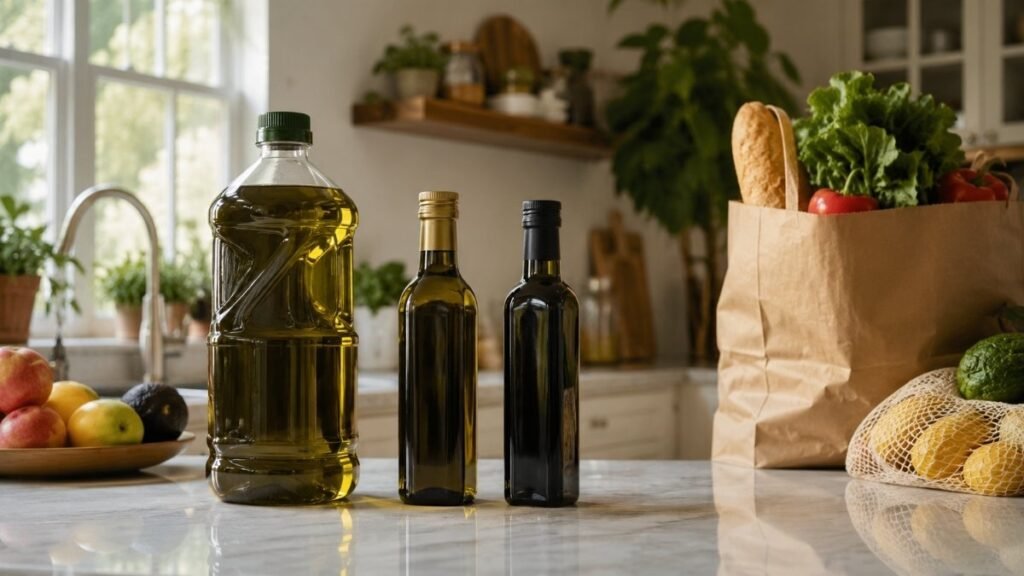
Buying Costco olive oil sounds simple until you’re standing in front of the shelf. One Kirkland bottle is cheaper, another says organic, and another promises a different origin—but which one actually makes sense for your kitchen?
The best choice depends on how you cook and how quickly you’ll use it. A large bottle can save money, but not if it sits in the pantry long enough to lose its fresh flavor.
This guide explains how to choose the best Costco olive oil for your cooking style, what to look for on the label, how to keep it fresh, and when paying more for a premium bottle is actually worth it.
Overview
Quick answer: For most households, Kirkland Signature Organic Extra Virgin Olive Oil in the 2-liter size is the best all-around choice for everyday cooking, while a smaller bottle of a single-origin EVOO works better as a finishing oil for salads and dipping.
Costco doesn’t sell just one “olive oil” — it rotates through several types (Extra Virgin, Organic EVOO, Pure, and occasionally Light), plus different origins like Spain, Italy, Tunisia, and Greece. The right pick depends on three things: how often you cook with oil, how many people you’re feeding, and whether you care more about flavor or price per liter.
Bulk buying only pays off if you’ll actually use the oil before it loses freshness — typically within 4 to 6 months of opening. If your household only uses a splash of olive oil here and there, a smaller bottle is usually the smarter buy, even if the per-liter price looks worse on paper.
Costco Olive Oil Quick Buying Guide
| Need | Best Pick | Why |
|---|---|---|
| Everyday cooking | Kirkland Signature EVOO (2L) | Balanced flavor, reliable price per liter |
| Salads & finishing | Single-origin EVOO (smaller bottle) | More distinct, fruity flavor |
| Frequent, high-heat cooking | Kirkland Pure Olive Oil | Higher smoke point, more neutral taste |
| Small household (1–2 people) | 500ml–750ml bottle | Finishes before it turns stale |
| Large household (4+ people) | 2L Kirkland jug | Cost-effective if used within a few months |
| Label to check first | “Harvest Date” or “Best By” | Freshness matters more than country of origin |
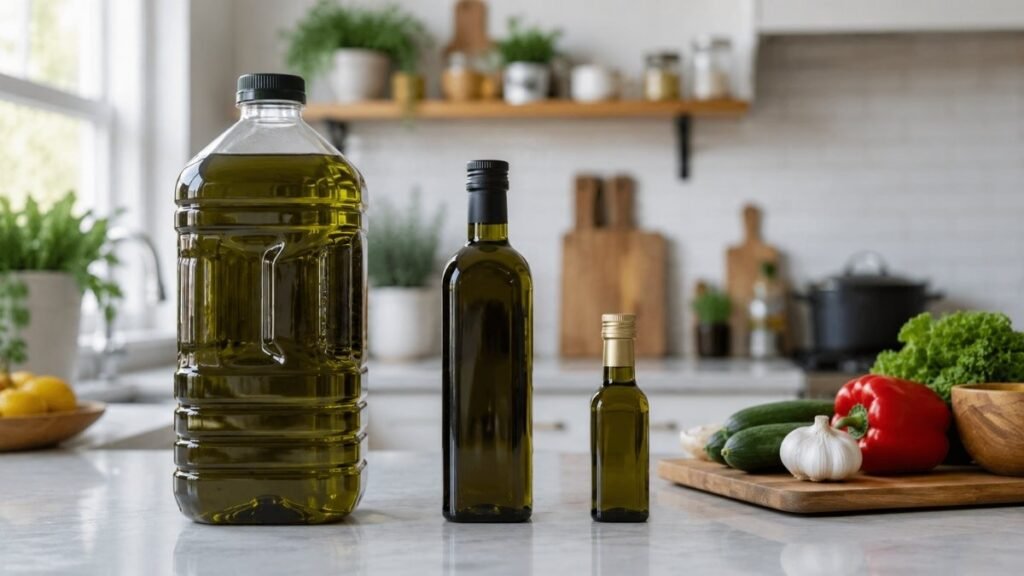
Which Costco Olive Oil Fits Your Household?
The best Costco olive oil depends on how often it gets used in your kitchen.
A 2-liter Kirkland bottle is a practical choice for families that cook dinner most nights. Regular use means the oil stays fresh, and the lower cost per liter becomes a real saving.
A large jug can easily last six months or longer, and that’s usually when the flavor starts to fade. The bright, fruity taste becomes flatter over time, and some people even notice a slightly waxy or crayon-like smell as the oil loses freshness.
Package size isn’t the only variable. Flavor intensity matters too:
- Mild, buttery oils work well for people who are new to cooking with olive oil or who use it in delicate dishes like fish or light pasta.
- Bold, peppery oils suit households that already enjoy a stronger olive taste, especially in Mediterranean-style cooking or dipping bread.
Best Costco Olive Oil by Household Type
| Household Type | Recommended Size | Recommended Flavor | Reasoning |
|---|---|---|---|
| Single / couple, light cooking | 500ml–750ml | Mild | Finishes before flavor fades |
| Couple, cooks often | 1L | Mild to medium | Balances value and freshness |
| Family of 3–4 | 2L | Medium | Used up within a reasonable window |
| Large family (5+) or meal preppers | 2L, possibly two bottles | Medium to bold | High turnover keeps oil fresh |
Match the bottle size to how quickly your household actually goes through olive oil — not to the lowest price per liter.
Understanding Costco’s Olive Oil Options
It’s common to see more than one Kirkland olive oil on the Costco shelf, and they don’t all serve the same purpose. Some are better for salads, others are better for everyday cooking, and knowing the difference makes picking a bottle much easier.
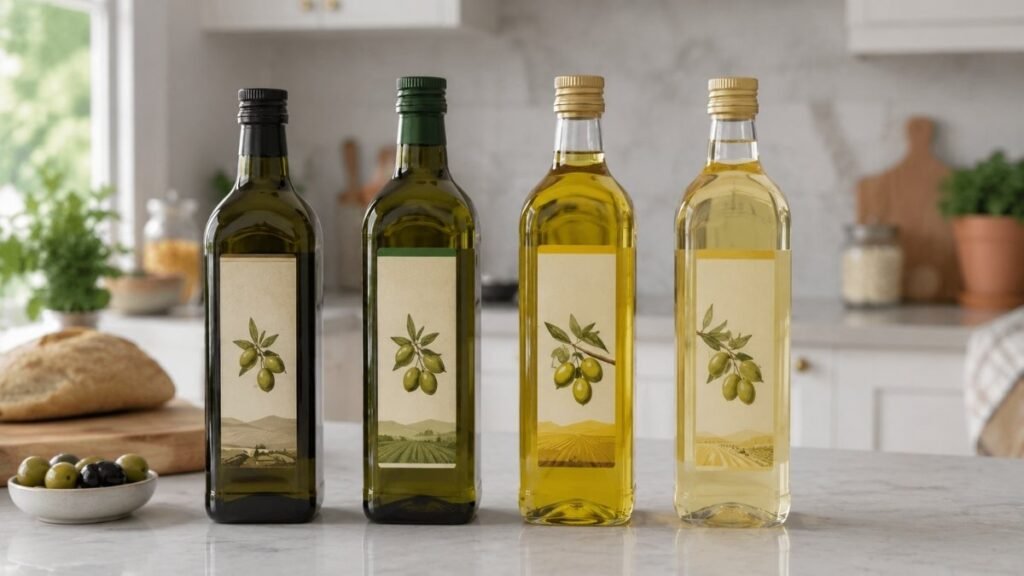
Extra Virgin Olive Oil (EVOO) is the least processed type — made by mechanically pressing olives without heat or chemicals. It keeps the most flavor, aroma, and naturally occurring antioxidants, which is why it’s the go-to for salads, dips, and finishing dishes.
Organic EVOO follows the same extraction process but comes from olives grown without synthetic pesticides or fertilizers. It doesn’t necessarily taste different from conventional EVOO, but it appeals to shoppers prioritizing how the olives were farmed.
Pure Olive Oil is a blend of refined olive oil (processed with heat and sometimes chemical solvents to remove impurities) and a small amount of virgin oil added back in for flavor. It has a more neutral taste and a higher smoke point, making it a practical choice for everyday cooking where you don’t need a pronounced olive flavor.
Light Olive Oil is one of the most misunderstood labels on the shelf. It’s surprisingly common for shoppers to assume “light” means fewer calories — it doesn’t. All olive oils have essentially the same calorie count. “Light” here refers to a milder flavor and color, achieved through additional refining, not a diet-friendly formula.
EVOO vs Pure vs Light Olive Oil
| Type | Flavor | Best Use | Smoke Point | Processing |
|---|---|---|---|---|
| Extra Virgin | Strong, fruity/peppery | Salads, dips, finishing | Lower | Minimal (cold-pressed) |
| Organic EVOO | Strong, fruity/peppery | Same as EVOO | Lower | Minimal, organic farming |
| Pure Olive Oil | Mild, neutral | Everyday cooking, sautéing | Higher | Refined + some virgin oil |
| Light Olive Oil | Very mild | High-heat cooking, baking | Higher | More heavily refined |
Is Kirkland Extra Virgin Olive Oil Real?
Yes — Kirkland Signature Extra Virgin Olive Oil has consistently performed well in independent quality testing, including evaluations by olive oil certification groups that check for authenticity and adherence to extra virgin standards.
The confusion usually comes from a broader industry issue: olive oil fraud, where oils are diluted with cheaper refined oils or mislabeled, has been a real problem globally, particularly with some imported brands. That reputation has made shoppers cautious of any large-scale, private-label oil — including Costco’s.
However, low price doesn’t automatically signal a lower-quality or diluted product. Costco’s scale allows it to source directly from large producers and cut out several distribution markups, which is a big part of why Kirkland oil costs less than boutique brands without necessarily being lower quality.
That said, it’s still smart to check the bottle yourself before trusting the label blindly.
Authenticity Checklist
- Look for a harvest date, not just a “best by” date — genuine EVOO producers usually disclose this
- Check for a country of origin or blend disclosure (e.g., “Product of Italy” or “Blend of oils from Spain, Italy, and Tunisia”)
- Confirm the bottle is dark glass or opaque plastic — clear glass suggests less concern for light protection, often a sign of lower-quality packaging
- Smell the oil once opened — genuine EVOO should smell fresh, grassy, or fruity, never like crayons or old nuts
- Compare two bottles side by side in-store if unsure — labeling details, especially certification seals, can vary batch to batch
Single-Origin or Blended Olive Oil: Which Should You Buy?
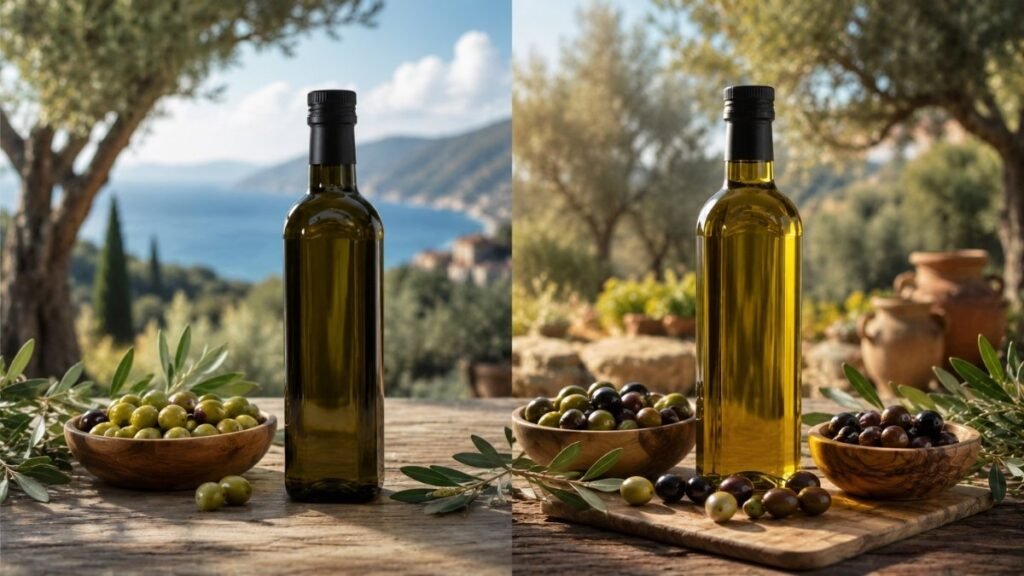
Single-origin olive oil comes from olives grown in one specific country or region, while blended olive oil combines oils from multiple countries to create a more consistent flavor and supply chain.
Neither option is inherently better — they simply serve different purposes. Single-origin oils, like a bottle labeled “Product of Italy,” tend to have a more distinct, traceable flavor profile tied to that region’s olive varieties and climate. Blended oils, often labeled as a mix of Spanish, Italian, and Tunisian oils, are typically more affordable and taste more consistent from batch to batch, since producers can adjust the blend to maintain flavor even when one region has a weaker harvest.
For everyday cooking, blended oils make practical sense — you’re not usually trying to taste subtle regional differences while sautéing vegetables. For salads, bread dipping, or dishes where the olive oil itself is the star, a single-origin oil, particularly from Spain, Italy, or Greece, tends to deliver more noticeable character.
Single-Origin vs Blend
| Factor | Single-Origin | Blended |
|---|---|---|
| Flavor consistency | Varies by harvest | Very consistent |
| Best use | Finishing, dipping, salads | Everyday cooking |
| Price | Usually higher | Usually lower |
| Traceability | High | Lower |
| Availability at Costco | Sometimes seasonal | Reliable, year-round |
Choosing the Right Costco Olive Oil for Every Meal
The same olive oil doesn’t have to do every job. Using the right bottle for salads, everyday cooking, or high-heat recipes helps you get better flavor without spending more than you need to.
For salads and dipping, reach for your more flavorful bottle — a single-origin or bold EVOO — since these dishes let the oil’s taste shine without any heat dulling it.
For everyday cooking like sautéing vegetables or making a quick pan sauce, a mild EVOO or Pure Olive Oil works well and won’t overpower the dish.
For higher-heat cooking, such as roasting at high oven temperatures or pan-searing, Pure or Light Olive Oil is the more practical pick, thanks to a higher smoke point that resists breaking down.
A common misconception is that cooking with olive oil “destroys” its health benefits entirely. In reality, normal home cooking temperatures don’t eliminate the beneficial compounds in olive oil — they do reduce somewhat over time and heat exposure, but the oil remains a healthier fat choice than many alternatives even after cooking. The bigger concern with high heat isn’t nutrition, it’s flavor: expensive, aromatic EVOO loses its distinct character when overheated, which is simply a waste of the oil’s best qualities.
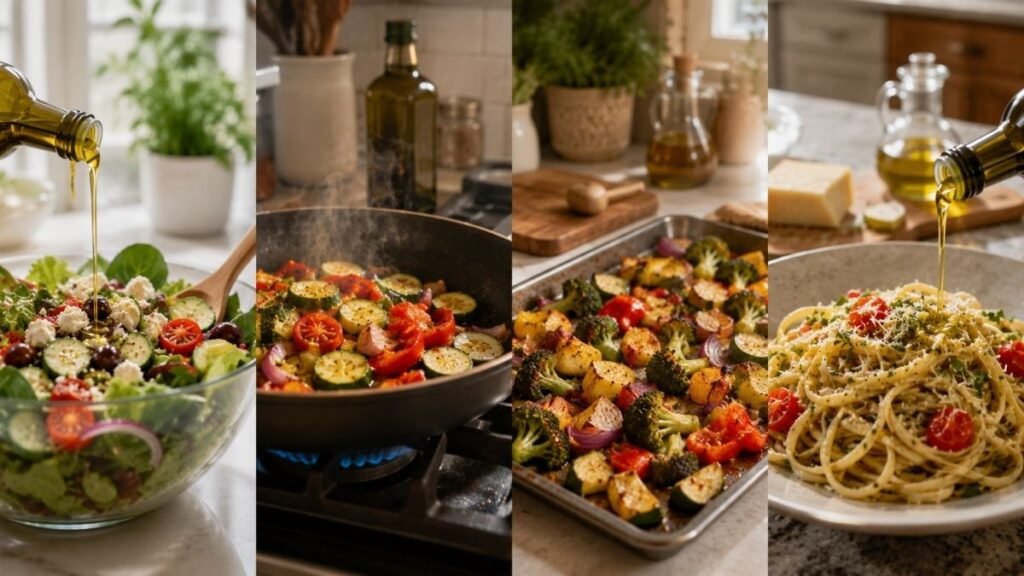
Best Olive Oil for Each Cooking Method
| Cooking Method | Recommended Oil | Why |
|---|---|---|
| Salad dressing / dipping | Bold EVOO | Flavor is the point |
| Sautéing / stir-frying | Mild EVOO or Pure | Balanced flavor, moderate heat |
| Roasting / baking | Pure or Light | Higher smoke point |
| Deep frying | Pure or Light (or a neutral oil) | Avoid wasting flavorful EVOO |
| Finishing a cooked dish | Single-origin EVOO | Adds fresh flavor at the end |
What Should Fresh Olive Oil Taste Like?
Fresh, good-quality olive oil should taste fruity, slightly bitter, and often peppery at the back of the throat — that peppery bite is actually a positive sign, not a defect.
This is one of the most common points of confusion for people newer to cooking with real EVOO. Many beginners notice a sharp, throat-catching sensation after tasting olive oil and assume something is wrong with it. In reality, that peppery burn comes from polyphenols, natural compounds associated with fresher, higher-quality oil. Oils that lack any bite at all are often more heavily processed or simply older.
Rancid oil, on the other hand, tastes noticeably different — flat, greasy, or like crayons, old walnuts, or putty. It won’t have the fresh, grassy aroma of good EVOO. If a bottle tastes distinctly “off” rather than just mild, that’s the oil to toss, not the peppery one.
A simple taste test: dip a small piece of plain bread in the oil at room temperature. Fresh oil should taste vibrant; rancid oil will taste dull or stale almost immediately.
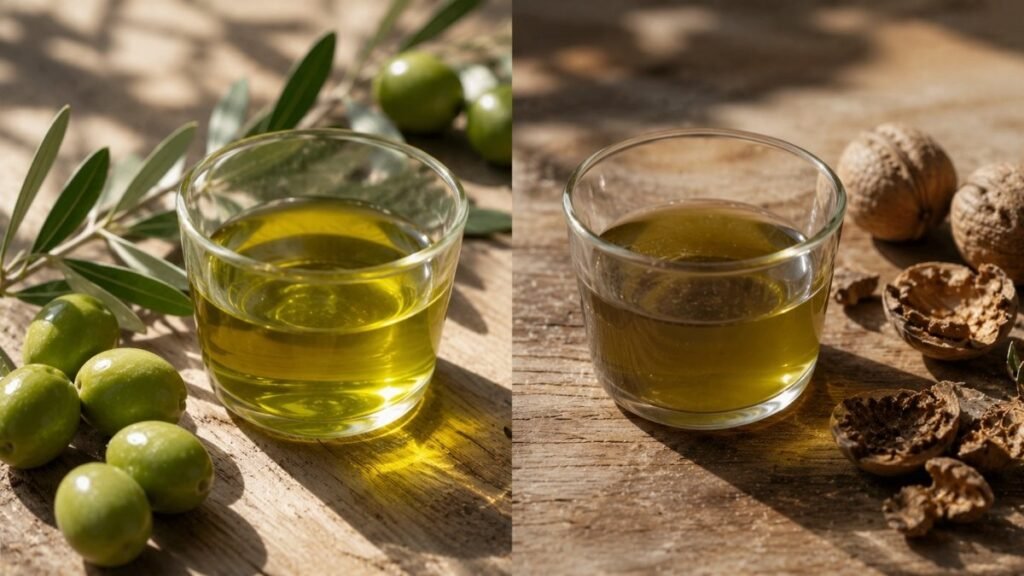
Fresh vs Rancid Olive Oil
| Trait | Fresh Oil | Rancid Oil |
|---|---|---|
| Aroma | Grassy, fruity | Musty, stale |
| Taste | Peppery, slightly bitter | Flat, greasy |
| Aftertaste | Sharp throat catch (normal) | Waxy or crayon-like |
| Color (not always reliable) | Vibrant green to gold | Can look normal even when rancid |
| Action | Safe and ideal to use | Discard, even if within “best by” date |
Peppery isn’t a flaw — stale, flat, or crayon-like flavors are the real warning signs.
Is Costco’s Bulk Olive Oil Worth Buying?
Bulk olive oil is worth it only if your household will realistically finish the bottle within about 4 to 6 months of opening it — otherwise, the “savings” quietly disappear as flavor and quality fade.
It’s tempting to focus purely on price per liter, since the 2-liter Kirkster jug almost always looks cheaper than smaller bottles. But that math only works if the oil gets used at a steady pace. A common and easily avoidable mistake is buying the biggest container available, using it a few times, and then letting it sit in the back of the pantry for the better part of a year.
For a family of four that cooks regularly, going through 2 liters in 3–4 months is realistic, and the bulk size pays off. For a single person or a couple who cooks only a couple of times a week, that same jug might last 8–10 months — long enough for noticeable flavor loss, even if the oil hasn’t gone unsafe to eat.
A practical middle ground some households use: buy one smaller bottle for finishing and flavor-forward dishes, and reserve the bulk jug only if daily cooking volume genuinely supports it.
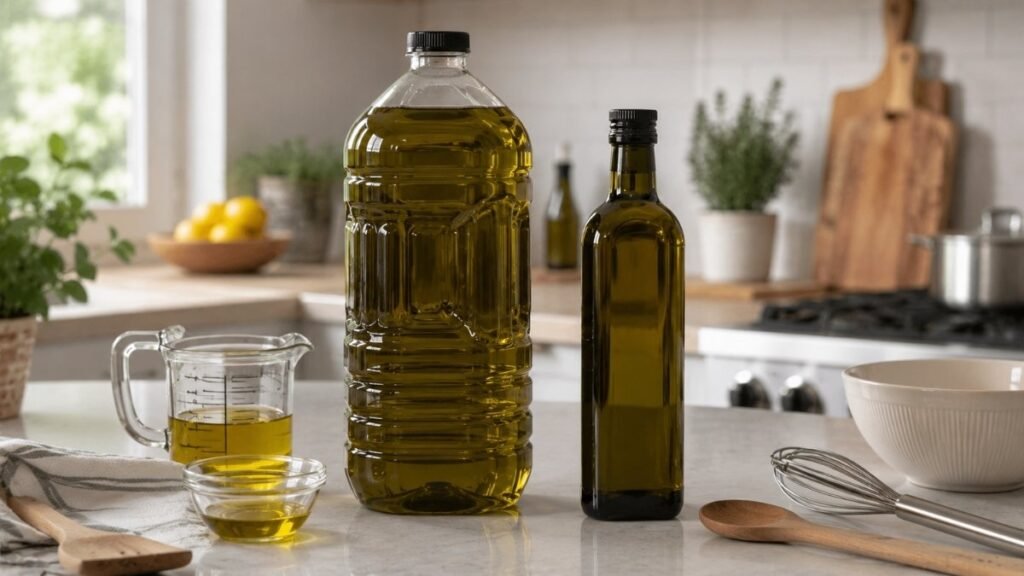
Bulk Value Calculator (Rule of Thumb)
| Household Size | Typical Olive Oil Use | 2L Jug Realistic Finish Time | Bulk Worth It? |
|---|---|---|---|
| 1 person | Occasional | 8–12 months | Usually not |
| 2 people | Moderate | 5–7 months | Borderline |
| 3–4 people | Regular cooking | 3–5 months | Yes |
| 5+ people | Heavy daily cooking | 2–3 months | Yes |
Bulk olive oil only saves money if you can finish it while it’s still fresh — not just cheap per liter on paper.
How to Store Olive Oil and Keep It Fresh
Proper storage protects both your investment and your food safety, since oil exposed to heat, light, and air breaks down faster and can eventually turn rancid.
Store olive oil in a cool, dark place — a pantry or cabinet away from the stove, oven, or any direct sunlight. It’s surprisingly common for people to keep their oil bottle right next to the stovetop for convenience, but that ambient heat is one of the fastest ways to shorten its shelf life.
If you buy the large Kirkland jug, consider decanting a smaller amount into a dark glass bottle or opaque dispenser for daily use, and keep the main jug sealed tightly in a cabinet. This limits how often the bulk of your oil is exposed to air and light.
One thing that often worries shoppers unnecessarily: cloudy olive oil isn’t automatically spoiled. Oil can turn cloudy if it’s been refrigerated or exposed to cold temperatures, which causes natural fats to solidify slightly. It typically clears again at room temperature and doesn’t indicate spoilage on its own.
Olive Oil Storage Checklist
- Keep the bottle away from direct sunlight and heat sources
- Store in a cabinet or pantry, not next to the stove
- Keep the cap or lid tightly sealed between uses
- Decant a small amount into a dark bottle for everyday cooking
- Use within 4–6 months of opening for the best flavor
- Don’t panic over cloudiness from cold storage — let it return to room temperature
Heat, light, and repeated air exposure are what shorten olive oil’s life — not the calendar date alone.
Is Premium Olive Oil Worth the Extra Money?
Premium olive oils can taste more distinctive, but the higher price isn’t always due to better quality. Brand reputation, smaller production batches, and packaging often add to the cost as well.
Brands like Graza or California Olive Ranch, which Costco occasionally carries alongside Kirkland, tend to emphasize single-origin sourcing, specific harvest timing, or a particular flavor style. For someone who genuinely notices and enjoys those nuances — especially in raw applications like dipping, drizzling, or dressing — that premium can be worth paying for.
For everyday cooking, though, many households find the difference far less noticeable once the oil is mixed into a dish or exposed to heat. Kirkland’s EVOO consistently tests well for authenticity, which means shoppers aren’t necessarily sacrificing quality by choosing the more affordable option.
A practical approach many kitchens land on is a two-bottle strategy: keep an affordable, larger Kirkland bottle for regular cooking, and a smaller premium bottle reserved specifically for finishing dishes, salads, or serving with bread — where the flavor differences actually show up.
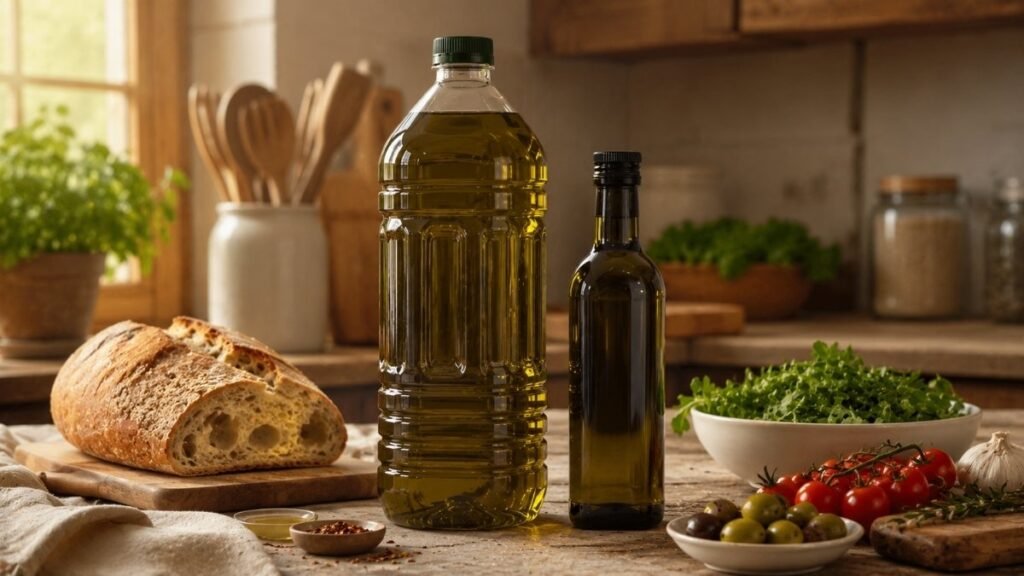
Kirkland vs Premium Olive Oil
| Factor | Kirkland Signature | Premium Brands |
|---|---|---|
| Price per liter | Lower | Higher |
| Authenticity | Verified in independent testing | Varies by brand |
| Flavor complexity | Good, reliable | Often more distinct |
| Best use | Everyday cooking | Finishing, gifting, special dishes |
| Value for daily cooking | High | Lower (you’re paying for nuance you may not use daily) |
FAQ
Which Costco olive oil offers the best value for daily cooking versus finishing dishes?
For daily cooking, the 2-liter Kirkland Signature EVOO or Pure Olive Oil offers the best price-to-performance balance. For finishing dishes like salads or bread dipping, a smaller single-origin EVOO bottle delivers more noticeable flavor. Buying both in smaller and larger sizes covers both needs without waste.
Is Kirkland Signature Extra Virgin Olive Oil authentic and real extra virgin olive oil?
Yes, it has performed well in independent quality evaluations that check for extra virgin authenticity. As with any oil, check the harvest date and origin details on the bottle to confirm freshness rather than relying on price alone.
Is Kirkland 100% Spanish EVOO in the plastic jug better than Italian EVOO in glass bottles?
Neither is objectively “better” — Spanish EVOO tends to be milder, while Italian EVOO often has a bolder, more peppery profile. The plastic versus glass packaging matters more for light protection than the oil’s quality itself, so store plastic jugs in a dark cabinet just as you would glass.
Why does some olive oil cause a peppery burn or bitter taste in the back of the throat?
That sensation comes from polyphenols, natural compounds found in fresher, higher-quality olive oil. It’s a sign of freshness and quality, not spoilage — oils lacking any peppery bite are often more processed or further from their harvest date.
How can small households prevent large Costco olive oil jugs from going rancid?
Decant a small amount into a dark bottle for everyday use and keep the main jug sealed in a cool, dark cabinet. If a 2-liter jug realistically takes 8+ months to finish, consider a smaller bottle instead, since fresher, smaller quantities beat bulk savings that come with flavor loss.
Does cooking with Extra Virgin Olive Oil destroy its health benefits and polyphenols?
Normal home cooking temperatures reduce some polyphenol content but don’t eliminate the oil’s benefits entirely. Olive oil remains a solid fat choice even after cooking; the bigger downside of high heat is flavor loss, not a total loss of nutritional value.
What is the difference between single-origin olive oil and blended olive oil at Costco?
Single-origin oil comes from one country or region and tends to have a more distinct, traceable flavor. Blended oil combines oils from multiple regions for consistency and often a lower price, making it a practical choice for everyday cooking.
Are brand-name olive oils like Graza and California Olive Ranch at Costco worth the extra cost over Kirkland?
They can be, especially for raw uses like dressing or dipping where subtle flavor differences stand out. For everyday cooking, though, Kirkland’s verified-authentic EVOO typically performs comparably, making premium brands more of a “nice to have” than a necessity.
🏠 Behind This Guide
Choosing Costco olive oil sounds easy until you’re standing in front of the shelf trying to decide between several bottles that all seem similar. We’ve had the same moment ourselves—wondering whether the larger jug is really the better value, whether a premium bottle is worth the extra money, or if the country of origin actually makes a difference.
That’s why this guide focuses on the questions most shoppers have while they’re still in the store. Instead of recommending one bottle for everyone, we explain what each type does best, when buying in bulk makes sense, and how to keep olive oil tasting fresh after you bring it home.
Because the goal isn’t just to buy olive oil.
It’s to choose the bottle that fits the way your family actually cooks.
Continue Exploring Olive Oil
Choosing the right bottle is only part of buying olive oil wisely. These beginner-friendly guides will help you understand different olive oil types, compare popular brands, and get the best flavor from every meal.
- Extra Virgin Olive Oil — Learn what makes extra virgin olive oil different and why it’s the top choice for salads, finishing dishes, and everyday cooking.
- Virgin vs Extra Virgin Olive Oil — Compare the key differences in flavor, quality, production methods, and the best uses for each type.
- Olive Oil and Extra Virgin — Understand the relationship between regular olive oil and extra virgin olive oil so you can choose the right one with confidence.
- Trader Joe’s Olive Oil — See how Trader Joe’s olive oils compare in quality, flavor, and value before your next grocery trip.
- Best Olive Oil for Cooking — Find the best olive oils for sautéing, roasting, baking, and other everyday cooking methods.
- Kirkland Olive Oil — Explore the different Kirkland olive oil options, including Extra Virgin, Organic, and Pure Olive Oil.
- Best Olive Oil — Compare top olive oil brands, learn what to look for on the label, and discover which bottles offer the best value for your kitchen.
❤️ A Final Note
Making the most of your groceries isn’t about being perfect—it’s about making small, informed choices every day.
At Pantryva, we create practical food storage, grocery, and kitchen guides that help everyday households waste less, spend smarter, and feel more confident about the food they bring home. Every article is built around clear, reliable advice you can trust in real life.
Helping you make smarter food decisions, save more on every grocery trip, and get the most from every item in your pantry.