
There is a specific kind of culinary magic that happens when you take five pounds of humble yellow onions, a splash of dry wine, and sixty minutes of patience. If you’ve ever sat in a dimly lit Parisian bistro, breaking through a thick, brûléed crust of Gruyère cheese to reach a rich, mahogany broth, you know that french onion soup isn’t just a starter—it’s a liquid hug.
As a food lover who prioritizes both flavor and the “clean label” philosophy, I’ve spent years perfecting an easy french onion soup recipe that delivers restaurant-quality depth without the excessive sodium or artificial additives of store-bought versions. Whether you’re hosting a cozy dinner for friends or looking for a mindful weekend cooking project, this guide will show you how to turn the lowliest vegetable in your pantry into culinary gold.
1. The Science of the Sauté: Why Patience is the Only Ingredient That Matters
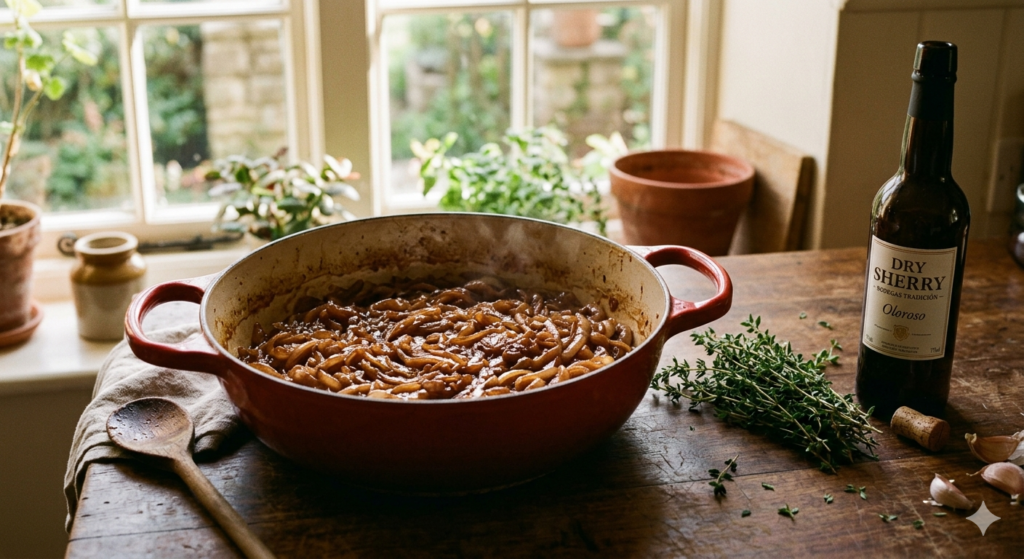
At its heart, a great french onion soup recipe is a masterclass in the Maillard Reaction. This isn’t just “browning”; it’s a complex chemical transformation where the natural sugars and amino acids in the onion create hundreds of new savory flavor compounds.
According to culinary data, onions consist of approximately 8-9% sugar. By cooking them “low and slow,” you aren’t boiling that sugar; you are transforming it into a jammy, savory complex that defines the soup’s soul.
Real Experience: “I used to think 15 minutes was enough to brown onions,” says Julian, a home cook from Seattle. “But following the 45-minute rule changed everything. The soup went from ‘onion water’ to a deep, dark nectar that tasted like it came from a Michelin-starred kitchen.”
2. The Gourmet Pantry: Selecting Your Flavor Matrix
To create a “gourmet” experience from basic staples, your selection must be intentional. High-quality ingredients are the foundation of an easy french onion soup recipe.
| Ingredient | The Professional Choice | Why it Matters |
| Onions | Yellow or Spanish Onions | Higher sulfur content leads to a more robust sweetness after long cooking. |
| Fat | Grass-Fed Unsalted Butter | Adds a silky mouthfeel and rich Vitamin K2 without masking the onion flavor. |
| Deglazing Liquid | Dry Sherry or Vermouth | The acidity (pH ~3.3) perfectly balances the heavy richness of the beef fat. |
| The Broth | Beef Bone Broth | Provides 10g+ of collagen per serving for that “lip-smacking” texture. |
3. Step-by-Step: Executing the Easy French Onion Soup Recipe
Mastering this dish comes down to three critical phases: The Sweat, The Jam, and The Bloom.
Phase 1: The Sweat (Minutes 0–15)
Melt 4 tablespoons of butter in a heavy-bottomed pot over medium-low heat (approx. 275°F). Add 5 lbs of thinly sliced onions. Cover the pot for the first 10 minutes to let the steam soften the fibers. This “sweating” ensures the onions cook evenly without crisping.
Phase 2: The Jam (Minutes 15–45)
Remove the lid. Stir every 5–7 minutes. If the onions start to stick or develop a dark film (the fond) too quickly, add 2 tablespoons of water to deglaze. This prevents carbonization (burning) and incorporates the flavor back into the onions. Aim for a color similar to an old Stradivarius violin.
Phase 3: The Bloom (The Final 20)
Once the onions are mahogany, add 1/2 cup of Dry Sherry. Scrape the bottom vigorously. Add 6 cups of beef bone broth, a bundle of fresh thyme, and one bay leaf. Simmer for 20 minutes at a gentle bubble to meld the flavors.
4. Pro Tips for the Ultimate “Cheese Pull” and Depth
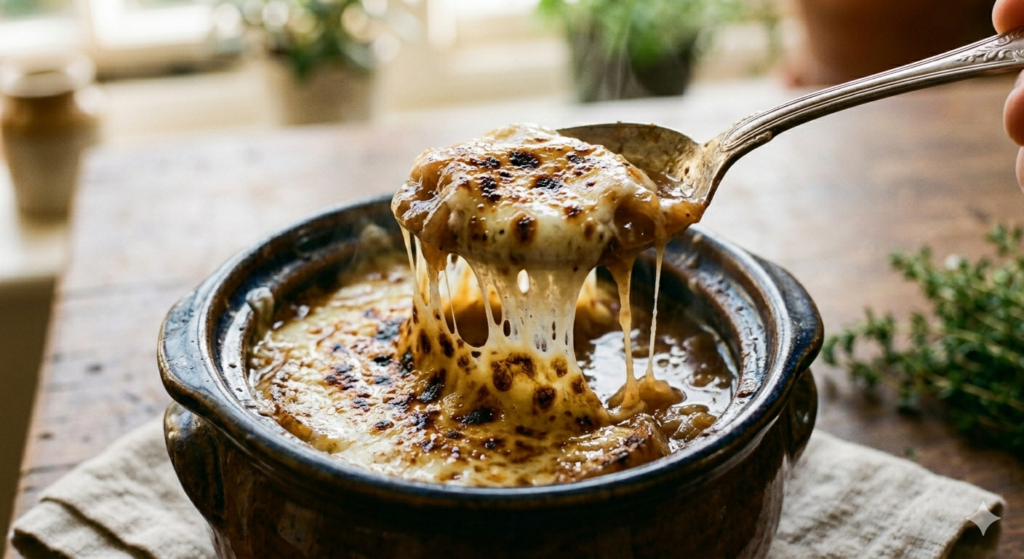
- The Garlic Friction Hack: Toast your sourdough slices until they are very hard. Then, rub a raw, halved garlic clove across the surface. The toast acts like sandpaper, grating a microscopic layer of fresh garlic into the bread for an incredible aromatic punch.
- The Umami Booster: If your broth feels “thin,” stir in 1 teaspoon of fish sauce or tamari. You won’t taste the fish, but the fermented glutamates will make the beef flavor explode.
- The Vinegar Finish: Just before serving, add 1/2 teaspoon of Sherry vinegar. The acidity “wakes up” the heavy fats and makes the sweetness of the onions pop.
5. FAQ: Solving Your Soup Struggles
Q: Why is my soup bitter instead of sweet? A: You likely had the heat too high. If onions develop black edges, they are burning, not caramelizing. Keep the heat low—it should sound like a gentle “whisper” in the pan, not a roar.
Q: Can I make this a vegetarian french onion soup? A: Absolutely. Substitute the beef broth with a dark, roasted mushroom broth and add a tablespoon of soy sauce to mimic the savory “meatiness.”
Q: Which bowls are broiler-safe? A: Use high-fired ceramic crocks or French “Lion’s Head” bowls. Avoid thin porcelain, which can crack under the 500°F heat of a broiler.
6. Pros and Cons: A Balanced View
The Pros:
- Nutrient Dense: Onions are rich in Quercetin, an antioxidant that supports heart health.
- Cost-Effective: Turns $5 worth of onions into a world-class meal.
- Make-Ahead Friendly: The flavor actually improves after 24 hours in the fridge.
The Cons:
- Time Intensive: Requires at least 90 minutes of total focus.
- High Sodium Potential: Always use “Low Sodium” broth to stay in control of your health goals.
7. Conclusion: A Gentle Suggestion for Your Soul
Cooking a french onion soup recipe is more than just making dinner; it’s an exercise in mindfulness. In a world of “instant everything,” taking 45 minutes to watch onions turn into jam is a radical act of self-care. It’s a reminder that the best things in life—flavor, relationships, and health—often require a steady flame and a bit of time.
My gentle suggestion? This weekend, put on your favorite jazz playlist, pour a small glass of wine for yourself, and embrace the slow process. Whether you follow this as an easy french onion soup recipe for a cozy date night or a solo Sunday ritual, the result is pure, unadulterated comfort.