
If you’ve stood in a grocery aisle lately, you’ve seen the chaos. Prices for “liquid gold” are hitting record highs in 2026, but the quality? It’s hit an all-time low. Most people follow a standard olive oil buying guide thinking a “Product of Italy” sticker guarantees quality. It doesn’t. In fact, that’s often the first red flag.
As a pantry strategist, I’ve spent the last year testing store-brand oils and premium imports. Here is the blunt truth: most of what you see on the shelf is “zombie oil”—refined, chemically deodorized, or years past its prime. If you want the anti-inflammatory benefits of extra virgin olive oil, you have to stop buying with your eyes and start buying with a detective’s mindset.
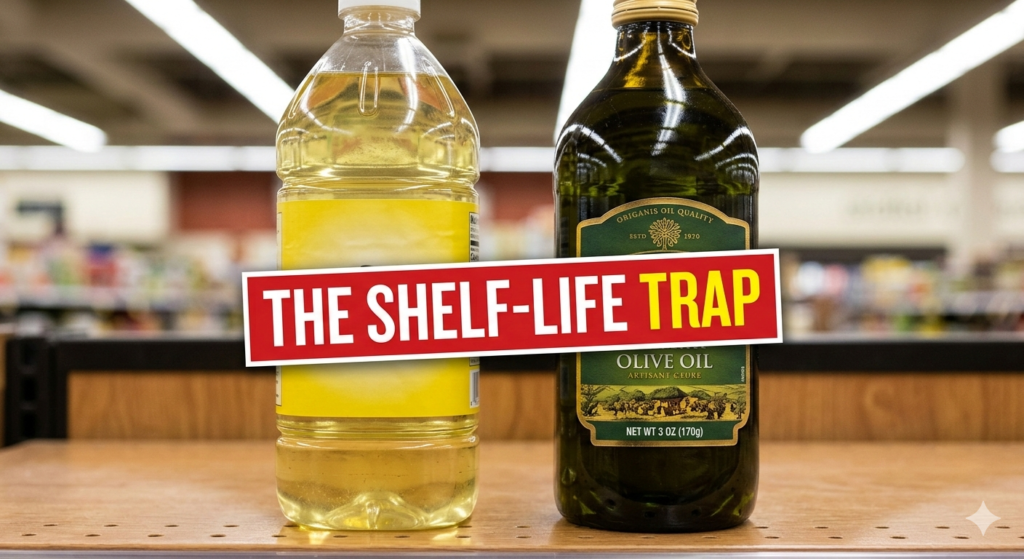
Red Flag #1: The “Product of Italy” Global Blend
This is the biggest marketing scam in the pantry world. When a label says “Product of Italy,” it often just means the oil was bottled there. If you flip the bottle around and see a tiny string of country codes like “ES, TN, GR, IT,” you’re buying a low-grade chemical blend from Spain, Tunisia, and Greece.
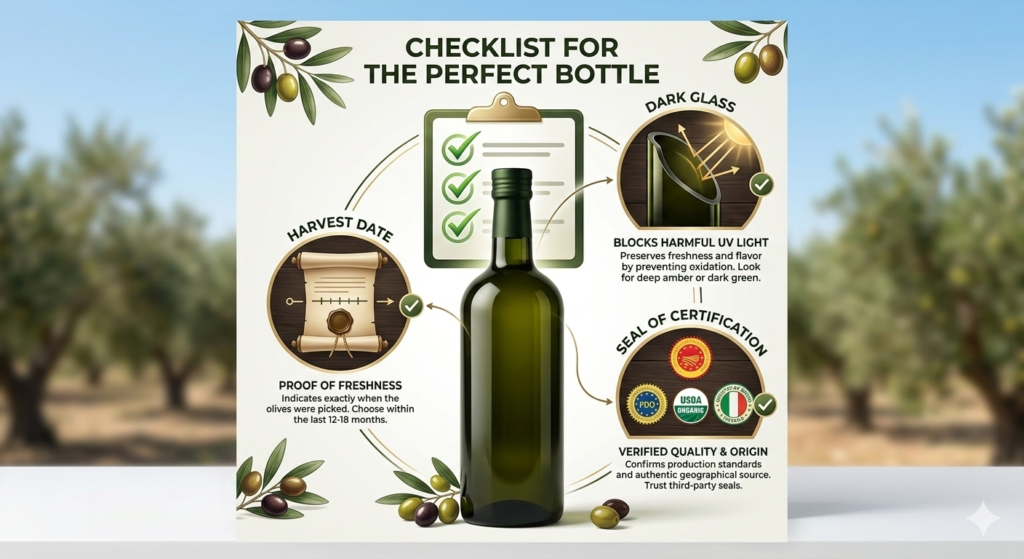
The Fix: Look for Estate-Grown labels or specific regions. True quality comes from single-origin sources. If it doesn’t have a DOP (Protected Designation of Origin) or IGP seal, it’s likely a mystery blend that lost its nutrients months before it hit the shelf.
Red Flag #2: Transparent Plastic Packaging
Light is the natural enemy of cold-pressed olive oil. If you see a high-priced oil sitting in a clear plastic or light glass bottle under harsh supermarket fluorescent lights, it’s already dead. Light triggers photo-oxidation, turning those healthy polyphenols into rancid fats.
The Fix: Always reach for the back of the shelf (where it’s darker) and only buy oil in dark green glass or opaque tin cans. If you can see the color of the oil through the bottle, don’t buy it.
Red Flag #3: Missing “Harvest Date”
Most brands only list an “Expiry Date,” which is usually two years after bottling—not two years after the olives were picked. Oil can sit in a tank for years before being bottled. By the time you buy it, it’s “zombie oil.”
The Fix: A legitimate extra virgin olive oil will proudly display its Harvest Date. In 2026, you should be looking for a late 2025 or early 2026 harvest. If the bottle doesn’t tell you when the olives were pressed, they are hiding something.
Data-Driven: The PantryVA Smoke Point & Stability Chart
Many people think you can’t cook with high-quality oil. That’s a myth. Real, unadulterated EVOO is actually more stable than refined seed oils because of its antioxidant load.
| Oil Type | Smoke Point | Best Use Case | Shelf Life |
| Premium EVOO | 375°F – 410°F | Finishing, Sautéing | 12-18 Months |
| “Pure” Olive Oil | 420°F | High-heat Frying | 24 Months (Low Nutrients) |
| Pomace Oil | 460°F | Avoid (Chemically Extracted) | 24 Months |
How to Run a “Home Audit” on Your Oil
Not sure if the bottle in your pantry is the real deal? Try these two “pro” tests:
- The Fridge Test: Real extra virgin olive oil contains monounsaturated fats that thicken or solidify when cold. Put a small glass in the fridge for 24 hours. If it remains 100% liquid, it’s likely cut with cheap vegetable oil.
- The Pepper Kick: Take a small sip. High-quality, fresh oil should taste grassy and give you a spicy “peppery” kick in the back of your throat. That burn is the Oleocanthal (the anti-inflammatory magic). If it tastes greasy or like cardboard, throw it out.
FAQ: Clearing the Kitchen Confusion
- Can I fry with EVOO? Yes, but it’s a waste of money. Use a high-quality “refined” olive oil for deep frying and save the EVOO for medium heat or finishing.
- Does color matter? Not really. Color depends on the olive variety, not quality. Some of the best oils are pale gold, while others are neon green.
- What is the best certification? Look for the International Olive Council (IOC) standards or the California Olive Oil Council (COOC) seal for guaranteed purity.
Conclusion: Quality Over Quantity
In 2026, a $10 gallon of olive oil is a red flag. You are better off buying one $25 bottle of high-phenolic, estate-grown oil than five bottles of “refined” mystery fat. Your health, and your taste buds, will thank you.