
Key Takeaways
- Extra virgin olive oil (EVOO) is the least processed, most nutritious grade of olive oil — but a landmark study by the UC Davis Olive Center found that 69% of imported olive oils labeled “extra virgin” in the United States did not meet the standard’s sensory or chemical criteria. Knowing how to read a label matters.
- The health evidence for extra virgin olive oil is substantial: regular consumption has been linked to reduced risk of heart disease, lower inflammation markers, and improved blood sugar control, according to research published in the New England Journal of Medicine and reviewed by the American Heart Association.
- The two-bottle strategy — one affordable EVOO for everyday cooking, one better-quality bottle for raw finishing — lets most families get the full health and flavor benefits of extra virgin olive oil without overspending.
- Kirkland Signature EVOO (Costco) and Aldi’s Specially Selected EVOO are the two best-value options at major U.S. retailers based on third-party quality testing — both significantly outperform their price points.
- Extra virgin olive oil stored in a dark, cool location lasts 12–18 months unopened and 3–6 months after opening at peak quality. Most families are using it well past its flavor prime without realizing it.
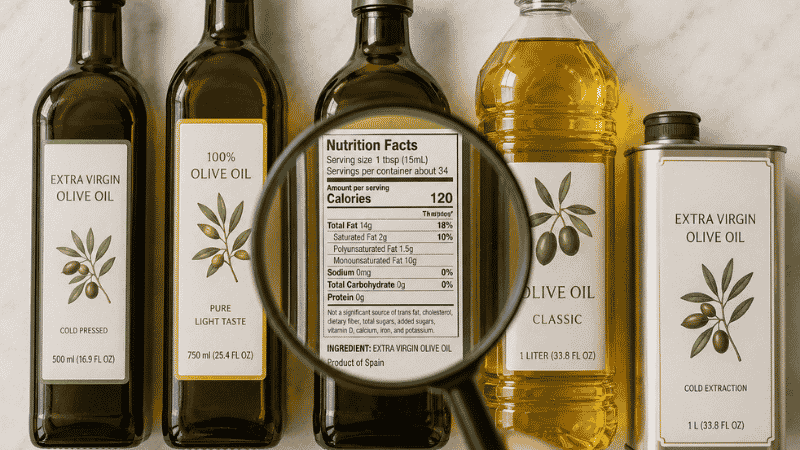
You’re standing in front of the grocery store olive oil section. There are 28 bottles. Three of them say “Italian.” Five say “extra virgin.” Two are in dark glass, four are in clear plastic, and one costs $4.99 for 34 ounces while another costs $18.99 for 16 ounces. They all look more or less the same. You grab the one you usually get — probably whatever’s on sale — and move on.
Here’s the uncomfortable truth: there’s roughly a one-in-three chance the bottle you just grabbed isn’t actually what the label says it is. The UC Davis Olive Center tested imported olive oils labeled “extra virgin” at major U.S. grocery stores and found that 69% failed to meet the official standard. They tasted stale, oxidized, or were simply refined oil in a premium wrapper.
But this guide isn’t here to make you anxious about olive oil. It’s here to give you the specific information that turns a confusing 2-minute grocery aisle decision into a confident 10-second one — so you can pick a bottle that’s genuinely good, at a price that makes sense for a family budget, and use it in a way that actually delivers the health and flavor benefits you’re buying it for.
What Makes Extra Virgin Olive Oil Different — and Why It Matters at the Grocery Store
Not all olive oil is the same product, and the grade system matters more than most shoppers realize.
Extra virgin olive oil is extracted from olives purely by mechanical means — crushing, pressing, centrifuging — with no heat or chemical solvents. To earn the “extra virgin” label, the oil must pass both chemical tests (acidity below 0.8%) and sensory tests (no flavor defects, must have positive fruity olive character). It’s essentially fresh olive juice. The nutritional and flavor compounds — polyphenols, vitamin E, oleocanthal — are preserved because nothing harsh has been done to the olives.
Virgin olive oil is made the same way but has minor flavor defects or slightly higher acidity. Rarely sold in U.S. stores.
Regular olive oil (also labeled “pure olive oil” or “light olive oil”) is a blend of heat-refined olive oil and a small amount of virgin or extra virgin oil. The refining process — which uses heat and sometimes chemical solvents — strips out the polyphenols, antioxidants, and much of the flavor. It’s a more neutral cooking oil with fewer health properties.
Olive pomace oil is extracted from the leftover olive pulp using chemical solvents after pressing. The lowest grade, not typically sold in regular grocery stores.
Why this matters at the grocery store: A bottle labeled “olive oil” or “pure olive oil” is not the same product as extra virgin olive oil, despite looking nearly identical on the shelf. For everyday cooking where olive oil is just a medium, the difference is modest. For the documented health benefits — heart protection, anti-inflammatory effects, antioxidant activity — you want extra virgin, and you want it to be genuinely extra virgin rather than a mislabeled product.
The Health Benefits of Extra Virgin Olive Oil — What the Science Actually Says
The health evidence for extra virgin olive oil is among the strongest in nutritional science for any single food.
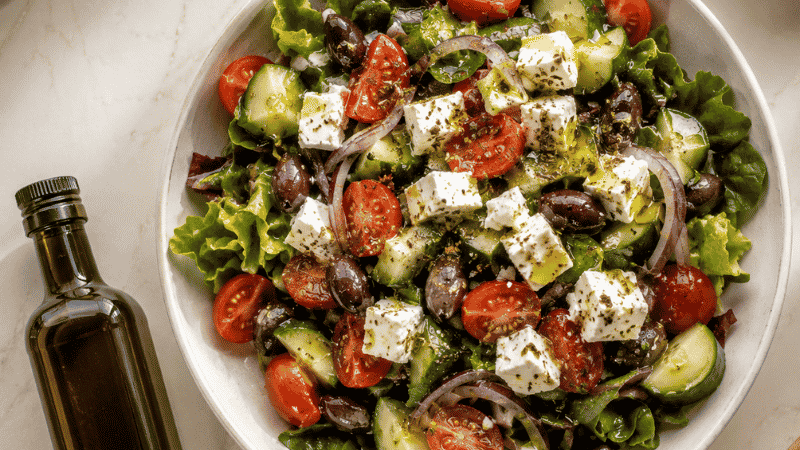
Heart Health
The landmark PREDIMED trial, published in the New England Journal of Medicine, followed over 7,000 adults at high cardiovascular risk for nearly 5 years. Those assigned a Mediterranean diet supplemented with extra virgin olive oil (about 4 tablespoons daily) had a 30% lower rate of major cardiovascular events compared to the control group. The American Heart Association classifies olive oil as a heart-healthy fat, recommending it as a replacement for saturated fats like butter and lard.
The mechanism is well understood: oleic acid, the primary monounsaturated fatty acid in olive oil (about 71% of its fat content), helps lower LDL cholesterol and reduce inflammation in blood vessel walls. Polyphenols, which are only present in meaningful amounts in genuine extra virgin oil, add additional anti-inflammatory and antioxidant effects.
Anti-Inflammatory Properties
Oleocanthal, a polyphenol unique to olive oil, has been shown in laboratory studies to inhibit the same enzymes (COX-1 and COX-2) as ibuprofen — essentially acting as a natural anti-inflammatory. The sensation of mild throat irritation you feel when tasting a high-quality extra virgin olive oil is oleocanthal at work. A “peppery” bite at the back of the throat is actually a marker of quality and anti-inflammatory potency.
Blood Sugar and Metabolic Health
Several controlled trials have found that replacing saturated fats with extra virgin olive oil improves insulin sensitivity and blood glucose control. A 2017 review in Nutrients found that EVOO consumption was associated with lower fasting glucose and improved HbA1c markers in people with type 2 diabetes or at metabolic risk.
Cancer Risk Reduction
Epidemiological research from Mediterranean countries — where olive oil is consumed daily in meaningful quantities — consistently shows lower rates of certain cancers, particularly colorectal and breast cancer, compared to populations consuming primarily saturated fats. The polyphenols in EVOO appear to have anti-tumor properties, though this research is still developing and should not be interpreted as a treatment or cure.
How Much Olive Oil Per Day?
The health benefits in most studies were associated with 1–4 tablespoons (15–60ml) of extra virgin olive oil per day, consumed as part of an overall diet that was also low in processed foods. You don’t need to take it like a supplement — simply using it as your primary cooking and finishing oil achieves the right intake level for most families.
How to Read an Extra Virgin Olive Oil Label at the Grocery Store
This is the skill that turns a confusing aisle into a simple decision. Here’s what to look for and what to ignore.
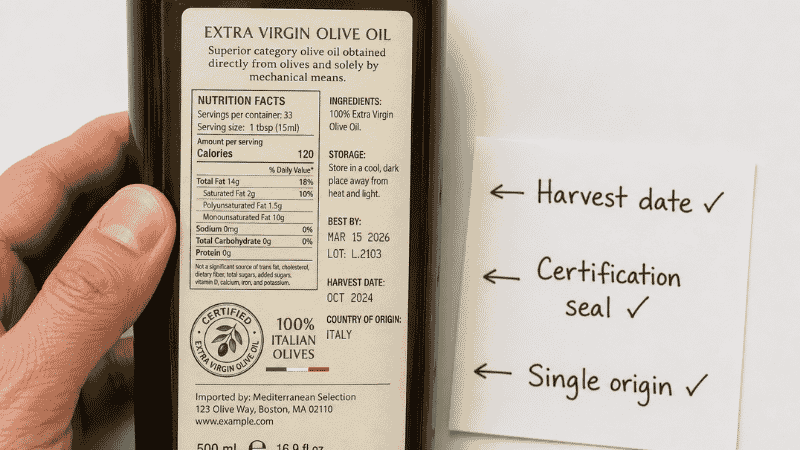
Look For
“Extra Virgin” — The minimum baseline. Note that this alone doesn’t guarantee quality, but it’s the necessary starting point. Never buy bottles labeled only “olive oil,” “pure olive oil,” or “light olive oil” if you want the health benefits.
Harvest date or bottling date — The most underused label element. Olive oil is a fresh agricultural product, not a stable shelf good. A harvest date tells you when the olives were pressed. Oil is typically at peak quality within 12–18 months of harvest. If a bottle has no harvest date and only a vague “best by” date 3 years away, it may have been sitting in a warehouse for years before hitting your shelf. A visible harvest date is a marker of a producer who stands behind their product’s freshness.
Single origin or specific region — “Product of Italy” can mean the oil was bottled in Italy from olives grown in Spain, Greece, and Tunisia. Genuine Italian EVOO should say something like “100% Italian olives” or list a specific region (Tuscany, Apulia, Sicilian, etc.). Same principle applies for Spanish, Greek, or California oils.
Certification seals — The North American Olive Oil Association (NAOOA) seal means the oil has been independently tested for authenticity. The California Olive Oil Council (COOC) seal on California oils indicates they passed California’s strict extra virgin standards, which are more stringent than federal requirements.
Dark glass or tin packaging — Light degrades olive oil significantly. A quality producer puts their oil in dark green or amber glass, or in a tin. A clear plastic bottle tells you the producer either doesn’t know or doesn’t care about light degradation during retail display.
Ignore or Be Skeptical Of
“Cold pressed” or “first pressed” — These terms are essentially unregulated marketing language in the U.S. All extra virgin olive oil is produced without heat by definition. “Cold pressed” sounds premium but adds no verified information.
“Light” olive oil — Does not mean lower calories. “Light” refers to lighter flavor, and these products are typically refined olive oil with minimal extra virgin content. Avoid if you want health benefits.
“Imported from Italy” — Italy is a major importer and blender of olive oils from Spain, Greece, Turkey, and Tunisia. “Imported from” or “bottled in” Italy is not the same as Italian-origin olives. Look for “100% Italian olives” if Italian provenance matters to you.
“Rich in antioxidants” or similar health claims — All olive oil manufacturers can make this claim. It says nothing about whether the specific bottle you’re holding has meaningful antioxidant content or is a mislabeled refined product.
Best Extra Virgin Olive Oil Brands at the Grocery Store by Budget
Based on Consumer Reports taste testing, UC Davis certification data, and third-party quality assessments:
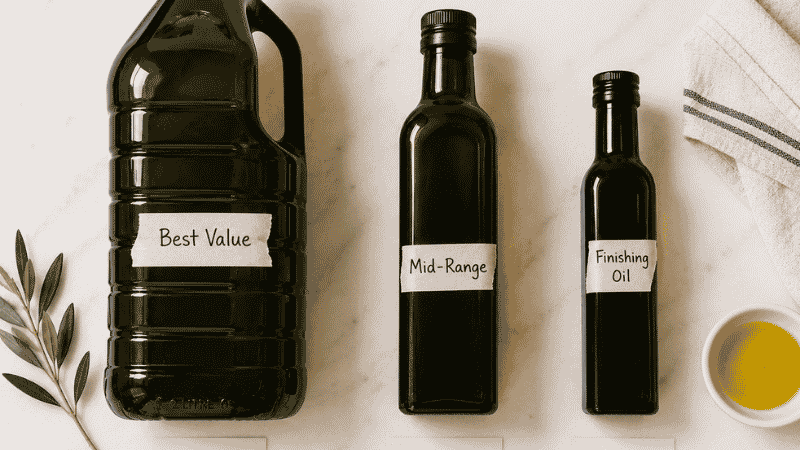
Best Everyday Value ($0.30–$0.50/oz)
Kirkland Signature Organic EVOO (Costco) — Bureau Veritas certified as genuine extra virgin. Consistently passes UC Davis third-party testing. At roughly $0.30/oz for a 2-liter bottle, it’s the best cost-per-quality ratio available at a major U.S. retailer. The 2-liter jug is worth decanting into a smaller dark bottle for counter use — keeping most of it in the cool, dark pantry preserves freshness.
Aldi Specially Selected EVOO — Consumer Reports’ Smart Buy pick in their blind tasting, at approximately $0.50/oz. Certified quality at a budget price. Available as Aldi’s rotating “ALDI Finds” and as a regular item depending on location.
Walmart Great Value EVOO — Not the same quality level as Kirkland or Aldi Specially Selected, but a decent everyday cooking oil at about $0.35–$0.40/oz. Adequate for high-heat applications where you’ll lose some polyphenols regardless of oil quality.
Best Mid-Range ($0.60–$0.90/oz)
Carapelli Original EVOO — America’s Test Kitchen top scorer in a blind tasting of top-selling supermarket brands. Widely available at Walmart, Target, and most grocery chains. Grassy aroma, fruity finish, good freshness.
Filippo Berio EVOO — Consistent mid-range quality, widely available, reliable. Has passed multiple third-party authenticity tests. Good choice if Carapelli isn’t available in your area.
California Olive Ranch — Made from California-grown olives, which means stricter labeling standards and more transparent origin. Clean, buttery flavor profile. Available at most major grocery chains.
Best Quality for Raw Finishing ($1.00+/oz)
For drizzling over finished dishes, salad dressings, or bread dipping where the oil’s flavor is prominent — this is where a premium bottle makes a perceptible difference. Look for single-estate Italian, Greek, or Spanish EVOO with a recent harvest date. Brands like Kosterina, Brightland, or local California producers are appropriate here. Buy in small bottles (250–375ml) since you’ll use it slowly.
The Two-Bottle Strategy: How to Use Extra Virgin Olive Oil Without Wasting It
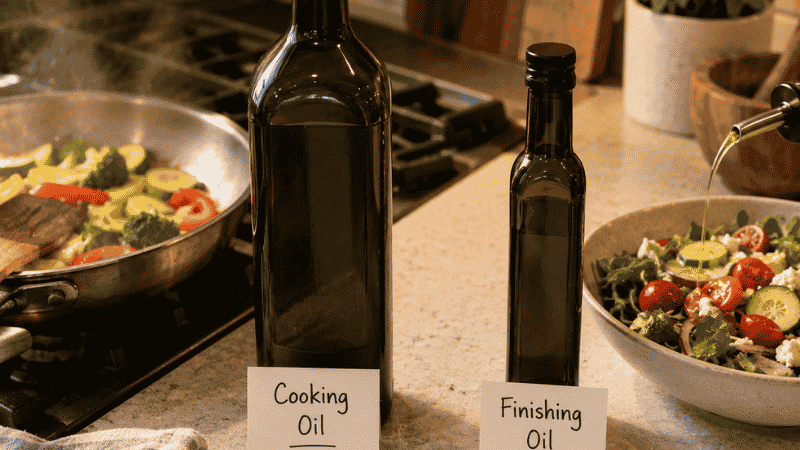
Most families don’t need one premium bottle of olive oil. They need two different bottles used for two different purposes.
Bottle 1 — The Workhorse: An affordable EVOO like Kirkland or Aldi Specially Selected for everyday cooking — sautéing vegetables, making pasta sauce, roasting, frying eggs, cooking chicken. At these temperatures, some polyphenols are lost regardless of oil quality, so spending $18 on a bottle for your daily stir-fry is not the best use of money.
Bottle 2 — The Finisher: A mid-range to premium EVOO for uncooked applications — salad dressings, drizzling over soup, finishing pasta, dipping bread. This is where the oil’s flavor and polyphenol content are fully preserved and actually perceptible. A small bottle used sparingly for these applications lasts 2–3 months and delivers most of the health and flavor value of expensive olive oil at a fraction of the cost of using premium oil for everything.
The economics: A family using this system might spend $22 on a Costco 2-liter jug (Bottle 1) that lasts 3–4 months, plus $10–$14 on a mid-range 375ml bottle (Bottle 2) that lasts the same period. Total: $32–$36 per quarter for genuinely good olive oil across all uses. That’s less than buying two mediocre large bottles at random from the grocery store aisle.
How to Store Olive Oil Properly — and How to Tell If It Has Gone Bad
Olive oil’s enemies are heat, light, and oxygen. This isn’t marketing language — it’s chemistry. The polyphenols and monounsaturated fats that make EVOO valuable oxidize when exposed to these factors, turning the oil rancid, flavorless, or chemically degraded.
Storage Rules
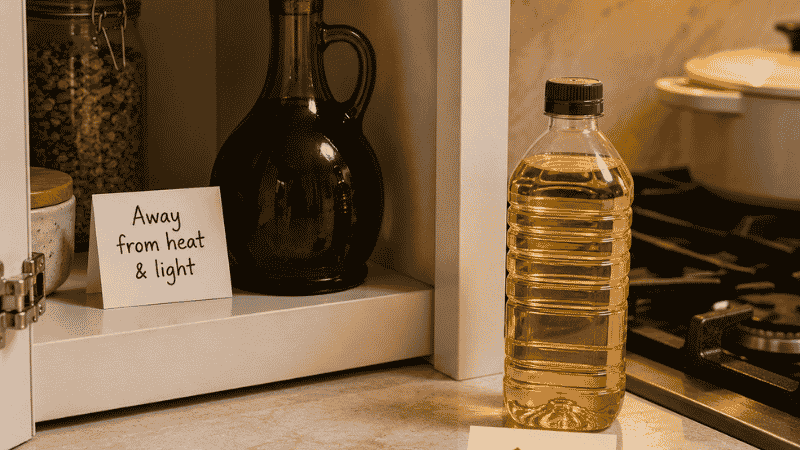
Keep it away from the stove. The most common olive oil storage mistake is a pretty bottle next to the range. The heat from cooking accelerates oxidation dramatically. Store in a cool cabinet across the kitchen.
Dark container or dark location. If your oil came in a clear bottle, keep it in a closed cupboard rather than on the counter. If you bought the Costco jug, decant weekly portions into a small dark glass cruet and keep the main jug sealed and cool.
Seal the bottle tightly after each use. Oxygen exposure through a loosely capped bottle degrades the oil continuously between uses.
Optimal temperature: 57°F–70°F (14°C–21°C). A cool pantry or lower kitchen cabinet is fine. The refrigerator works chemically but may cause the oil to cloud or solidify temporarily — it returns to liquid at room temperature without any quality loss, but the visual can be alarming if you’re not expecting it.
How Long Does Olive Oil Last?
- Unopened, properly stored: 12–24 months from harvest date
- Opened, properly stored: 3–6 months at peak quality
- Opened, stored near heat or in sunlight: may degrade in weeks
How to Tell If Olive Oil Has Gone Bad
Smell it. Rancid olive oil smells waxy, like crayons, old nuts, or the inside of a cardboard box. Fresh olive oil smells like olives — grassy, slightly fruity, with a hint of pepper.
Taste it. A flat, flavorless oil has oxidized and lost its polyphenol content. An unpleasantly bitter or musty taste (distinct from the pleasant pepper bite of polyphenols) indicates rancidity or fermentation.
The refrigerator test. Genuine extra virgin olive oil, when refrigerated, will begin to cloud or partially solidify within 30–60 minutes due to its wax content. This is not a definitive test for authenticity — other factors affect cloudiness — but oil that shows absolutely no change after refrigeration overnight may be a highly refined product or blend.
Rancid olive oil won’t make you sick in the acute sense, but the oxidized compounds are not beneficial and have lost any of the anti-inflammatory and antioxidant properties you’re buying it for.
When to Use Regular Olive Oil vs. Extra Virgin
A common question: is it worth using EVOO for high-heat cooking, or should you save it for raw applications?
The short answer: EVOO can be used for most home cooking methods safely, including sautéing, roasting, and pan-frying. Its smoke point — approximately 375°F–405°F (190°C–207°C) — is high enough for the vast majority of home cooking. The concern about EVOO “breaking down” at high heat is overstated for normal home cooking temperatures.
A study published in Food Chemistry found that extra virgin olive oil was more resistant to oxidation at high temperatures than other cooking oils, largely due to its polyphenol content and high monounsaturated fat ratio. Some polyphenols are lost at high heat, but the oil remains stable and does not produce the harmful compounds that polyunsaturated oils can at high temperatures.
The practical guidance: Use your everyday EVOO for all normal cooking — it’s fine, it’s safe, and it’s still providing more nutritional value than refined vegetable oil even when heated. Reserve your better finishing oil for raw applications where its full flavor and polyphenol content are preserved and appreciated.
FAQ
Q: What is the difference between extra virgin olive oil and regular olive oil?
Extra virgin olive oil is extracted from olives purely mechanically — no heat or chemical solvents — and must pass strict chemical and sensory tests. Regular olive oil (also sold as “pure” or “light”) is a blend of heat-refined olive oil and a small amount of virgin or extra virgin oil. The refining process strips out polyphenols, vitamin E, and much of the flavor. For cooking where flavor is secondary, regular olive oil is cheaper and adequate. For the documented health benefits, only genuine extra virgin olive oil delivers the relevant compounds.
Q: Can you cook with extra virgin olive oil?
Yes. The concern that EVOO degrades dangerously at cooking temperatures is not supported by current research for normal home cooking. Its smoke point (375–405°F) covers sautéing, roasting, pan-frying, and baking. Some antioxidants are reduced at high heat, but the oil remains stable and significantly healthier than most seed oils. For deep frying at very high temperatures (above 400°F for extended periods), refined oils are more appropriate.
Q: How do you know if olive oil is real or fake?
Look for: a visible harvest date (not just “best by”), certification seals (NAOOA or COOC), dark glass or tin packaging, and specific origin language (“100% Italian olives” rather than “bottled in Italy”). For at-home testing: smell it — fresh EVOO smells like olives, grassy and slightly peppery. If it smells like crayons, wax, or nothing at all, it may be rancid or mislabeled refined oil.
Q: Is Kirkland olive oil real extra virgin?
Yes — Kirkland Signature Organic EVOO has been verified as genuine extra virgin olive oil by Bureau Veritas and has passed UC Davis Olive Center third-party testing. It is one of the best-value genuine EVOO products available at a major U.S. retailer. Buy it at Costco directly — Kirkland products sold through third-party sellers on Walmart.com or Amazon cannot be verified as authentic.
Q: Should olive oil be refrigerated?
Refrigeration is safe and chemically beneficial (slows oxidation) but not necessary if you store the oil in a cool, dark location. The downside of refrigeration is temporary cloudiness or solidification — the oil is perfectly fine and returns to liquid at room temperature, but it can look alarming. For a large jug you’re using slowly, refrigerating the portion not in use is a reasonable approach.
Q: How long does olive oil last once opened?
At peak quality: 3–6 months from opening when stored in a cool, dark location in a sealed bottle. After this, the flavor degrades noticeably even if the oil isn’t unsafe. Buying in quantities you’ll use within this window — rather than the largest jug available — preserves quality. The exception is Costco’s 2-liter Kirkland bottle if you use olive oil daily as a family; at that rate, you’ll finish it well within 3–4 months.
Q: What is a good amount of extra virgin olive oil to use per day?
The health benefits in research studies were associated with 1–4 tablespoons (15–60ml) per day as part of a Mediterranean-style diet. For most families cooking with it regularly — using it to sauté, make salad dressings, finish dishes — hitting 1–2 tablespoons per person per day is achievable without any supplementing. You don’t need to measure or take it like medicine; simply making it your primary fat for cooking and finishing is sufficient.
The Honest Bottom Line
Extra virgin olive oil is genuinely worth buying and genuinely worth using daily — the research behind its health benefits is among the strongest in nutritional science for any single food. But it’s only worth those benefits if the bottle you’re buying is actually what it says it is, stored in a way that preserves what you paid for, and used in amounts that match what the studies actually tested.
The practical version: buy Kirkland at Costco or Aldi Specially Selected for everyday cooking. Keep a smaller, better bottle for raw finishing. Store it away from heat and light. Replace it within 3–4 months of opening. Don’t overthink the rest.
For more specific brand comparisons — including how Costco’s Kirkland stacks up against Trader Joe’s in a direct head-to-head test — our guide to the best affordable olive oil covers exactly that. And for how to use olive oil as a pantry anchor alongside other essential family staples, our pantry staples guide covers the full picture.
References
- Guasch-Ferré M, et al. (2014). Olive oil intake and risk of cardiovascular disease and mortality in the PREDIMED Study. BMC Medicine. doi:10.1186/1741-7015-12-78
- UC Davis Olive Center. Tests Indicate That Imported “Extra Virgin” Olive Oil Often Fails International and USDA Standards. University of California, Davis. olivecenter.ucdavis.edu
- American Heart Association. Monounsaturated Fats. heart.org
- Gorzynik-Debicka M, et al. (2018). Potential health benefits of olive oil and plant polyphenols. International Journal of Molecular Sciences. doi:10.3390/ijms19030686
- Ghanbari R, et al. (2012). Valuable nutrients and functional bioactives in different parts of olive (Olea europaea L.)—a review. International Journal of Molecular Sciences. ncbi.nlm.nih.gov