
Key Takeaways
- A homemade pasta sauce made from a $1.50 can of crushed tomatoes costs approximately $2–$3 to make — compared to $8–$10 for a jar of Rao’s or $3–$5 for Barilla. Over a month of weekly pasta nights, that difference adds up to real money.
- The basic pasta sauce in this guide takes 20 minutes total (10 active) and uses pantry staples you likely already have: canned tomatoes, olive oil, garlic, and dried basil.
- The most important canned tomato buying tip: “San Marzano” on the label doesn’t always mean San Marzano tomatoes. Only jars with a D.O.P. certification contain the real thing — everything else is marketing language you’re paying a premium for unnecessarily.
- One batch of basic homemade pasta sauce can be turned into at least 5 completely different dinners throughout the week — meat sauce, pink vodka sauce, arrabbiata, pizza sauce, and shakshuka — by adding one or two additional ingredients each time.
- Homemade pasta sauce freezes perfectly for up to 3 months. Making a double or triple batch and freezing in quart-sized containers is one of the simplest and most effective budget cooking habits a family can build.
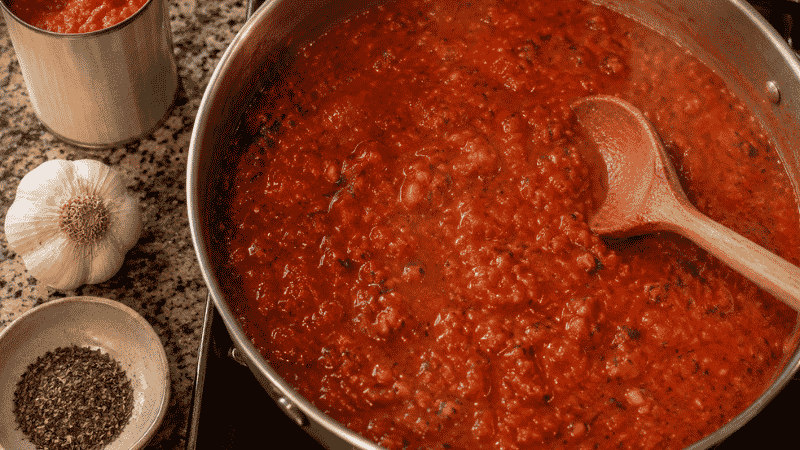
The jar of Rao’s marinara has been sitting in your cart. You picked it up because you’ve heard it’s the best — and it is genuinely good. Then you turned it over and saw the price: $9. You put it back. You picked up the Barilla instead at $3.49, feeling slightly like you gave up something. You get home, open the jar, heat it up, and think: this is fine. But fine isn’t great.
Here’s what nobody tells you when you’re standing in the pasta sauce aisle: for less money than the cheapest decent jarred sauce, you can make something that tastes better than Rao’s in about 20 minutes. Not as a weekend project. As a Tuesday evening thing. The ingredients are four items you probably already have in your pantry. The technique takes one pan and about 10 minutes of actual attention.
This guide covers the full picture: how to make pasta sauce from scratch when you have time, how to make jarred sauce taste significantly better when you don’t, which canned tomatoes are actually worth buying at the grocery store, and how to turn one batch of sauce into five different dinners so that buying a few extra cans means a week of effortless pasta nights.
The Real Cost of Jarred Pasta Sauce vs. Homemade
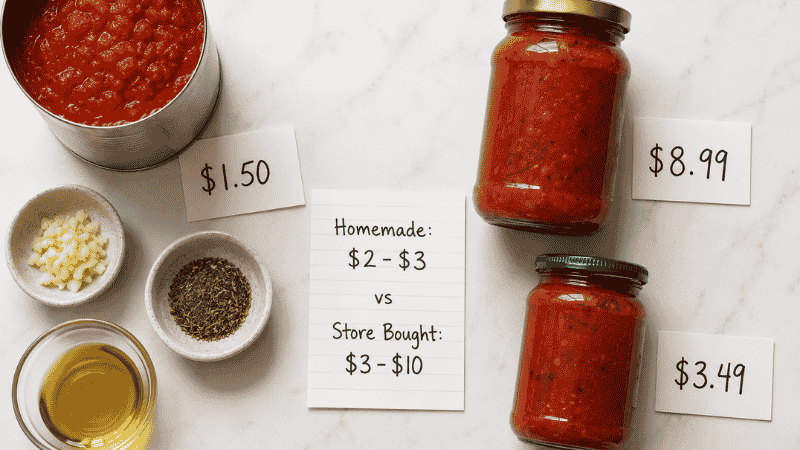
Let’s do the math that nobody does at the grocery store.
A jar of Rao’s marinara (24 oz): $8–$10, serves 4–6 people. A jar of Barilla marinara (24 oz): $3–$3.49, serves 4–6 people. Homemade pasta sauce from a 28-oz can of crushed tomatoes: approximately $2–$3 total for a batch that serves 6–8 people.
The homemade version costs less than the cheapest acceptable jarred option and yields more servings. Over 52 weeks of pasta nights, the difference between buying Rao’s and making your own is approximately $300–$400 per year — real money for something that takes 20 minutes.
The common objection: “But I don’t have time to make sauce from scratch.” The honest answer: a basic homemade tomato sauce takes 20 minutes including prep. That’s the same amount of time it takes to boil pasta. You can do both simultaneously and dinner is on the table faster than delivery would arrive.
The second common objection: “Jarred sauce is just as good.” It’s convenient, but it’s not the same. Jarred sauces are designed for mass-market appeal — they tend to be sweeter than homemade and lack the brightness you get from properly sautéed garlic and simmered fresh tomatoes. Even a modest homemade sauce, made with pantry staples, tastes more alive.
How to Make Pasta Sauce from Scratch in 20 Minutes
This is the base recipe — simple, fast, and genuinely good. Once you know it, you’ll improvise it from memory within a few weeks.
The Ingredients You Need
Crushed tomatoes (one 28-oz can): The foundation of the sauce. Crushed tomatoes give a smoother result than diced and a chunkier result than tomato puree — the right texture for most pasta dishes. Look for cans where tomatoes are the first (and ideally only) ingredient. Hunt’s and Walmart’s Great Value perform well in this role at about $1–$1.50/can. More on canned tomato buying below.
Olive oil (2 tablespoons): This is how you build the flavor base. Use a decent everyday olive oil — not your finest finishing oil, but not the cheapest either. Great Value EVOO at Walmart works well for cooking.
Garlic (4–5 cloves): Don’t be conservative here. Garlic cooked in oil is the flavor backbone of this sauce. If your cloves are small, use 5. Mince them finely or put them through a press.
Onion (1 medium, diced): Adds sweetness and body. Roughly dice it — it will soften and almost dissolve into the sauce during cooking. If you want a silky-smooth sauce, dice it very finely or blend the finished sauce.
Dried basil (1.5–2 teaspoons): Don’t worry about the culinary snobs who say dried herbs are inferior. A good dried basil — one you can actually smell when you open the jar — adds real flavor. If yours has no scent at all, buy a new jar.
Butter (1 small pat, about 1 teaspoon): The secret weapon. A tiny amount of butter at the end adds a roundness and richness that makes the sauce taste like it cooked longer than it did. Don’t skip it.
Salt, pepper, pinch of sugar: Sugar (just ½ teaspoon) cuts the acidity of canned tomatoes without making the sauce sweet. You can substitute a small piece of carrot simmered in the sauce, which Italian home cooks have used for generations to achieve the same effect.
The Method
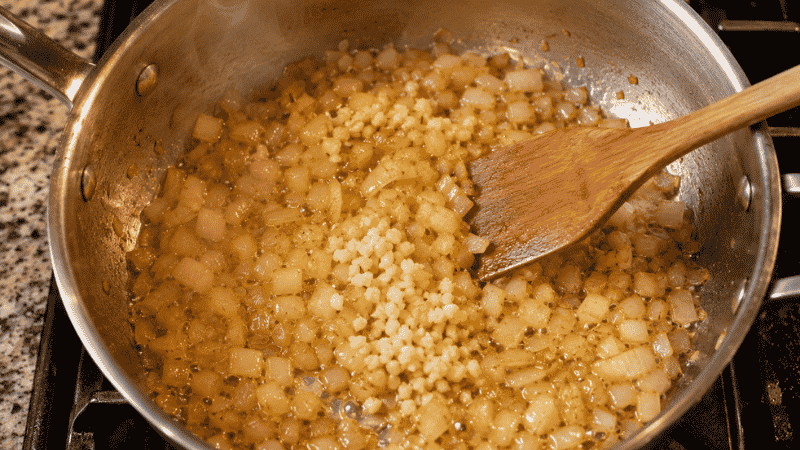
Step 1 — Build the aromatics (5 minutes): Heat the olive oil in a medium saucepan over medium-high heat until it shimmers. Add the diced onion and cook, stirring frequently, until softened and translucent — about 3 minutes. Add the garlic and stir immediately to prevent burning. Cook 1–2 more minutes until fragrant. Add the dried basil, red pepper flakes, salt, and sugar. Stir to combine for about 30 seconds.
Step 2 — Add the tomatoes (2 minutes): Add the butter and let it melt. Pour in half the can of crushed tomatoes and scrape the bottom of the pan to release any browned bits — this is flavor, don’t lose it. Add the remaining tomatoes. Stir in ¼ cup of water. The sauce will seem thin; it thickens as it simmers.
Step 3 — Simmer (10 minutes minimum, up to 1 hour): Reduce heat to low. Simmer uncovered for at least 10 minutes, stirring occasionally. For a deeper, more developed flavor, simmer up to 45–60 minutes, adding water as needed to maintain consistency. The longer simmer is worth it when you have the time — the flavor becomes noticeably richer after 30 minutes.
Taste and adjust: Before serving, taste the sauce. Does it need more salt? More acid (a splash of balsamic vinegar)? More heat (extra red pepper flakes)? This is your sauce now — adjust it to what your family likes.
Total time: 10 minutes prep and active cooking, 10–60 minutes simmering mostly unattended. Total cost: approximately $2–$3 at Walmart/Aldi prices.
How to Buy the Best Canned Tomatoes for Pasta Sauce at the Grocery Store
The canned tomato aisle has a deception problem. Here’s how to shop it without overpaying.
The San Marzano Situation
You’ve seen “San Marzano” on countless pasta sauce cans and jars. These words have been attached to a quality halo — San Marzano tomatoes, grown in a specific volcanic soil region of Italy near Naples, are genuinely superior for sauce-making: lower acidity, sweeter, denser flesh, fewer seeds.
The problem: “San Marzano style” or “San Marzano type” on a label means nothing. These are marketing terms that any tomato producer can use. Only cans labeled with D.O.P. certification (Denominazione d’Origine Protetta) contain tomatoes actually grown in the San Marzano region under certified conditions.
What this means for shopping:
- A can labeled “San Marzano” without D.O.P.: probably a California-grown tomato with marketing language. Price: $3–$5. Value: questionable.
- A can labeled “San Marzano D.O.P.”: the real thing. Price: $4–$6 for a 28-oz can. Worth it for simple sauces where the tomato flavor is prominent.
- A can of Hunt’s or Great Value crushed tomatoes: California-grown, consistent quality, $1–$1.50. Excellent value for everyday pasta sauce.
The practical buying advice: Use Hunt’s or Great Value crushed tomatoes for weekly family pasta nights — they’re genuinely good and the price difference from D.O.P. tomatoes is significant over time. Reserve D.O.P. San Marzano cans for simple preparations like marinara or aglio e olio where the tomato flavor stands alone.
Crushed vs. Diced vs. Whole Peeled: Which to Buy
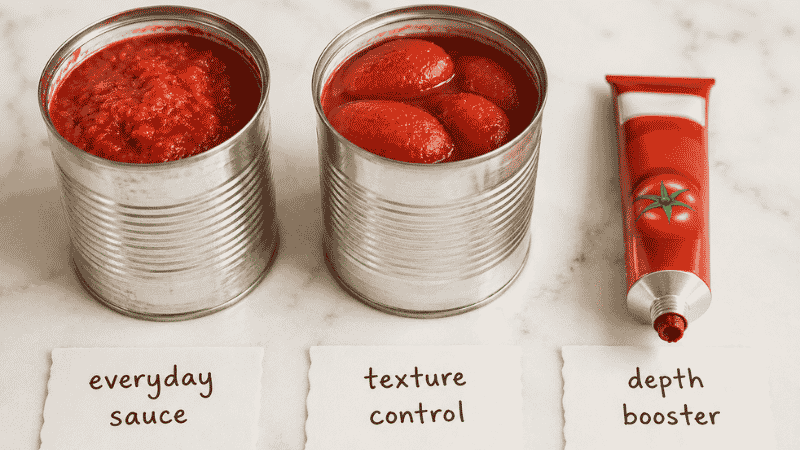
Crushed tomatoes: Best for smooth-ish sauces. Already broken down, cooks quickly, gives good texture without blending. Best everyday choice for pasta sauce.
Whole peeled tomatoes: Best for sauces where you want to control texture. Crush by hand or with a potato masher in the pan. Slightly more work but gives a fresher, slightly chunkier result. San Marzano D.O.P. almost always comes in whole peeled form.
Diced tomatoes: Works for pasta sauce but produces a chunkier result that doesn’t integrate as smoothly. Good for quick sauces or when you want noticeable tomato chunks.
Tomato paste: Not a sauce base on its own but an incredibly useful concentrate for adding depth. A tablespoon or two added to your sautéed garlic before adding crushed tomatoes intensifies the tomato flavor significantly. Buy it in a tube (Amore brand is widely available) rather than a can — it lasts months in the fridge after opening.
How to Make Jarred Pasta Sauce Taste Better (For When You Don’t Have 20 Minutes)
Some nights, scratch is not happening. Here’s how to make a jar of pasta sauce taste significantly more like something you made yourself, in about 5 minutes of additional work.
The 5-Minute Upgrade Method
Sauté aromatics first. Before opening the jar, sauté a minced garlic clove (or two) in 1–2 tablespoons of olive oil for 1–2 minutes over medium heat. Pour the jarred sauce directly into this garlic oil. The sautéed garlic immediately improves the flavor by adding depth the factory process can’t replicate.
Add a pat of butter at the end. Same principle as the homemade method — 1 teaspoon of butter stirred in just before serving adds richness and rounds out the acidity.
Simmer it. Jarred sauce is ready to eat but not necessarily ready to taste its best. Even 10 minutes of gentle simmering concentrates the flavor and removes the slightly metallic taste that some jarred sauces have straight from the jar.
Add a Parmesan rind if you have one. This is the professional trick most home cooks don’t know: drop a Parmesan rind (the hard edge you’d normally throw away) into the simmering sauce. It slowly dissolves and adds a savory, umami depth that transforms the sauce. Fish it out before serving.
Use pasta water. When you drain your pasta, save a ladle of the starchy cooking water. Add it to the sauce as you toss the pasta — the starch helps the sauce coat the pasta rather than pool at the bottom of the bowl.
Is Rao’s Worth the Price?
Rao’s is genuinely the best mass-market jarred pasta sauce — it uses higher-quality tomatoes, olive oil instead of vegetable oil, and has a shorter ingredient list without added sugar. The flavor is noticeably better than mid-range jarred sauces.
At $8–$10 per jar, it’s three to five times the cost of making a comparable sauce at home. It’s worth buying when you genuinely don’t have time to make sauce, and it’s a better choice than spending $3.50 on a Barilla jar that still tastes processed. But it’s not a replacement for homemade if you have 20 minutes — your homemade version, made with similar care and good canned tomatoes, will match or exceed it.
The honest middle ground: Keep a jar of Rao’s for genuine emergencies. Keep canned tomatoes and pantry staples on hand so you can make the real thing when you have a few minutes.
5 Ways to Turn One Batch of Pasta Sauce Into a Week of Different Dinners
This is where the economics of homemade pasta sauce get genuinely impressive. One double batch (roughly $5–$6 in ingredients) made on Sunday evening becomes five different dinners throughout the week — none of them feeling like repetition.
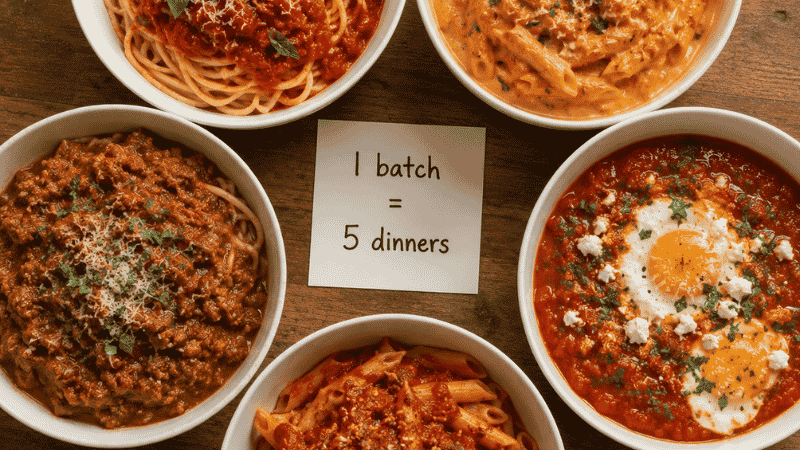
Version 1: Classic Marinara (the base)
The sauce as written above. Serve over spaghetti or rigatoni with Parmesan. This is Monday.
Version 2: Meat Sauce (Tuesday)
Brown half a pound of ground beef or Italian sausage in a separate pan. Drain fat. Add 1.5–2 cups of base sauce. Simmer together 10 minutes. Serve over penne or rigatoni.
Cost added: $2–$3 for the ground beef. Total cost for this dinner: $3–$4 for 4–6 servings.
Version 3: Pink Vodka Sauce (Wednesday)
Heat 1–2 cups of base sauce in a saucepan. Add ¼ cup of heavy cream and stir until incorporated. Finish with a tablespoon of butter. The cream turns the tomato sauce into something that looks and tastes restaurant-worthy. Optional: add a splash of vodka and simmer 2 minutes.
Cost added: about $0.50 for the cream. Total dinner cost under $4.
Version 4: Arrabbiata (Thursday)
Heat 1–2 cups of base sauce. Add ½–1 teaspoon of red pepper flakes (more than you normally would) and 2 additional minced garlic cloves. Simmer 10 minutes. Serve with penne — arrabbiata means “angry” in Italian and the dish traditionally uses penne for the tubes to trap the spicy sauce.
Cost added: essentially nothing. Total dinner cost under $3.
Version 5: Shakshuka or Eggs in Sauce (Friday)
Pour 2 cups of base sauce into a wide skillet over medium heat. Make 4–6 small wells in the sauce. Crack one egg into each well. Cover and cook until whites are set but yolks are still slightly runny, about 5–7 minutes. Serve with crusty bread.
This is not pasta — it’s a completely different dish that uses the same sauce. The sauce takes zero additional ingredients and the total dinner cost (including eggs and bread) runs under $5 for a family of four.
How to Store and Freeze Pasta Sauce
Refrigerator Storage
Homemade pasta sauce keeps in an airtight container in the refrigerator for 4–5 days. Store it in a glass container if possible — plastic absorbs tomato stains and odors over time.
Allow the sauce to cool to room temperature before refrigerating, but don’t leave it sitting at room temperature for more than 2 hours according to USDA food safety guidelines — bacteria multiply rapidly between 40°F and 140°F.
Freezer Storage
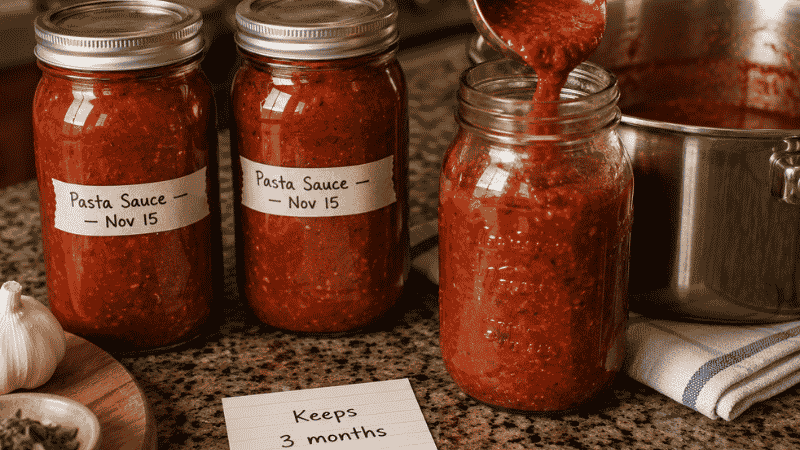
Pasta sauce freezes excellently for up to 3 months without any quality loss. This makes batch cooking particularly valuable — making triple the recipe costs very little extra and produces dinner for three future weeks.
How to freeze:
- Cool the sauce completely (refrigerate first if making a large batch)
- Pour into quart-sized freezer bags or airtight containers
- Leave 1 inch of headspace — the sauce expands when frozen
- Label with date and contents
- Freeze flat if using bags for easier storage
Thawing: Move from freezer to refrigerator the night before you need it. Or thaw in a covered saucepan over very low heat, adding a splash of water if needed to restore consistency.
Portion sizes for freezing: For a family of four, 2 cups of sauce is typically enough for one dinner. Freeze in 2-cup portions for easiest use.
When You Have Only 10 Minutes
If even 20 minutes is too much, here’s the absolute fastest pasta sauce that still tastes genuinely good:
Heat 2 tablespoons of olive oil over medium heat. Add 3–4 minced garlic cloves and cook 1 minute until fragrant. Pour in one 28-oz can of crushed tomatoes. Add salt, red pepper flakes, and dried basil. Simmer 8 minutes while the pasta cooks. Add a pat of butter. Done.
Total active time: 5 minutes. Total cost: under $2. This is faster than driving to pick up takeout and significantly cheaper than any jarred sauce worth buying.
FAQ
Q: How do I make pasta sauce taste less acidic?
Add a pinch of sugar (½ teaspoon to start) or a small piece of carrot simmered in the sauce for 20 minutes, then removed. Both neutralize the acidity of canned tomatoes without making the sauce taste sweet. A pat of butter at the end also rounds out sharpness. Avoid adding too much sugar — if you can taste the sweetness, you’ve added too much.
Q: How long does homemade pasta sauce last in the fridge?
4–5 days in an airtight container. Store in glass when possible. Beyond that, freeze it — homemade sauce keeps perfectly in the freezer for up to 3 months.
Q: Can you freeze pasta sauce?
Yes, and it’s one of the best things to batch-cook specifically for freezing. Cool completely before freezing. Store in portioned containers (2 cups per container for a family of four is a practical portion size). Keeps 3 months in the freezer with no quality loss.
Q: Is it really cheaper to make pasta sauce than to buy it?
Significantly yes. A batch of homemade sauce made from a 28-oz can of crushed tomatoes costs $2–$3 and serves 6–8 people. A comparable jar of Rao’s costs $8–$10. Over a year of weekly pasta nights, homemade sauce saves approximately $300–$400. Even compared to mid-range brands like Barilla ($3–$3.49), homemade works out cheaper per serving and tastes better.
Q: What’s the best canned tomato brand for pasta sauce?
For everyday cooking: Hunt’s crushed tomatoes or Walmart’s Great Value crushed tomatoes ($1–$1.50/can) are reliable and excellent value. For simple sauces where tomato flavor is prominent: look for D.O.P.-certified San Marzano tomatoes ($4–$6/can) — not just “San Marzano style” labels, which are marketing language without certification.
Q: How much sauce do I need per person?
About ½ cup (4 oz) of pasta sauce per serving for pasta dishes. A standard 28-oz can of crushed tomatoes yields approximately 2–3 cups of finished sauce — enough for 4–6 servings. For a family of four making pasta twice a week, one can per batch is sufficient.
Q: Can I use fresh tomatoes instead of canned?
You can, but for everyday pasta sauce it’s not the better choice. Fresh supermarket tomatoes outside of late summer peak season are often less flavorful than canned. Canned tomatoes are processed at peak ripeness and are more consistent in flavor year-round. Save fresh tomatoes for simple preparations — tomato salads, bruschetta, quick sautéed cherry tomato sauces — where their texture matters.
The Honest Bottom Line
Knowing how to make pasta sauce from scratch is one of the most practical kitchen skills a home cook can have — not because it’s impressive, but because it’s genuinely more economical than any jarred alternative and takes less time than most people think. Twenty minutes, four ingredients, one pan, and you have something that beats a $9 jar of premium sauce.
The batch cooking approach — making triple the recipe and freezing in portioned containers — extends that value further. One batch-cooking session per month can keep a family in pasta sauce for the entire month without ever opening a jar.
Now that you have the sauce, our guide to how to boil pasta perfectly covers the other half of the equation — including the correct water ratio, how much salt, and the pasta-in-sauce finishing technique that makes home pasta taste like restaurant pasta. And for the pantry setup that means you always have canned tomatoes, pasta, and basic aromatics on hand without a special grocery run, our pantry staples guide covers every ingredient worth keeping stocked.
References
- USDA Food Safety and Inspection Service. Safe Food Handling: The Danger Zone and Refrigerator Storage. fsis.usda.gov
- USDA Agricultural Research Service. FoodData Central — Nutritional Profile of Canned Crushed Tomatoes. fdc.nal.usda.gov
- European Commission. D.O.P. Protected Designation of Origin — San Marzano Tomato Certification. agriculture.ec.europa.eu
- Consumer Reports. Best Jarred Pasta Sauces: Taste Test and Value Comparison. consumerreports.org
- National Center for Home Food Preservation. Freezing Tomato Products — Safe Storage Guidelines. nchfp.uga.edu