
Key Takeaways
- The correct water-to-pasta ratio is 4–6 quarts of water per pound of pasta — most home cooks use too little, which causes sticking and uneven cooking.
- Pasta water should be salted to taste like mild seawater — approximately 1 tablespoon of kosher salt per quart of water. This is the single most impactful step most home cooks skip or underdo.
- Never add oil to pasta water — it coats the pasta and prevents sauce from adhering properly. Never rinse cooked pasta — it washes off the starch that helps sauce cling.
- Dry pasta lasts 2+ years when stored in a cool, dry place in an airtight container, well beyond the printed “best by” date. It’s one of the most economical pantry staples available.
- The best value pasta brands at Walmart and Aldi — Great Value and Barilla — perform comparably to premium Italian imports in blind taste tests for most family cooking purposes, at a fraction of the cost.
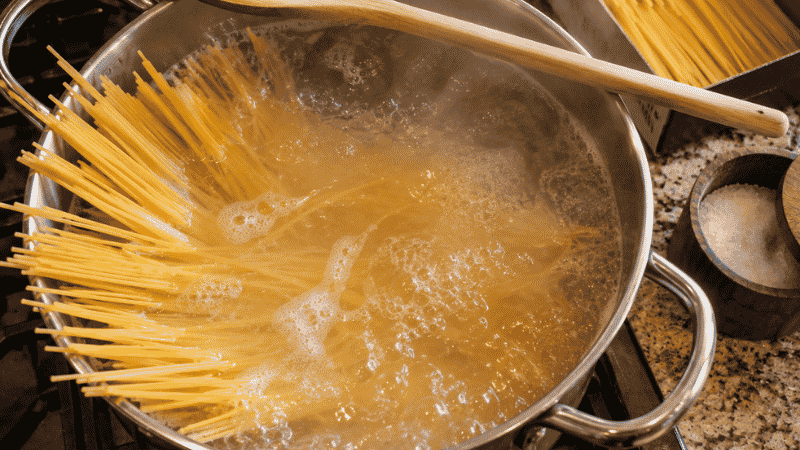
You bought a box of pasta, filled a pot with water, boiled it, and ended up with a plate of noodles that tasted vaguely like nothing and stuck together by the time you got the sauce ready. Or the opposite: you pulled them out too early and they had a chalky crunch in the center that ruined everything. You know how to boil water. You’re not sure why pasta keeps going wrong.
Here’s the thing most pasta guides don’t tell you: knowing how to boil pasta correctly isn’t about following a recipe. It’s about understanding four or five principles that, once you know them, make every pasta dish you ever make better — regardless of the sauce, the shape, or the brand. Salt at the right time. The right amount of water. The right moment to pull them out. What to do (and not do) after draining.
This guide covers all of it — plus the buying and storing information that most pasta guides skip entirely. Because pasta is one of the cheapest, most versatile staples in any family kitchen, and it deserves to be cooked right.
What to Look for When Buying Pasta at the Grocery Store
Before we talk about how to boil pasta, let’s talk about what to put in the pot — because not all pasta is created equal, and the difference matters more than most people realize.
Which Pasta Brand Is Actually Worth the Money?
The pasta aisle can be confusing. Barilla at $1.29/lb. Great Value at $0.89/lb. Rummo or De Cecco at $2.50–$3.50/lb. Rustichella d’Abruzzo at $6+/lb. The price range is enormous — so what are you actually paying for?
For everyday family cooking, the honest answer is: not much. Consumer Reports and multiple food publication taste tests have found that Barilla and Walmart’s Great Value perform comparably to premium Italian brands in blind tests for sauced pasta dishes. The starches cook similarly, the texture is consistent, and when you’re finishing pasta in a properly made sauce, the differences between a $1 and a $4 box are minimal.
Where premium pasta genuinely makes a difference: simple dishes with minimal sauce — aglio e olio, cacio e pepe, pasta with just olive oil and Parmesan. In these preparations, the pasta itself is the star, and bronze-cut pasta with more surface texture (which holds oil and sauce better) is noticeable. For these, De Cecco or Rummo are worth the slight premium.
The shopping recommendation: Keep Barilla or Great Value as your everyday workhorse. Keep one box of a premium brand for simple olive oil-based dishes. That’s the practical pasta buying strategy for a family budget.
How to Read a Pasta Label at the Grocery Store
A few things worth checking when you pick up a box:
Ingredients: Pasta should contain two things — semolina (durum wheat) and water, or semolina and eggs (for egg pasta). If there’s a long list of additives, put it back. The best pasta has the shortest ingredient list.
Bronze-cut vs. Teflon-cut: Bronze-cut pasta has a rougher, more porous surface that holds sauce better. It’s described on the label as “bronze die” or “trafilata al bronzo.” Most mass-market pasta is Teflon-cut and has a smoother surface. Not a dealbreaker, but worth knowing.
“100% Durum Wheat Semolina”: This is the baseline quality indicator. Pasta made from softer wheat tends to get mushy more quickly when cooked.
Which Pasta Shape for Which Dish?
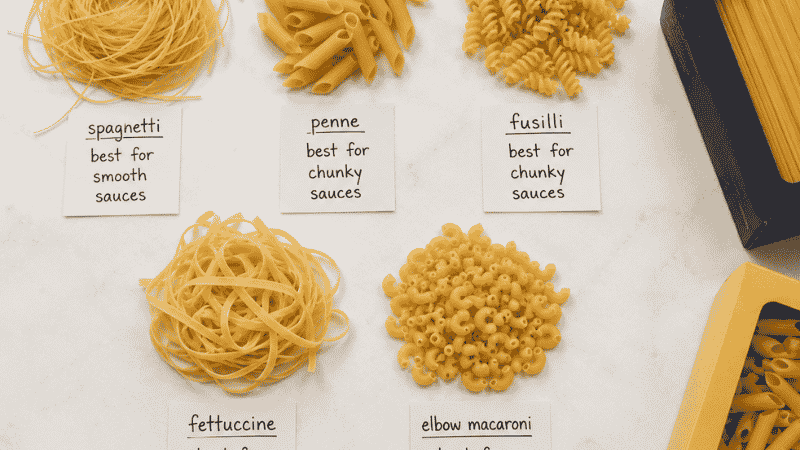
This is the question nobody answers in pasta buying guides, and it’s the one that matters most when you’re standing in the aisle. Here’s the practical matching guide:
Long, thin pasta (spaghetti, linguine, angel hair): Works best with smooth, olive oil-based, or seafood sauces. The smooth surface means thick, chunky sauces don’t cling as well. Use with marinara, aglio e olio, or clam sauce.
Long, flat pasta (fettuccine, pappardelle, tagliatelle): Works best with creamy sauces or hearty meat sauces — the wide surface area holds heavier sauces. Classic for Alfredo or Bolognese.
Short, tubular pasta (penne, rigatoni, ziti): Works for almost anything and is the most versatile shape for family cooking. The tubes trap chunky sauces inside them. Good for baked pasta dishes.
Short, ridged pasta (fusilli, rotini, cavatappi): Best for thick, chunky sauces and for pasta salads. The ridges and spirals catch small pieces of meat or vegetable.
Small pasta (ditalini, elbows, orzo): Best for soups and stews where the pasta needs to integrate into the dish rather than stand alone.
The practical takeaway: For a family on a budget trying to minimize variety in the pantry, keep spaghetti (for sauced dishes), penne or rigatoni (for baked and chunky sauce dishes), and elbows or ditalini (for soups). Three shapes covers 90% of what a home kitchen needs.
How to Boil Pasta: The Complete Step-by-Step Guide
Now the cooking. Every step below has a “why” — because understanding the reason makes it easier to remember and easier to adjust when things go slightly differently.
Step 1: Use More Water Than You Think
Fill your pot with 4–6 quarts (about 4–6 liters) of water for every pound of pasta. This is significantly more than most home cooks use. A pot that’s only half-full of water is the most common reason pasta sticks together.
Why so much water? Because pasta needs room to move freely as it boils. When you add pasta to a small amount of water, the water temperature drops significantly, cooking slows down unevenly, and the pasta sits in contact with itself long enough to stick. A large amount of water returns to a boil quickly and keeps the pasta moving.
For a family of four, you’re probably cooking half a pound to one pound of pasta per meal — which means a large pot filled most of the way up. Don’t use a small saucepan for pasta. It’s one of those things that genuinely makes a difference.
Step 2: Bring to a Full Rolling Boil Before Adding Anything
Wait until the water is at a full rolling boil — not a gentle simmer, not small bubbles on the bottom, but a vigorous boil that doesn’t calm down when you stir it. Adding pasta to water that isn’t fully boiling leads to uneven cooking and mushy texture.
This usually takes 8–12 minutes depending on your stove and pot size. Use this time to prepare your sauce ingredients — chopping garlic, opening canned tomatoes, grating Parmesan. The pasta should wait for you, not the other way around.
Step 3: Salt the Water Generously — This Is Not Optional
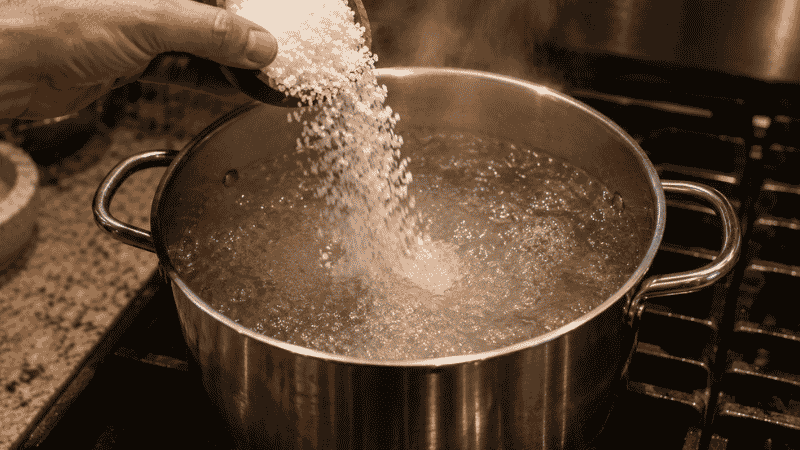
Once the water is boiling, add salt — about 1 tablespoon of kosher salt (or 1.5 teaspoons of fine table salt) per quart of water. For a standard large pot of water (5–6 quarts), that’s 5–6 tablespoons of kosher salt. More than you think. The water should taste like mild seawater when you taste it.
This step is the single most impactful thing most home cooks skip or underdo. Here’s why it matters so much: pasta absorbs water as it cooks. If that water is well-salted, the pasta itself becomes seasoned from the inside out — not just on the surface. Unsalted pasta, even with a flavorful sauce on top, always tastes slightly flat and incomplete.
Common concern: “Won’t it make the pasta too salty?” No. Most of the salt stays in the cooking water that goes down the drain. What gets absorbed is enough to season the pasta properly — not enough to make it taste salty.
What to use: Kosher salt (Morton’s or Diamond Crystal) is the recommended choice because its coarser texture makes it easier to add in the right amount without overdoing it. Regular table salt has a finer texture and higher sodium density per teaspoon — use about 2/3 as much if substituting.
Step 4: Do Not Add Oil to the Water
This one surprises people. Adding olive oil to pasta water does prevent sticking — but it also coats the pasta’s surface with a thin film that prevents sauce from clinging to it. You’ll end up with pasta that slides around in your sauce rather than absorbing and integrating it.
The correct way to prevent sticking is simply to use enough water (Step 1) and stir after adding the pasta (Step 5). Oil in the water is a common habit that actively makes the final dish worse.
Step 5: Add Pasta and Stir Immediately
Add the pasta all at once and stir it immediately with a long-handled spoon or fork. Then stir every 1–2 minutes for the first few minutes to prevent the pasta from sticking to itself or the bottom of the pot. After the first few minutes of stirring, the pasta will have enough of a cooked surface that sticking becomes less of an issue.
For long pasta like spaghetti: lower the bundle into the pot and, as the bottom half softens, gently press or stir the top half in. Don’t break spaghetti in half unless you genuinely need to — it changes the texture of the final dish and how the pasta wraps around a fork.
Step 6: Cook Until Almost Done — Then Finish in the Sauce
This is the step that separates good home pasta from great home pasta. Cook the pasta for about 1–2 minutes less than the package instructions — until it’s just barely underdone. It should still have a slight chalky resistance in the very center when you bite it.
Then transfer the pasta directly to your waiting sauce and cook them together for the final 1–2 minutes. The pasta absorbs the sauce as it finishes cooking, becoming one cohesive dish rather than two separate elements (pasta + sauce sitting on top).
Why this matters: When pasta and sauce cook together briefly, the starch on the pasta’s surface combines with the sauce to create a creamy, emulsified coating. This is what makes restaurant pasta taste different from pasta made at home, where the sauce is poured over the pasta rather than integrated with it.
Step 7: Reserve Pasta Water Before Draining
Before you drain, scoop out 1–2 cups of the pasta cooking water and set it aside. This starchy, salty water is one of the most useful things in pasta cooking — it thickens sauces, helps emulsify oil-based sauces, and adjusts consistency without watering down flavor.
A practical tip for remembering this step: put a measuring cup in the colander before you drain, so you physically can’t forget to set some aside. Once you’ve drained, that starchy water is gone.
Step 8: Drain — But Don’t Shake Dry
Drain the pasta over a colander. Don’t shake it furiously to get every drop of water out — a small amount of water clinging to the pasta is fine and will add to the sauce rather than diluting it.
Do not rinse the pasta with cold water unless you are making a cold pasta salad. Rinsing:
- Washes off the starchy surface coating that helps sauce cling
- Cools the pasta down, which reduces how much sauce it absorbs
- Dilutes any salt that’s in the pasta
The only appropriate time to rinse pasta is when making a cold pasta salad — the rinsing stops the cooking and cools it down quickly for chilling.
Step 9: Add Immediately to the Sauce
Hot, just-drained pasta is at its most receptive to absorbing sauce. Add it to your waiting pan of sauce immediately, toss to coat, add a splash of reserved pasta water if the sauce is too thick, and serve.
The Most Common Pasta Boiling Mistakes (and How to Fix Them)
My Pasta Came Out Sticky and Clumped Together
Cause: Not enough water, or the pasta sat in the colander too long after draining without being tossed in sauce.
Fix: Add a splash of olive oil and toss immediately if you need to hold the pasta briefly before saucing. Better solution: always have the sauce ready and waiting before the pasta is done, so there’s no waiting period.
My Pasta Is Mushy and Overcooked
Cause: Cooked too long, or left to sit in the hot water after the pot was removed from heat.
Fix: There is no way to un-cook overcooked pasta. Prevention is the only solution — taste it starting 2 minutes before the package time suggests, and drain the moment it’s al dente. Hot water continues cooking pasta even off the heat.
If mushy pasta is already done: use it in baked pasta dishes (baked ziti, lasagna) where the additional baking time and structural support of the dish hides the texture issue. Don’t try to serve overcooked pasta as a straight pasta dish.
My Pasta Tastes Bland Even with a Good Sauce
Cause: Under-salted or unsalted pasta water. This is almost always the reason.
Fix: Next time, salt the water aggressively (Step 3). If the current batch is already cooked: season the sauce more heavily, and finish with extra Parmesan and a drizzle of good olive oil to compensate.
The Sauce Isn’t Sticking to My Pasta
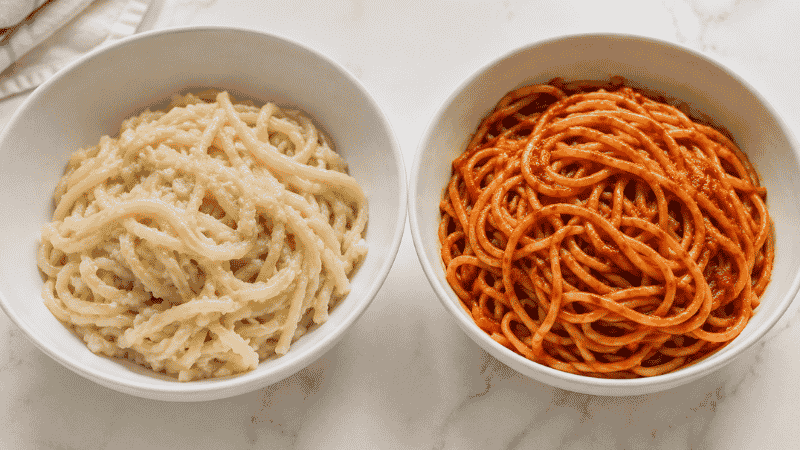
Cause: Either oil was added to the cooking water, the pasta was rinsed after draining, or the sauce was poured over the pasta rather than the pasta being tossed in the sauce.
Fix: Skip the oil, skip the rinse, and integrate the pasta and sauce in the pan together (Step 6). Add a splash of pasta water to help the sauce coat the noodles more evenly.
How to Store Pasta: Cooked and Uncooked
Storing Dry (Uncooked) Pasta
Dry pasta is one of the most shelf-stable foods in a family kitchen. Unopened dry pasta keeps for 2+ years beyond the printed “best by” date when stored in a cool, dry location. According to the USDA, most dry goods are safe to eat well beyond their labeled dates as long as they show no signs of moisture damage, discoloration, or pest activity.
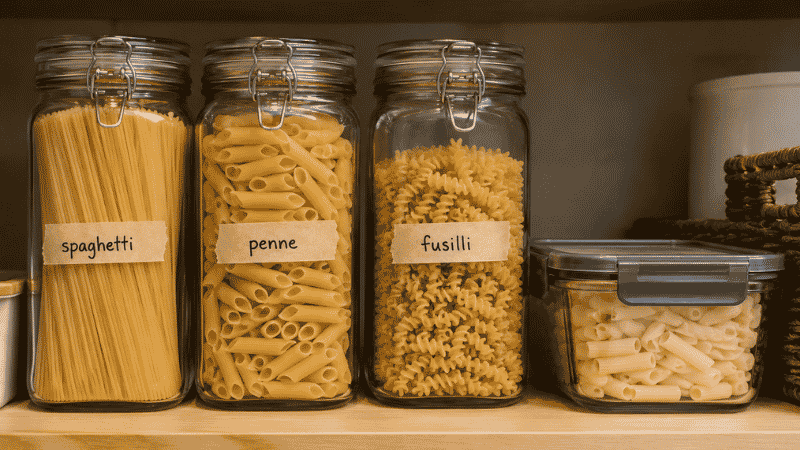
Once opened, transfer dry pasta to an airtight container — a sealed glass jar or a clip-top storage canister works perfectly. This prevents the pasta from absorbing ambient moisture and smells from the pantry, which can affect flavor over time. Stored this way, open dry pasta keeps well for a year or more.
The pantry economics: A 1-lb box of Barilla or Great Value spaghetti costs $1–$1.50. Stored properly, it lasts a year or more. Buying 4–6 boxes at a time when they’re on sale (stores frequently run 5 for $5 deals) and storing them properly is one of the most straightforward pantry savings strategies available to any family.
Storing Cooked Pasta
Cooked pasta, stored in an airtight container in the refrigerator, keeps for 3–5 days. For best results:
- Toss the cooked pasta lightly with a small amount of olive oil before refrigerating to prevent clumping.
- Store sauce and pasta separately if possible — pasta stored already sauced absorbs the sauce and can become mushy by day 2.
- Reheat in a skillet with a splash of water or pasta water and a small amount of butter or olive oil to restore texture.
Can you freeze cooked pasta? Plain cooked pasta (not sauced) freezes reasonably well for up to 2 months, though the texture softens slightly upon thawing. Sauced pasta dishes like baked ziti or lasagna freeze excellently and are actually better candidates for freezing than plain pasta.
How to Boil Pasta When You Only Have 15 Minutes
The fastest possible pasta dinner, broken into overlapping tasks:
- Minute 0: Fill pot with water, put on high heat.
- Minutes 1–8: While water heats, prepare sauce ingredients (mince garlic, open canned tomatoes, grate Parmesan, etc.).
- Minute 8: Water is boiling. Add salt generously. Add pasta.
- Minutes 8–16: Cook pasta while making a simple sauce in a separate pan.
- Minute 15: Test pasta for doneness. Transfer to sauce pan. Toss for 1–2 minutes. Reserve pasta water. Serve.
The critical efficiency move: start the water before you do anything else. The water heating time is the only time in pasta cooking that you can’t multi-task around.
FAQ
Q: How much water do you need to boil pasta?
Use 4–6 quarts (4–6 liters) of water per pound of dry pasta. This is more than most home cooks use, but the extra water prevents sticking and ensures even cooking. For half a pound (the typical family dinner serving for 3–4 people), a large pot half-full is the minimum.
Q: How much salt do you add to pasta water?
About 1 tablespoon of kosher salt per quart of water, or enough that the water tastes like mild seawater. For a standard large pot, that’s approximately 4–6 tablespoons of kosher salt. This sounds like a lot — and it is — but most of it goes down the drain when you drain the pasta. What remains properly seasons the pasta from the inside out.
Q: Should you rinse pasta after boiling?
For hot pasta dishes, no — never rinse. Rinsing removes the starchy surface coating that helps sauce cling to the pasta. For cold pasta salads, yes — rinse with cold water to stop the cooking process and cool the pasta down for chilling.
Q: Should you add oil to pasta water?
No. Adding oil to pasta water prevents sticking, but it also coats the pasta’s surface and prevents sauce from clinging to it properly. The correct way to prevent sticking is to use enough water and stir the pasta immediately after adding it.
Q: How do you know when pasta is done?
Taste it. Start tasting 1–2 minutes before the package time suggests. Al dente pasta — the correct texture — should be tender but with a slight, pleasant firmness when you bite through it. There should be no chalky or hard center. If you’re finishing the pasta in sauce, pull it slightly before fully done — it will finish cooking in the sauce.
Q: How long does dry pasta last after the expiration date?
Significantly longer than the printed date suggests. According to USDA food safety guidelines, dry pasta is safe well beyond its “best by” date when stored in a cool, dry place in an airtight container. Quality may gradually diminish, but properly stored dry pasta is typically safe and usable for 1–2 years past the printed date.
Q: What is the cheapest pasta brand worth buying?
Great Value (Walmart’s store brand) and Barilla are the best everyday value at $0.89–$1.29/lb. Both perform comparably to pasta costing 3–4x more in sauced dishes. For simple olive oil-based pasta where texture is more noticeable, De Cecco ($2.50–$3/lb) is the best mid-tier upgrade without reaching into expensive artisan territory.
The Honest Bottom Line
Knowing how to boil pasta correctly comes down to four habits: enough water, aggressively salted water, no oil, and no rinsing. Add finishing the pasta in the sauce rather than pouring sauce on top, and you’ve closed the gap between the pasta you’re making and the pasta you’re ordering at restaurants.
Pasta is also one of the best-value staples in any family pantry — under $1.50 a pound at most stores, shelf-stable for years, and versatile enough to anchor dozens of completely different dinners. Buying in bulk when it’s on sale and storing it in airtight containers is one of the simplest and most reliable grocery savings habits a family can build.
Once you have the cooking method down, the next piece is the sauce. Our guide to making pasta sauce from scratch and upgrading jarred pasta sauce covers the full picture — including which jarred sauces are worth buying, which brands are genuine value, and the simple additions that make any sauce taste like it cooked all day. And for the pantry setup that makes pasta night a zero-stress, no-grocery-run dinner, our pantry staples list covers every ingredient worth keeping on hand.
References
- USDA Food Safety and Inspection Service. Shelf-Stable Food Safety — Pasta and Dry Goods. fsis.usda.gov
- USDA Center for Nutrition Policy and Promotion. Choose MyPlate: Grains — Pasta and Whole Grain Guidelines. myplate.gov
- Barilla. How to Cook Pasta: Official Guidelines and Water Ratios. barilla.com
- Consumer Reports. Store Brand vs. Name Brand: Pasta Taste Test Results. consumerreports.org
- USDA Agricultural Research Service. FoodData Central — Nutritional Profile of Enriched Dry Pasta. fdc.nal.usda.gov