
Key Takeaways
- Most people fail at meal prepping not because they lack discipline, but because they start wrong — prepping 7 full different meals on their first attempt, then abandoning it by Thursday when they’re sick of everything they made. The fix is starting with components, not complete meals.
- A realistic first session takes 60–90 minutes, not the 20 minutes some guides promise or the 4 hours some Instagram posts imply. Building that expectation correctly is what keeps beginners from quitting after week one.
- According to the USDA, American households that plan meals and shop with a list spend approximately 23% less on groceries than those who shop without a plan. For a family of four spending $250/week, that’s a potential $57 weekly saving.
- The component method — cooking 2–3 proteins, 2 grains, and 3–4 vegetables and mixing them differently each day — is the approach that solves the #1 reason beginners quit: food boredom by Wednesday.
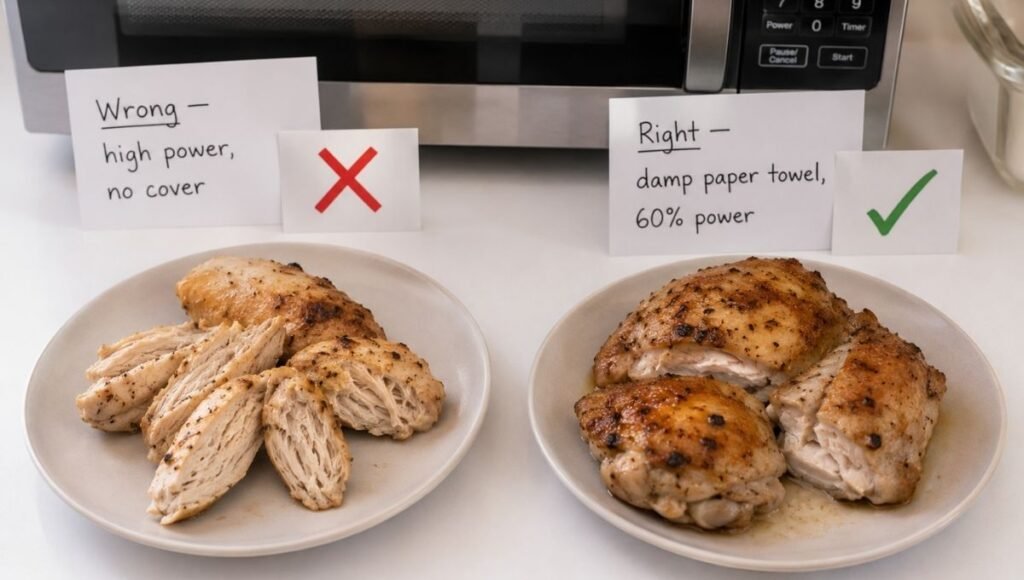
- Proper reheating technique matters more than most guides acknowledge. Microwaved chicken becoming rubbery is not inevitable — it’s the result of reheating on high power without moisture. A damp paper towel and medium power changes everything.
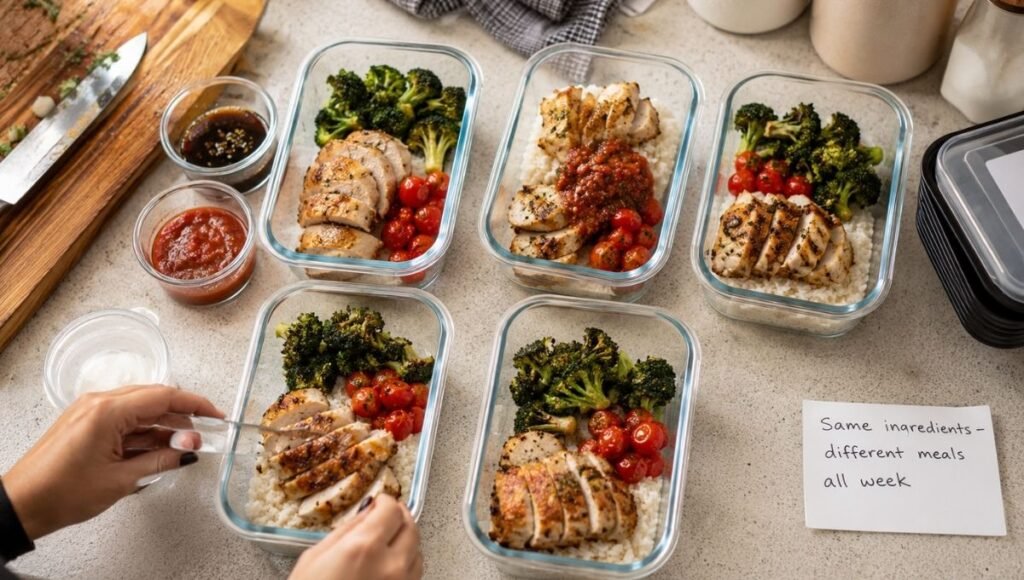
Here’s the version of how meal prepping starts that most guides don’t tell you about.
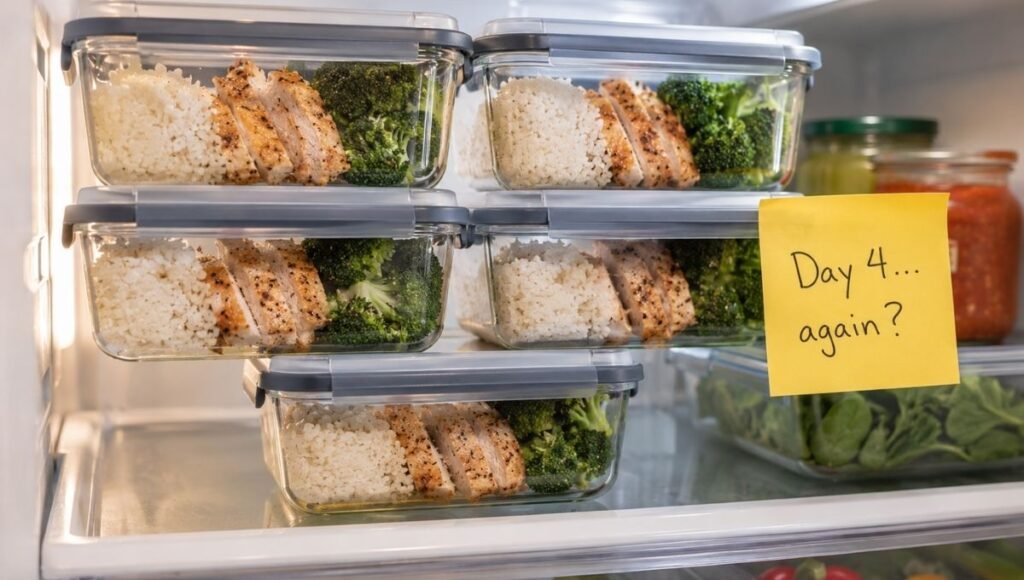
You buy a bunch of containers. You spend Sunday afternoon cooking — chicken, rice, broccoli, more chicken, more rice, more broccoli. You feel very organized and virtuous. You put six identical containers in the fridge. Monday and Tuesday are great. Wednesday you open the fridge, look at the fifth container of the same meal, and close the fridge. You order something. Thursday the containers are still there. Friday you throw most of them away.
If that sounds familiar, you’re not alone — and you didn’t fail at meal prepping. You just got common beginner advice that sets people up for that exact experience. The solution isn’t more willpower. It’s a different approach from the start.
This guide is for people who’ve tried and quit, people who’ve been curious but intimidated, and people who want to learn how to start meal prepping in a way that actually survives contact with a real week. That means honest time expectations, the component method that solves food boredom, what to cook first, and how to reheat things so they still taste good — because that last part is where most guides go completely silent.
Why Most Beginners Quit Meal Prepping (And Why It’s Not Your Fault)
Before the how-to, the honest diagnosis. Understanding why meal prepping fails for most beginners is the most useful thing you can read before starting.
Failure reason #1: Prepping too many full meals at once
The most common beginner mistake is treating meal prep like restaurant production — cooking seven distinct, complete meals for seven days of lunch and dinner. By day 3, you’re tired of everything you made. By day 5, the food is at the edge of its safety window. By day 7, you’re throwing things away and wondering why everyone else seems to love this.
The fix is the component method, covered in detail below. You’re not making meals. You’re making ingredients that combine into different meals.
Failure reason #2: The session taking three times longer than expected
Guides that say “prep all your meals in 30 minutes!” are setting you up to feel like you failed when it takes two hours. The first few prep sessions genuinely take 90 minutes to two hours for most people. This isn’t failure — it’s learning. By your third session, you’ll be faster because you understand your kitchen’s rhythms: when the oven and stovetop can work simultaneously, how to sequence the prep so nothing’s waiting.
Failure reason #3: Reheated food tastes terrible
Microwaved chicken breast becomes rubbery. Broccoli gets slimy. Rice dries out. If the food you’re prepping doesn’t taste good reheated, you’ll stop eating it regardless of how organized your containers are. This is one of the most common complaints and one of the least addressed — more on this below.
Failure reason #4: Choosing the wrong foods to prep
Not every food preheats well. Salads wilt. Delicate fish gets fishy. Creamy sauces separate. Choosing the right prep-friendly foods in your first sessions makes the difference between looking forward to your lunch and dreading it.
Editor’s take: The meal prep content world has a problem with toxic positivity. “Just do it! It’s so easy! Life-changing!” — and then you try it and it’s not easy and you feel like you’re the one who failed. You didn’t. The advice skipped steps.
How to Start Meal Prepping: The Component Method
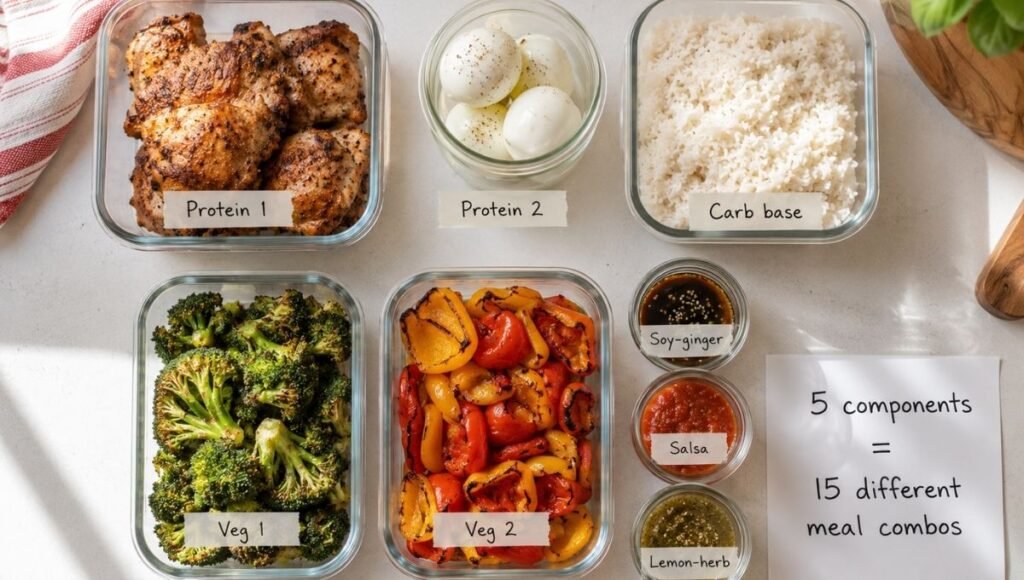
This is the approach that actually works for beginners — and honestly, for experienced meal preppers too. Instead of making five separate complete recipes, you cook a small number of flexible building blocks that combine into different meals throughout the week.
The basic component ratio for a family of 4:
- 2 proteins — one that reheats well (chicken thighs, ground beef, hard-boiled eggs), one that’s cold-friendly (canned tuna, chickpeas, deli turkey)
- 2 carb bases — one grain (rice, quinoa, or pasta), one starch (roasted potatoes or sweet potatoes)
- 3–4 vegetables — a mix of roasted (broccoli, bell peppers, zucchini) and raw or quick-prep (spinach, shredded carrots, cherry tomatoes)
- 2–3 sauces or flavor profiles — this is the key to avoiding food boredom
With this setup, the same chicken thigh and rice combination becomes:
- Monday lunch: Chicken rice bowl with roasted broccoli, soy-ginger sauce
- Wednesday dinner: Chicken and rice burrito bowl with black beans, salsa, and shredded cheese
- Thursday lunch: Chicken fried rice using day-old rice (it actually fries better)
Same base ingredients. Completely different flavor experiences. The meal boredom problem largely disappears.
The sauce rotation that makes this work:
This single detail — having 2–3 different sauces ready — makes the component method viable. Pick from:
- Soy + sesame oil + garlic (Asian-adjacent, works on almost anything)
- Salsa or hot sauce (makes everything into a taco bowl)
- Olive oil + lemon + herbs (Mediterranean direction)
- Ranch or Caesar dressing (for salad applications)
- Peanut sauce (excellent on grain bowls, noodles, vegetables)
Your First Meal Prep Session: What to Cook and When
Your goal for the first session isn’t perfection. It’s building enough experience to know what works for your household. Here’s the specific framework.
Before You Start: 10 Minutes of Planning
Write down (or note in your phone): What will your family actually eat this week? Not what sounds nutritious and ambitious — what will they reliably eat when they open a container at noon on a Wednesday.
Pull from this short list of reliable prep-friendly proteins:
- Bone-in chicken thighs (baked): Most forgiving chicken, stays moist when reheated, $1.49–$1.99/lb at Aldi
- Ground beef or turkey (browned): Use in tacos, pasta, rice bowls, quesadillas
- Hard-boiled eggs: Zero-cook-time protein that’s ready immediately, $3–$4/dozen
- Canned chickpeas or black beans: Drain, rinse, done. No cooking required.
Reliable carb bases:
- White or brown rice: 2 cups dry makes about 6 cups cooked — enough for 3–4 dinners for a family of four
- Pasta: Cook a full pound, store plain (no sauce), toss with whatever sauce later
- Roasted sweet potatoes: Cube, toss with olive oil and salt, roast at 400°F
Reliable vegetables for roasting (all go in the oven together):
- Broccoli florets
- Bell pepper strips
- Zucchini slices
- Cherry tomatoes (add these in the last 10 minutes)
The Sequence That Saves Time
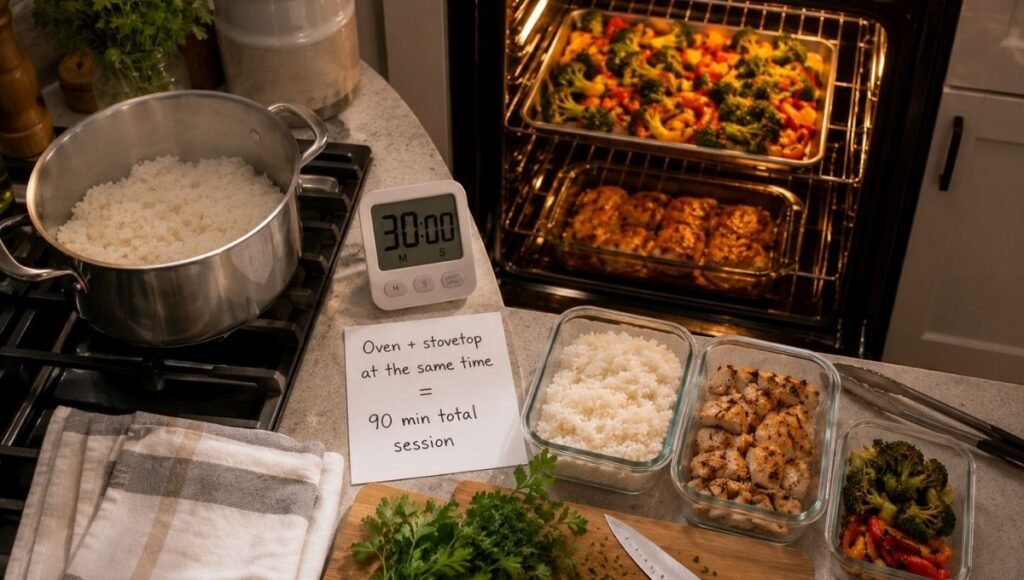
The biggest time inefficiency in meal prepping is sequential cooking — finish one thing, start the next. The approach that cuts your session time by 30–40% is parallel cooking.
Minute 0: Preheat oven to 400°F. Start boiling water for rice or pasta. Begin peeling and cutting sweet potatoes.
Minute 10: Rice or pasta in the pot. Vegetables tossed with olive oil on sheet pans, into the oven. Chicken thighs seasoned and in a baking dish, also into the oven.
Minute 30: Stir vegetables. Check chicken temperature. While things cook, chop any raw vegetables, hard-boil eggs if using (start in cold water, bring to boil, 12 minutes).
Minute 45–50: Everything from the oven is done. Rice or pasta finished. Eggs done.
Minute 50–60: Cool food on the counter for 20–30 minutes before packing. Pack into labeled containers.
Total active time: 30–35 minutes of actual work. Total session length including cooling: 80–90 minutes.
This is why experienced meal preppers can “prep in an hour” — they’re counting active time, not total time. Your session will be closer to 90 minutes total and that’s completely normal.
The Reheating Problem Nobody Talks About
This is the section most meal prep guides skip entirely, which is a real problem because bad reheating turns good food into something you don’t want to eat.
Why Microwaved Chicken Turns Rubbery
Muscle proteins in chicken tighten and squeeze out moisture when they get too hot too fast. Microwaving on high power heats the outside of the chicken much faster than the inside, overcooking the exterior while the center is still catching up. The result is dry, tough, slightly chewy chicken.
The fix: Microwave chicken on 60–70% power, covered with a damp paper towel, for shorter intervals (90 seconds, check, another 60 seconds if needed). The damp towel creates steam that keeps the exterior moist while the lower power lets heat distribute more evenly.
Even better: reheat chicken pieces in a skillet with a tablespoon of water or broth over medium-low heat, covered, for 2–3 minutes. This produces significantly better results than any microwave method.
Foods That Reheat Well vs. Foods That Don’t
Reheat beautifully:
- Chicken thighs (much better than breasts for this reason)
- Ground beef or turkey
- Soups, stews, and chili
- Roasted vegetables
- Rice (add a tablespoon of water before microwaving and cover)
- Pasta (add a small splash of water and microwave covered, or reheat in a pan with a bit of oil)
- Beans and legumes
Reheat poorly — use differently:
- Chicken breasts (tend to dry out — slice thin and add sauce, or switch to thighs)
- Fried anything (loses crunch no matter what you do)
- Fish (often becomes too fishy when reheated — use cold instead in salads or wraps)
- Delicate greens in dishes (wilted and slimy after refrigerating)
- Creamy sauces (can separate — whisk in a bit of warm water when reheating)
The cold alternative: Not everything needs to be reheated. Some components work better cold or at room temperature — grain bowls eaten cold are essentially the same as a salad. This is worth knowing when you’re planning what to prep.
How Much to Prep: The Realistic Calculation
Over-prepping is the most common and most expensive mistake beginners make. Here’s how to calculate the right amount.
For a family of 4:
Decide: are you prepping lunches, dinners, or both? Start with one. Starting with both is too ambitious for session one.
For 5 weekday lunches for 4 people: You need approximately 20 servings. One pound of cooked ground beef yields roughly 8 servings. Two pounds of chicken thighs (bone-in) yields approximately 6–8 servings of usable meat. Three cups of dry rice yields about 9 cups cooked — enough for 6–8 grain bowls.
The waste-prevention calculation: Think about what your family will actually eat in 4 days (the safe window for most cooked proteins in the fridge). If you prep 5 days of food for 4 people, that’s 20 servings of protein. If anyone misses a meal, eats out, or changes plans, you have unused food at the edge of its window. It’s better to prep 4 days conservatively and freeze what you don’t use by day 2.
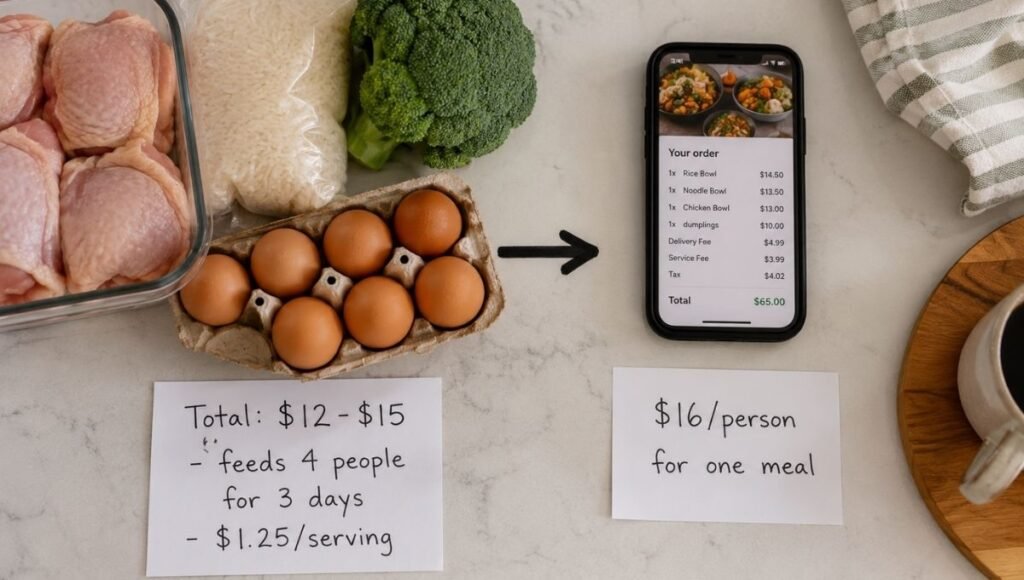
Cost comparison (2026 Walmart/Aldi prices):
| Item | Cost | Serves |
|---|---|---|
| 3 lbs bone-in chicken thighs | $5.97–$7.00 | 4 people × 3 meals |
| 2 cups dry rice | $0.40 | 4 people × 3 meals |
| 2 heads broccoli | $2.00–$3.00 | 4 people × 2–3 meals |
| 1 dozen eggs | $3.00–$4.00 | Multiple snacks/breakfasts |
| Total | ~$12–$15 | ~12 meals for 4 people |
Cost per meal: approximately $1.00–$1.25 per person. Compare to even a fast-food lunch at $8–$12 per person, or restaurant delivery at $15–$20+.
Harvard T.H. Chan School of Public Health notes in their Nutrition Source meal prep guidance that planning ahead consistently reduces food costs and food waste simultaneously — the two leaks that hurt family grocery budgets most.
What to Do When You Have Only 30 Minutes
Not every week allows for a proper prep session. Here’s the minimum viable prep that still makes a meaningful difference:
The 30-minute version:
- Cook a large pot of rice or pasta (starts in 5 minutes, cooks unattended)
- While it cooks, hard-boil 6–8 eggs
- While those cook, wash and cut raw vegetables for the week (bell peppers, carrots, celery)
- While everything finishes, portion last week’s leftover proteins or open a few cans of beans
Result: 15–20 minutes of actual work, unattended cooking time, and you have a carb base, two protein options (eggs + beans), and ready-to-use vegetables for the week. It’s not the full component method, but it eliminates the “I have nothing to eat” problem that drives takeout orders.
Containers: What You Actually Need vs. What You’re Sold
Meal prep containers have become their own industry, and you don’t need to spend $80 on a matching set to start.
What actually works:
Glass containers with snap lids (like Pyrex) are the best option for people who reheat food in the microwave. They don’t absorb odors, go directly from fridge to microwave to dishwasher, and last indefinitely. A set of 10 pieces at Walmart runs $25–$35. This is the only container investment worth making.
For freezer storage, heavy-duty zip-top freezer bags are more space-efficient than rigid containers and work just as well. A box of 30 bags costs $4–$5.
What you don’t need:
- Compartmentalized bento-style containers (nice but unnecessary)
- Matching color-coded container sets
- Special meal prep bags
- Anything that requires hand-washing if you have a dishwasher
What matters most: Airtight lids. Everything else is aesthetic.
Food Safety in Meal Prep: The Rules That Actually Matter
According to USDA food safety guidelines, most cooked proteins and prepared dishes should be consumed within 3–4 days when refrigerated at 40°F or below. This is the window that determines how much to prep at once.
Refrigerator window (3–4 days): Cooked chicken, ground beef, fish, rice dishes, soups, roasted vegetables
Longer window (5–7 days): Hard-boiled eggs in shell, raw cut vegetables, some dairy-based sauces
Freeze anything you won’t use in 3 days. This is the rule that eliminates both waste and food safety concerns. Prep on Sunday, plan to eat through Wednesday, freeze the Thursday/Friday portions on Sunday before they sit in the fridge unused.
Label everything with a date. This takes 5 seconds and eliminates all the “how long has this been in here?” uncertainty that causes perfectly good food to get thrown away.
FAQ
Q: Is meal prepping worth it for a family?
Yes — with the caveat that you need to do it correctly or the time investment isn’t worth the return. For a family of four that currently buys lunch or orders dinner 3+ times per week, meal prepping those meals saves $50–$100 per week compared to restaurant or delivery alternatives. The time investment (90 minutes per week) has a very clear return. For families that already cook most meals, the savings are smaller but the time savings during the week are significant.
Q: How do you start meal prepping when you hate cooking?
Start smaller than you think necessary. One protein, one grain, one vegetable. Don’t try to make interesting food — try to make acceptable food consistently. The goal in the first month isn’t delicious variety; it’s building the habit of having food ready. Once the habit is built, experimenting with better flavors is much easier.
Q: What’s the best meal prep food for beginners?
Chicken thighs (roasted), rice, and one or two roasted vegetables. This combination is forgiving, reheats well, costs very little, and can be seasoned differently each day to prevent boredom. It’s unexciting but reliable, which is exactly what you need when you’re building a new habit.
Q: How do you meal prep without getting bored of the same food?
Use the component method rather than prepping complete meals. Having the same chicken but with different sauces — Asian one day, Mexican another, Mediterranean the next — creates a genuinely different eating experience despite using the same base protein. Prepare 2–3 sauces on prep day and they make the week feel varied.
Q: How long does meal prepped food last in the fridge?
Most cooked proteins and dishes: 3–4 days per USDA guidelines. Hard-boiled eggs (in shell): 7 days. Raw cut vegetables: 3–5 days depending on the vegetable. Anything you won’t use within 3 days should be frozen immediately after cooking, not after it’s been sitting in the fridge.
Q: Do I need special containers to meal prep?
No. Glass containers with tight-fitting lids from Walmart ($25–$35 for a 10-piece set) work better than most specialized meal prep containers and last longer. Heavy-duty zip-top freezer bags handle the freezer storage. Anything beyond that is optional.
The Honest Bottom Line
Learning how to start meal prepping is less about cooking skill and more about building a sustainable system. The people who stick with it aren’t the ones who cook the most impressive containers — they’re the ones who found an approach that fits into their actual week without requiring heroic effort.
Start with components, not complete meals. Keep the first session to 90 minutes. Prep for 3–4 days, not 7. Learn which foods reheat well and build your routine around those. Accept that the first session will feel awkward and the third will feel natural.
The money savings are real — approximately $50–$100 per week for most families who implement even a partial system. The time savings are real too, though they come in week 2 and 3, not week 1.
For meal-prep-ready lunch ideas with exact costs per serving, our meal prep lunch ideas guide has 20 specific options across four prep sessions. And for the complete grocery system that makes prepping cheaper — including where to buy proteins at the best prices — our how to save money on groceries guide covers the full picture.
References
- Harvard T.H. Chan School of Public Health, The Nutrition Source. Meal Prep Guide — Planning, Shopping, and Storage. nutritionsource.hsph.harvard.edu
- USDA Food Safety and Inspection Service. Leftovers and Food Safety — Storage Times. fsis.usda.gov
- USDA Economic Research Service. Shopping with a List Reduces Grocery Spending. ers.usda.gov
- FoodSafety.gov. FoodKeeper App — Safe Storage Times for Meal-Prepped Foods. foodsafety.gov
- Bureau of Labor Statistics. Consumer Expenditure Survey — Food at Home vs. Food Away from Home. bls.gov