
Key Takeaways
- A functional family kitchen doesn’t require 50 pieces of equipment — research from the Bureau of Labor Statistics shows the average American household spends over $800 annually on kitchen and cooking supplies, much of it on items that see little to no use.
- The kitchen essentials list most guides give you is designed for people who cook recreationally. This one is for people who cook daily — which requires a different set of priorities entirely.
- Food storage containers are the single most overlooked item in every kitchen checklist, yet they directly impact how much money you waste on groceries every week.
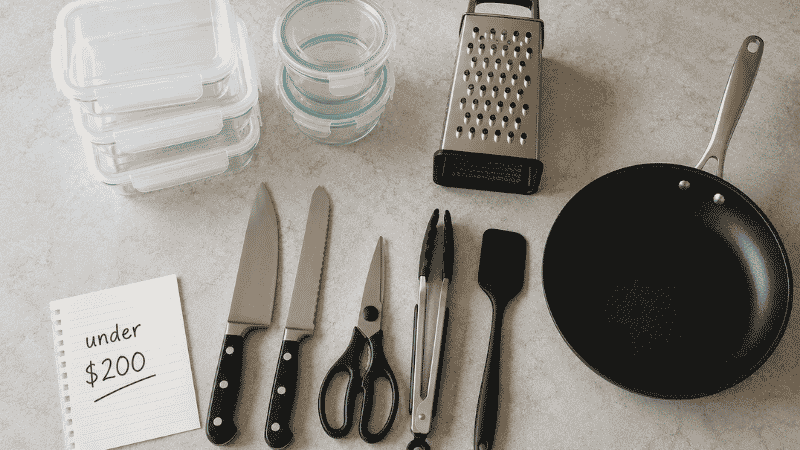
- You can build a fully functional kitchen — cookware, utensils, and storage — for under $200 if you shop strategically. We’ll show you where to spend and where to save.
- The “buy cheap vs. invest here” breakdown in this guide will save you from the most common kitchen purchasing mistakes that cost families hundreds of dollars over time.
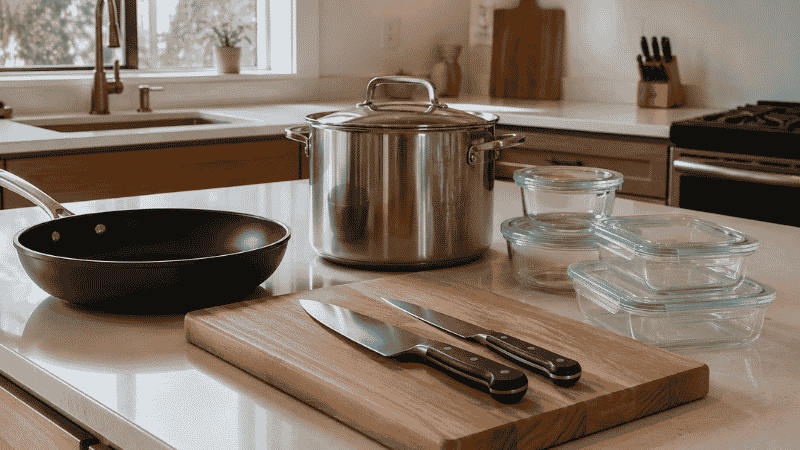
There’s a specific kind of frustration that hits when you realize your kitchen is full of things and still somehow missing everything you actually need. You’ve got a drawer stuffed with takeout chopsticks and six spatulas, a cabinet of mismatched lids, and yet somehow no decent pot that’s the right size for pasta night. You end up reheating leftovers in a pan that’s too small, fishing for the right lid every single time, and making three trips to Target in one week for things you should have had already.
This isn’t a character flaw. It’s what happens when nobody ever sat you down and said: here is a kitchen essentials list for someone who actually cooks dinner every night, not someone shooting a cooking video. The things that belong in a working family kitchen are different from what lifestyle blogs suggest, and the things that are genuinely worth spending money on are almost never the things that get the most attention.
This guide is the list I wish someone had handed me before I spent money on a mandoline I’ve used twice and a spice rack I knocked off the counter and never replaced. By the end, you’ll know exactly what to own, what to skip, and — crucially — where your grocery budget and your kitchen setup are costing you more than they should.
The Kitchen Essentials List Most Guides Get Wrong
Here’s the honest truth about most kitchen essentials guides: they’re written for aspirational cooks, not practical ones. They assume you have counter space, storage space, and a cooking style that involves elaborate Sunday projects. For the rest of us — people who need dinner on the table by 6:30 PM and have a cabinet situation that’s already out of control — those lists are actively unhelpful.
The real kitchen essentials list starts not with equipment, but with a question: what do you actually cook, and what breaks down most often? For most families, the answers are the same: you cook one-pot meals, quick proteins, pasta, rice, and vegetables. You run out of storage containers. You can never find a lid. You’re working with a knife that’s technically functional but secretly terrible.
That’s what this list addresses. Not the full aspirational kitchen. The kitchen that works for real life — and doesn’t cost a fortune to build.
Cookware: Where to Invest and Where to Save
The Only Pots and Pans You Actually Need
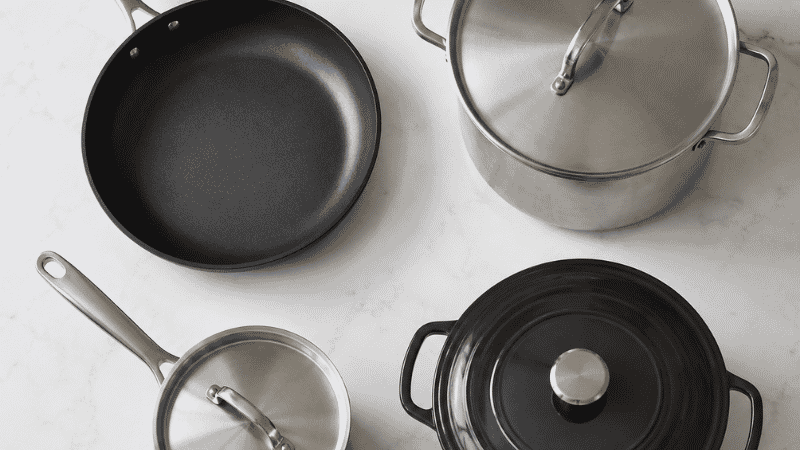
The cookware industry would love for you to believe you need a 12-piece set. You don’t. Most families run their entire dinner rotation on four pieces:
A large non-stick skillet (12-inch) is the single most-used piece of cookware in a working kitchen. Eggs, sautéed vegetables, quesadillas, ground meat — it handles all of it. This is where spending slightly more makes a genuine difference. A decent non-stick skillet ($35–$60, Tramontina or T-fal are excellent value at Walmart) will last 3–5 years with basic care. The $12 store-brand version will start flaking within 6 months. Invest here.
A large stock pot (6–8 quart) handles pasta, soups, and batch cooking. This is where you can save money without noticing the difference. An 8-quart pot at Walmart or Costco for $25–$35 does exactly what a $150 All-Clad does for boiling water and simmering soup. Buy cheap here.
A medium saucepan (3-quart) is for rice, sauces, heating broth, and warming things up. Again, for these uses, a mid-range option is fine. Budget $20–$30. Buy mid-range.
A Dutch oven or heavy-bottomed casserole dish is the one item worth a genuine investment if your family does any braising, slow-cooking, or one-pot meals. A Lodge enameled cast iron Dutch oven runs about $60–$80 at Target or Amazon — a fraction of the Le Creuset price, with nearly identical cooking performance. Invest here, but smart.
What You Don’t Need Right Away
Skip the wok, the steamer, the griddle pan, and the roasting rack until you actually catch yourself wishing you had one. These are easy to add later and take up significant space in the meantime.
The Knives Situation: Two Is Enough
The knife industry is one of the great upsell machines of the kitchen world. A 15-piece knife block looks impressive and uses 13 pieces you’ll never touch.
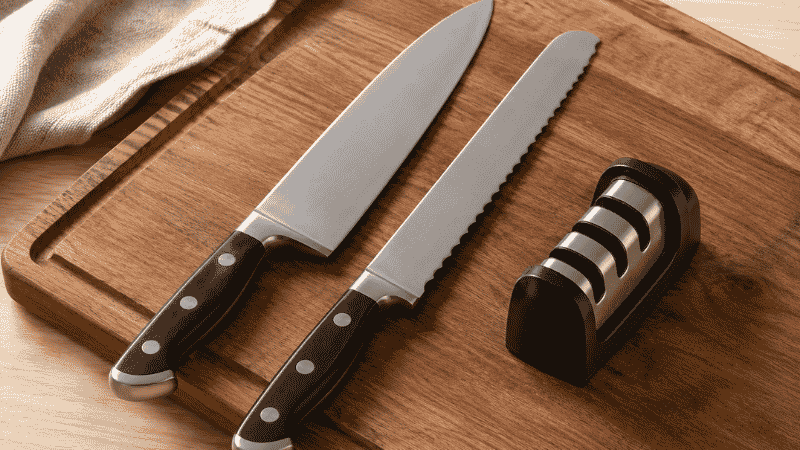
What you actually need is two knives:
An 8-inch chef’s knife is the workhorse. It handles 90% of prep work — chopping onions, slicing chicken, breaking down vegetables. Spend $30–$50 here. Victorinox’s Fibrox Pro is the choice of culinary school students and professional kitchens operating on a budget. It’s widely available on Amazon for around $40 and will outlast knives that cost five times as much if you keep it sharp. Worth investing in.
A serrated bread knife handles bread, tomatoes, and anything with a tough exterior. Buy the cheapest one that feels solid — this is genuinely not a place where price makes a difference. A $15 Mercer bread knife at Amazon does the job perfectly.
A knife sharpener (a simple pull-through carbide sharpener for $10–$15) extends the useful life of both knives significantly. Use it every few weeks and your knife performance will stay consistent for years.
Utensils: The Actual Essentials, No Fluff
Most kitchen utensil lists are padded. Here’s what you really use:
- Silicone spatula (2 of them — you’ll always wish you had more) for eggs, sauces, scraping bowls
- Wooden spoon or silicone spoon for stirring anything in a non-stick pan
- Tongs (silicone-tipped) for turning meat and tossing pasta
- Ladle for soups and sauces
- Colander for draining pasta and washing produce
- Box grater — block cheese costs 30–40% less per ounce than pre-shredded, and this is how you use it
- Vegetable peeler — a Y-shaped peeler is faster and safer than the old swivel style
- Kitchen scissors — for herbs, packaging, cutting pizza, and a dozen other daily uses
- Instant-read thermometer — eliminates guessing on chicken and pork doneness, which also eliminates food waste from overcooking
What you can skip for now: garlic press (a knife works), cherry pitter, citrus squeezer, avocado slicer. Tools designed for one job rarely earn their drawer space.
The Most Overlooked Section on Every Kitchen Essentials List: Food Storage
This is where most kitchen guides completely drop the ball, and it’s arguably the section that has the biggest impact on your actual grocery budget.
According to the USDA, the average American family throws away between $1,200 and $1,500 worth of food annually — much of it from poor storage. The right food storage containers don’t just organize your kitchen. They directly prevent money from going in the trash.
Glass vs. Plastic: The Honest Breakdown
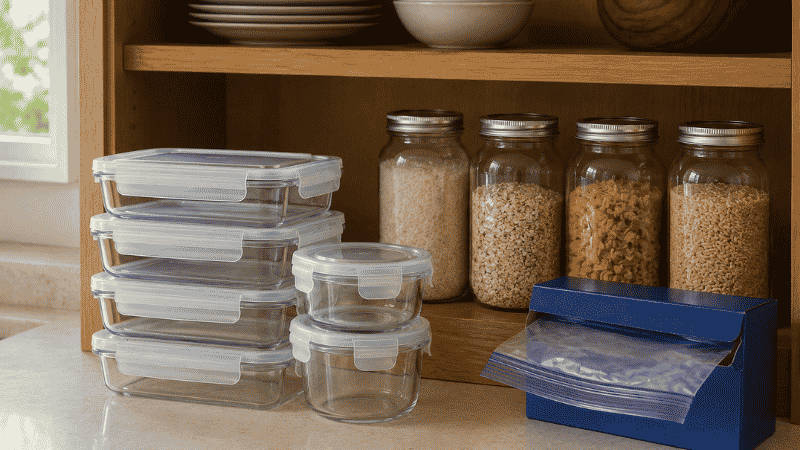
Glass containers (Pyrex or similar) are the better long-term investment. They don’t stain, don’t absorb odors, can go from fridge to microwave to oven, and last indefinitely. A set of Pyrex glass containers at Walmart or Costco runs $25–$35 for a set of 10 pieces. Buy these for anything you’re storing more than a day or reheating regularly.
Plastic containers are fine for dry goods, packed lunches, and things you’re eating the same day. BPA-free options are widely available; Rubbermaid Brilliance is the best mid-range option at about $20 for a starter set.
The Storage Containers You Actually Need
- 4–6 rectangular glass containers (various sizes) for leftovers and meal prep
- 2–3 round containers for soups, stews, and single servings
- A set of glass jars (Mason jars work perfectly) for storing dry pantry goods — rice, oats, pasta, lentils — in airtight conditions. This extends shelf life significantly compared to keeping things in their original paper packaging.
- Zip-top freezer bags (the heavy-duty variety) for freezing meat portioned from bulk purchases — this is one of the single most effective ways to cut your grocery bill
One specific upgrade most families don’t make until they discover it: tomato paste in a tube rather than a can. A tube stays in the fridge for months after opening. A half-used can of tomato paste is a $1 ingredient that goes bad in 4 days. Over the course of a year, switching to tubes saves a surprising amount of money and fridge drama.
If Your Kitchen Is Small: The Minimal Version That Still Works
If you’re in an apartment, a rental, or a kitchen with genuinely limited storage, the entire kitchen essentials list above compresses down to this:
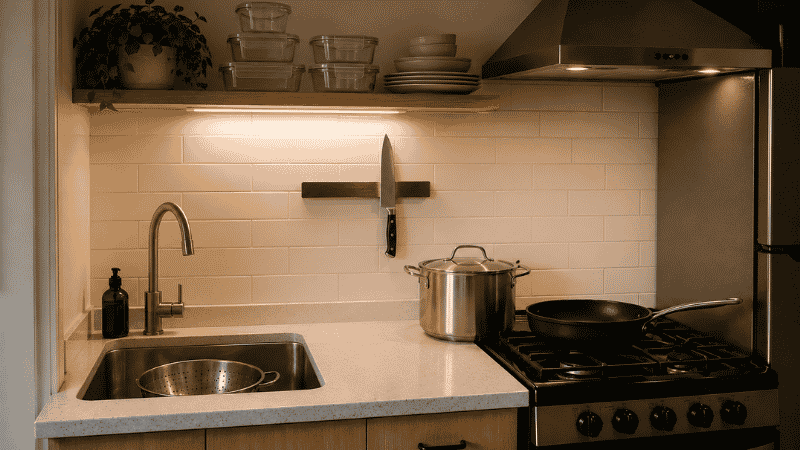
Non-negotiable (6 pieces):
- One 12-inch non-stick skillet
- One 6-quart stock pot
- One chef’s knife + sharpener
- One colander
- One set of glass storage containers
- One silicone spatula + tongs
Everything else is optional until you specifically miss it. The instinct to build a complete kitchen all at once is how people end up with drawers full of gadgets and no storage space for the things they actually use.
Start with the six. Cook for a month. Then add the one thing you found yourself wishing for most often. This approach also saves significant money — building gradually means buying intentionally rather than buying in anxious bulk.
The 3 Most Expensive Kitchen Mistakes Families Make
Mistake 1: Buying a knife set instead of two good knives. Knife sets look like value. They’re almost always the opposite. You’re paying for a block and 11 knives you’ll use a combined three times in your life. Buy one good chef’s knife and one bread knife. Done.
Mistake 2: Ignoring storage containers until things go bad. This is the quiet budget leak most families don’t notice. Poorly stored leftovers that get thrown away, produce that wilts because it wasn’t wrapped right, half-used cans that get forgotten in the fridge. Good food storage is grocery budget management. The $25–$35 you spend on a decent container set pays back within a few weeks.
Mistake 3: Buying cheap non-stick pans repeatedly. A $12 non-stick pan bought and replaced every 8 months costs more over five years than a $45 pan that lasts the same five years. The math on this is consistent — quality non-stick is one of the few kitchen investments that genuinely saves money over time.
How to Build Your Kitchen Essentials List for Under $200
Here’s a realistic budget breakdown for building a functional family kitchen from scratch:
| Item | Budget Option | Where to Buy | Approximate Cost |
|---|---|---|---|
| 12-inch non-stick skillet | Tramontina or T-fal | Walmart / Amazon | $35–$45 |
| 6–8 qt stock pot | Any store brand | Walmart / Amazon | $25–$35 |
| 3-qt saucepan | Any store brand | Walmart / Target | $20–$25 |
| Chef’s knife (8-inch) | Victorinox Fibrox Pro | Amazon | $35–$45 |
| Bread knife | Mercer | Amazon | $15 |
| Knife sharpener | KitchenIQ pull-through | Walmart | $10 |
| Colander | Any | Walmart | $10–$12 |
| Box grater | OXO or store brand | Target / Amazon | $12–$15 |
| Tongs + spatula + spoon | Any silicone set | Walmart | $12–$18 |
| Glass storage containers (set) | Pyrex or Amazon Basics | Walmart / Amazon | $25–$35 |
| Kitchen scissors | Cuisinart | Walmart | $10 |
| Instant-read thermometer | ThermoPop or Lavatools | Amazon | $25–$35 |
Total range: $234–$295 for a complete, functional setup. Cut the thermometer and one or two secondary items and you’re solidly under $200. This is the real number — not the $800+ that lifestyle kitchen guides imply.
FAQ
Q: What is the most important item on a kitchen essentials list?
A good 12-inch non-stick skillet is the single most versatile piece of equipment in any kitchen. If you can only buy one thing to upgrade your kitchen, this is it. It handles breakfast, quick weeknight dinners, sautéed vegetables, and reheating — the four most common cooking scenarios for the average family.
Q: What kitchen items are actually worth spending money on?
Three things genuinely justify higher spending: your primary chef’s knife (sharpness and balance affect every meal you cook), your main non-stick skillet (cheaper versions degrade quickly and can flake), and your food storage containers (glass lasts indefinitely and pays for itself through reduced food waste). Everything else is a candidate for the budget option.
Q: What can I skip on a kitchen essentials list if I’m on a tight budget?
Skip the Dutch oven until you need it (a heavy-bottomed stock pot can substitute for most uses), skip specialty bakeware until you’re actually baking regularly, skip any single-use gadget, and skip a stand mixer unless you bake bread or cakes weekly. The kitchen you use is more valuable than the kitchen you aspire to.
Q: How do I organize a small kitchen with limited storage?
Stack strategically: pots inside each other with lids stored separately in a lid organizer ($8–$12 at Walmart), store mixing bowls nested inside the largest bowl, and keep frequently used utensils in a crock on the counter rather than in a drawer. Use the inside of cabinet doors for small item storage — adhesive hooks and over-door organizers are inexpensive and don’t require drilling.
Q: Should I buy a kitchen appliance set or individual items?
Almost always buy individually. Appliance “sets” bundle items you want with items you don’t, and the individual quality is generally lower than buying the same pieces separately. The exception is if you find a set where every item is something you’d genuinely use — but check prices per item first to confirm it’s actually a better deal.
Q: What food storage containers are best for meal prep?
Glass rectangular containers (Pyrex 2-cup, 4-cup, and 7-cup sizes) are the most versatile for meal prep. They go from oven to fridge to microwave without transfer, they don’t stain from tomato sauce, and they don’t absorb smells. For portability (packed lunches, etc.), Rubbermaid Brilliance plastic containers seal very securely and don’t leak.
Q: How long does kitchen equipment actually last if you take care of it?
Quality kitchen equipment lasts far longer than most people expect. A good chef’s knife, properly sharpened and hand-washed, should last 15–20 years. Cast iron pans last multiple decades. Glass storage containers are essentially indefinite. Non-stick pans are the shortest-lived item in a kitchen — typically 3–7 years with quality pieces, significantly less with budget options. The FDA and NSF International both recommend replacing non-stick cookware when the coating begins to show signs of deterioration.
The Honest Bottom Line
Building a kitchen that works for a real family isn’t about having the most equipment. It’s about having the right equipment — items that handle daily cooking without friction, store food properly so grocery budgets aren’t silently wasted, and last long enough to justify their cost.
Start with the essentials that your cooking actually demands. Add storage containers before you add specialty gadgets. Buy one good knife instead of a full block. And don’t underestimate how much the right food storage system contributes to your actual weekly grocery budget — it’s not exciting, but it might be the highest-ROI kitchen purchase most families can make.
If you’re ready to put this kitchen to work, our guide to building a weekly grocery list that feeds a family of four for under $150 is the natural next step — and our pantry staples list tells you exactly what ingredients to stock once the kitchen is set up.
References
- U.S. Bureau of Labor Statistics. Consumer Expenditure Surveys: Household Spending on Kitchen and Cooking Supplies. bls.gov
- USDA Economic Research Service. The Estimated Amount, Value, and Calories of Postharvest Food Losses at the Retail and Consumer Levels in the United States. ers.usda.gov
- U.S. Food & Drug Administration. Safe Use of Cookware. fda.gov
- NSF International. How to Choose Safe Cookware. nsf.org
- USDA Food Safety and Inspection Service. Refrigerator & Freezer Storage Chart. fsis.usda.gov