
Key Takeaways
- A well-stocked pantry cuts the average family’s grocery bill by $60–$100 per week, according to meal-planning research published by the USDA Economic Research Service.
- You don’t need 100 items — you need the right 25, prioritized by how much cooking value they deliver per dollar spent.
- Most families waste money on pantry items they buy but never finish. This guide tells you what to skip, not just what to buy.
- The difference between a “good” pantry and a great one is storage knowledge — knowing how long each item truly lasts prevents hundreds of dollars in food waste every year.
- You can build a functional starter pantry for under $60 at Walmart or Aldi using the priority list in this guide.
You’re standing at the checkout lane, watching the total climb past $180 for a cart that somehow looks half-empty. Again. You swear you bought groceries last week. How is the pantry already bare?
If this sounds painfully familiar, you’re not alone. According to the USDA, the average American family of four throws away roughly $1,500 worth of food every year — much of it pantry items bought with good intentions but never actually used. The problem isn’t that you’re shopping wrong. The problem is that nobody ever sat you down and told you which staples are genuinely worth keeping, how much to buy, and where to get them without overpaying.
This isn’t another generic checklist. This is the guide I wish I’d had when I was standing in Aisle 6 at 6:45 PM, exhausted and staring at a wall of canned goods with zero idea what to grab. By the end of this article, you’ll know exactly what to buy, in what order, and why — so that your pantry starts working for you instead of silently draining your budget.
Why Most Pantry Guides Set You Up to Fail
Here’s something most pantry checklists won’t tell you: the problem isn’t a lack of food in your pantry. It’s the wrong food.
Walk into most American kitchens and you’ll find the same sad inventory: three half-used bottles of specialty vinegar, a jar of tahini from that one recipe two years ago, a bag of farro that’s been moved to the back shelf six times, and zero cans of beans. Meanwhile, there’s nothing to actually cook for dinner.
The standard “pantry essentials” advice tells you to stock 18 different spices, four kinds of vinegar, and specialty grains that take 45 minutes to cook. That advice is designed for people who cook recreationally. This guide is designed for people who need to get dinner on the table on a Tuesday night after a long day, without spending $200 at the store.
The real pantry staples follow one rule: every item must be able to play at least three different roles in your weekly cooking. If it can only do one thing, it doesn’t earn shelf space.
If You Only Have $50: Start Here First
Before we get to the full list, let’s talk about where to start if your pantry is truly empty and money is tight. These 10 items form the absolute foundation — everything else builds on them.
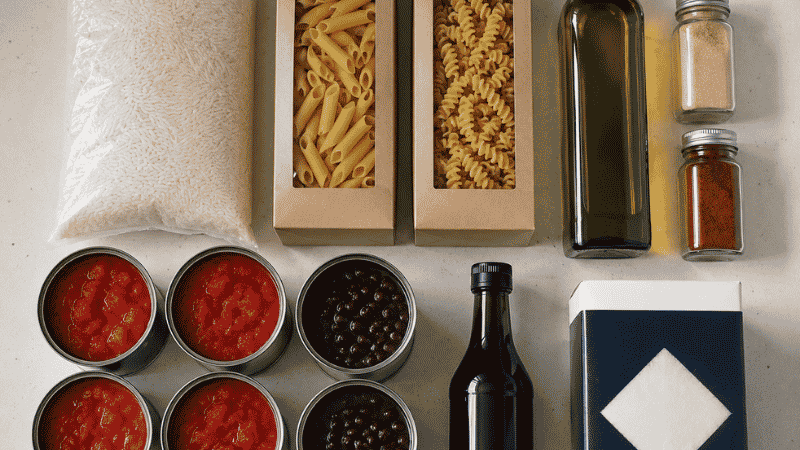
The $50 Priority Starter Pack:
- Jasmine rice (5 lb bag) — Walmart Great Value brand, around $5. The backbone of a dozen meals. Cooks in 15 minutes, stores for 2+ years in an airtight container.
- Dried pasta (2–3 boxes, various shapes) — Barilla or store brand, roughly $1–$1.50 each. The most versatile carb in your arsenal.
- Canned diced tomatoes (4 cans) — Hunt’s or store brand, about $1 per can. Base for soups, pasta sauces, chilis, and braises.
- Canned black beans and chickpeas (3–4 cans total) — Bush’s or Goya, around $1–$1.20 per can. Your weeknight protein when meat isn’t in the budget.
- Chicken broth (2 cartons or 1 large) — Swanson or Great Value, about $3–$4. Turns basic rice or pasta into something that actually tastes like a meal.
- Olive oil (1 bottle, 16–17 oz) — Kirkland from Costco if you have a membership, Great Value EVOO at Walmart otherwise. Budget $6–$8.
- Garlic powder, cumin, and smoked paprika — These three spices alone can season practically anything. Buy the McCormick basics at around $2–$3 each, or grab the store-brand versions for half the price.
- Soy sauce (1 bottle) — Kikkoman or store brand, $2–$3. An underrated flavor bomb that works far beyond Asian cooking.
- Kosher salt and black pepper — Morton’s kosher salt and a simple pepper grinder. Non-negotiable.
Total: approximately $45–$55 depending on where you shop. With these 10 items, you can make pasta dishes, rice bowls, soups, bean-based tacos, and grain salads — real food, not survival food.
The Full Pantry Staples List: Ranked by Cooking Value
Once the foundation is in place, you build outward. Here’s the complete list, broken into tiers by how much daily cooking value each item provides.
Dry Goods and Grains: Your Shelf-Stable Backbone
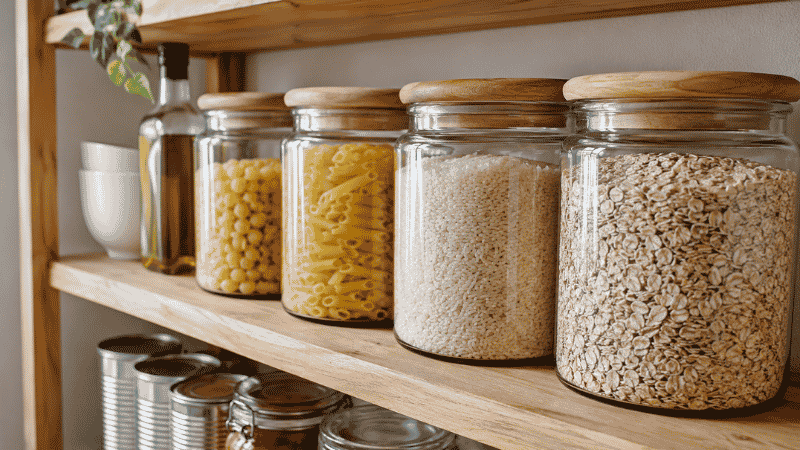
Jasmine rice is the single most useful grain for everyday cooking. Its slightly buttery fragrance makes plain food taste intentional. Buy in bulk — a 10-lb bag from Walmart runs about $10 and stores 2 years sealed, 6 months once opened.
Pasta in two cuts — one long (spaghetti), one short (penne or rotini). You don’t need five shapes. Two covers every sauce situation you’ll encounter. Dry pasta technically lasts indefinitely past its “best by” date as long as it’s stored in a cool, dry spot — the USDA confirms that most dry goods are safe long after printed dates, though quality may diminish.
Rolled oats (old-fashioned, not instant) are one of the best value-per-dollar items in any grocery store. Beyond breakfast, they thicken soups, replace breadcrumbs in meatballs, and can be blended into a simple “flour” for quick pancakes. A large container at Aldi runs about $3 and lasts months.
All-purpose flour earns its spot if you do any baking, use it to dredge chicken, or thicken sauces. Transfer it to an airtight container when you get home — flour stored in the paper bag often picks up pantry smells and can attract pests within a few weeks.
Canned Goods: The Real MVPs of Weeknight Cooking
Here’s the part most pantry guides under-explain: not all canned goods are created equal, and buying the wrong ones means you’ll never reach for them.
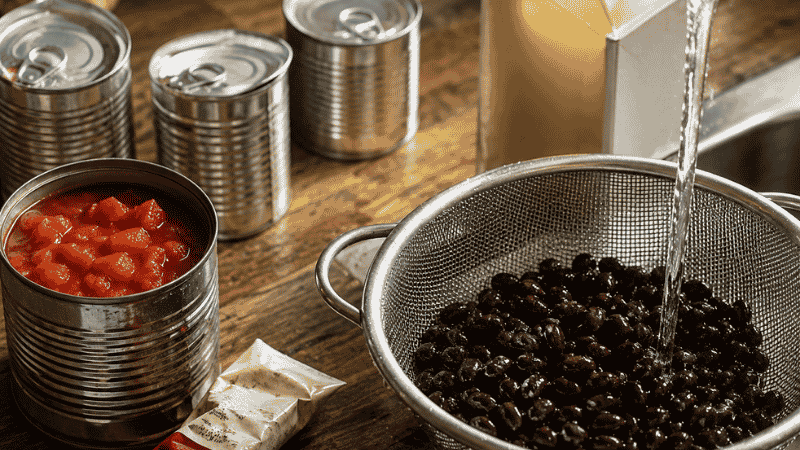
Canned tomatoes (whole peeled and diced) — Buy both types. Whole peeled tomatoes (San Marzano if they’re on sale, otherwise Hunt’s) are for cooking down into sauces. Diced are for quick soups and chilis. Stock 4–6 cans minimum.
Canned beans — Black beans, chickpeas, and kidney beans cover 90% of recipes. Always rinse them before use to cut the sodium by nearly half and remove that metallic “canned” flavor. Low-sodium versions (Bush’s makes them) are worth the extra 20 cents if you’re cooking for anyone managing blood pressure. Once opened, transfer to a glass container and refrigerate — they’ll stay good for 3–4 days. Never store leftovers in the open tin; the metal leaches into the food within hours.
Canned tuna in oil — Tuna packed in oil stays far more moist and flavorful than water-packed. Toss it with pasta, lemon, and capers for a $3 dinner that tastes like a restaurant. Look for Genova or Tonnino when they go on sale.
Tomato paste in a tube, not a can — This is the single easiest pantry upgrade most families aren’t making. A can of tomato paste requires you to use 2 tablespoons, then figure out what to do with the rest of the can before it molds in the fridge. A tube lasts in the refrigerator for months. Squeeze, cap, done.
Chicken broth or stock — Low-sodium is the right call here, because it gives you control over the salt level. Swanson’s low-sodium version is reliable; Pacific Foods is higher quality if you catch it on sale.
Oils, Vinegars, and Flavor Makers
This is where people overinvest early and end up with a shelf of bottles they never open. Start with just three:
Extra virgin olive oil is the workhorse. For everyday budget-focused cooking, Kirkland Signature EVOO from Costco is the best value — it consistently passes third-party purity tests and comes in a 2-liter bottle for about $20, working out to about $0.30 per ounce. If you don’t have a Costco membership, Walmart’s Great Value EVOO is a solid, budget-conscious option.
One important storage note: once you open that Costco jug, decant about a week’s worth into a smaller dark glass bottle and store the rest in a cool cabinet. Light and heat are olive oil’s enemies — a bottle sitting next to a warm stove can go rancid in weeks.
Apple cider vinegar is the single most versatile acid in your kitchen. A splash livens up a flat soup, tenderizes meat, replaces buttermilk in baking, and cuts through richness in sauces. Bragg’s is the reliable choice, but store-brand ACV works fine for cooking.
Soy sauce functions as a salt replacement with added depth — a trick professional cooks use to season soups and stews without making them taste “Asian.” Kikkoman is widely available; keep a bottle in the pantry (it lasts indefinitely unopened) and in the fridge once opened.
Spices: The 6 That Actually Get Used
Here’s where the standard lists go off the rails. Stocking 18 spices sounds thorough; in practice, it means buying 18 jars, using 4 of them, and throwing away the other 14 when they become flavorless dust two years later.
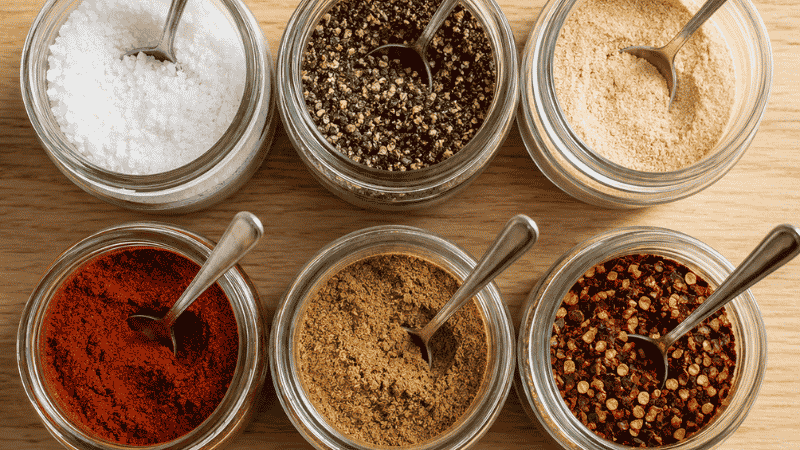
Start with six, and only six:
- Kosher salt (Morton’s or Diamond Crystal) — coarser than table salt, which makes it harder to accidentally over-season
- Whole black pepper in a grinder — pre-ground pepper loses flavor within weeks
- Garlic powder — yes, even if you use fresh garlic, the powder has different cooking properties
- Smoked paprika — the single best flavor upgrade for meat, eggs, roasted vegetables, and soups
- Ground cumin — the backbone of Mexican, Indian, and Middle Eastern cooking; adds earthiness that no other spice replicates
- Crushed red pepper flakes — background heat for pasta, soups, and anything you want to taste more alive
Once these six feel like second nature, add oregano, cinnamon, and onion powder. But resist the temptation to buy a 24-spice rack all at once. Fresh spices have a shelf life of about 1–2 years for ground spices and 2–4 years for whole spices, according to the FDA’s food storage guidance — buying 24 at once almost guarantees you’ll use most of them past their peak.
Refrigerator Staples: What to Always Have on Hand
Eggs are the ultimate emergency protein. A dozen costs under $4 at most stores and covers breakfasts, quick dinners (fried rice, frittata), and baking. They typically stay fresh 3–5 weeks past the sell-by date when stored properly in their original carton, toward the back of the fridge where temperature is most consistent.
Block cheese over shredded is a money-saving move that takes 90 seconds of effort. Pre-shredded cheese is coated in potato starch or cellulose to prevent clumping — which is also why it melts poorly and costs 30–40% more per ounce. Buy a block of sharp cheddar and grate what you need.
Plain Greek yogurt (large tub) functions as sour cream, a creamy salad dressing base, a marinade tenderizer, and a dip. Skip the flavored individual cups — they’re sweetened, overpriced per ounce, and gone in one serving.
Carrots, celery, and onions are the produce aisle’s most overlooked bargains. These three stay crisp in the crisper drawer for 2–3 weeks and form the flavor base for virtually every soup, stew, and braise. Store garlic in a cool, dry place away from onions — onions release ethylene gas that accelerates garlic sprouting.
Butter freezes beautifully and goes on sale regularly. When it drops below $3.50, buy two or three boxes and freeze what you won’t use within the month.
Freezer Staples: Your Insurance Policy
Frozen peas, corn, and chopped spinach are nutritionally superior to most “fresh” produce at the grocery store. Frozen vegetables are processed within hours of harvest, locking in nutrients, while “fresh” grocery produce has often been in transit and cold storage for days or weeks. A 16-oz bag of frozen peas at Aldi costs about $1.29.
Bone-in, skin-on chicken thighs are the best budget protein in the meat case, period. They’re harder to overcook than breasts, more flavorful, and routinely run $1.49–$1.99 per pound. Buy in bulk when they go on sale, divide into 4-piece portions in zip bags, and freeze. They thaw in about 6 hours in the refrigerator.
Ground turkey or beef (extra lean) can be browned from frozen in a skillet — add 1–2 tablespoons of water, cover, and let steam for 5 minutes before breaking it up. Brown a pound on Sunday and you’ve got meat for tacos, pasta sauce, and rice bowls for the rest of the week.
How Long Does This Stuff Actually Last? A Practical Storage Guide
| Item | Pantry (unopened) | After opening |
|---|---|---|
| Dry pasta | 2+ years | Indefinitely if kept dry |
| White rice | 2–4 years | 6 months in airtight container |
| Rolled oats | 1–2 years | 3–6 months |
| Canned beans | 3–5 years | 3–4 days in fridge (glass container) |
| Canned tomatoes | 18 months–2 years | 5–7 days in fridge |
| Olive oil | 18 months | 3–6 months (away from heat and light) |
| Soy sauce | 2–3 years | 1 year refrigerated |
| Ground spices | — | 1–2 years peak flavor |
| Whole spices | — | 3–4 years |
The most important rule: “Best by” dates on canned and dry goods indicate quality, not safety. The USDA is explicit about this — properly stored canned goods are generally safe well beyond their printed dates, as long as the can shows no signs of rust, swelling, or damage. When in doubt, the smell and appearance of the food after opening are your best indicators.
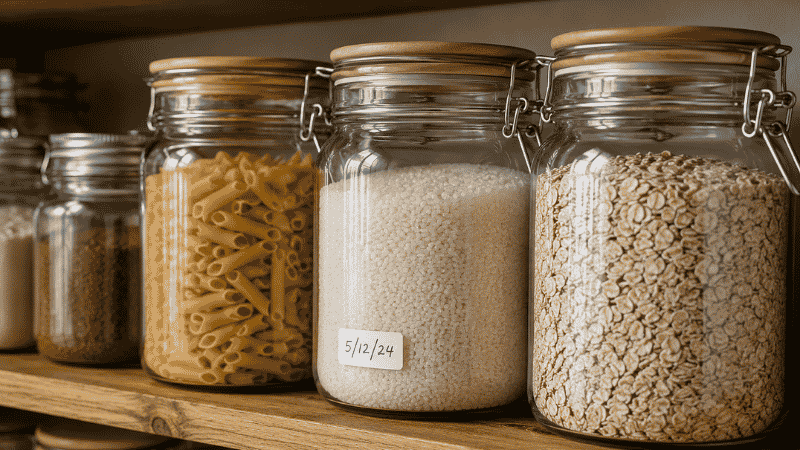
3 Pantry Mistakes That Are Quietly Costing You Money
Mistake 1: Buying spices in the big jar. Unless you cook for 20 people weekly, that 16-oz container of cinnamon will be tasteless sawdust before you’re halfway through it. Spices lose potency quickly once opened. Buy smaller jars, use them within a year, and replace rather than hoard.
Mistake 2: Keeping things “just in case.” The back of most pantry shelves is a graveyard of “just in case” purchases — specialty flours for a recipe you tried once, three varieties of hot sauce, a can of anchovy paste from a recipe you never made again. Do a quarterly pantry audit: if you haven’t touched it in 3 months and can’t name three ways to use it this week, donate or discard it.
Mistake 3: Buying pre-seasoned or pre-marinated versions of pantry items. Seasoned rice packets, flavored oatmeal packets, and marinated canned beans can cost 2–3x the unseasoned equivalent. Season things yourself — it takes 45 extra seconds and saves real money over the course of a month.
FAQ
Q: What are the most important pantry staples to buy first if I’m starting from scratch?
Start with rice, pasta, canned beans, canned tomatoes, olive oil, and a few core spices (garlic powder, smoked paprika, cumin, salt, pepper). These 10 items cost about $45–$55 at Walmart and form the base for dozens of different meals. Everything else on this list builds on this foundation.
Q: How long do pantry staples actually last?
Most dry goods (pasta, rice, oats) last 2 years or more when stored in a cool, dry place in airtight containers. Canned goods are good for 2–5 years, though quality may decline after the “best by” date. The USDA states that shelf-stable canned foods are safe “indefinitely” as long as the can is in good condition. Your nose is your best guide — if it smells off, don’t eat it.
Q: Is store brand really as good as name brand for pantry staples?
For most pantry staples, yes. Consumer Reports testing has repeatedly found that store-brand canned beans, rice, pasta, and spices perform comparably to name brands in blind taste tests. The exceptions: olive oil (quality varies significantly by brand) and canned tomatoes (San Marzano varieties are noticeably different from generic). For everything else, Great Value at Walmart or the Aldi house brand is money well spent.
Q: I always end up with half-open cans of tomato paste going bad. What should I do?
Switch to tomato paste in a tube (Amore or Cento brands are widely available). Squeeze what you need, recap, refrigerate. It keeps for months. Alternatively, freeze leftover canned tomato paste in tablespoon-sized portions on a baking sheet, then transfer to a zip bag — pull out exactly what you need next time.
Q: How do I stop wasting the fresh produce I buy?
Buy strategically: carrots, celery, cabbage, and onions last 2–3 weeks in the fridge, while leafy greens and berries need to be used within 3–5 days. Plan your meals so delicate produce gets used early in the week and longer-lasting vegetables cover the back half. When produce starts to look tired, use it in a cooked dish (soup, stew, stir-fry) — cooking forgives a lot.
Q: Can I freeze canned beans after I open them?
Yes, and it’s one of the best kitchen habits you can build. Drain and rinse the beans, spread them on a baking sheet, freeze until solid (about an hour), then transfer to a freezer bag. They keep for up to 3 months and thaw in minutes. This eliminates the “half a can in the fridge” problem entirely.
Q: What’s the actual difference between “best by,” “use by,” and “sell by” dates?
None of these dates are federally regulated for most foods, and none of them mean the food has “gone bad.” “Sell by” is for store inventory management. “Best by” indicates peak quality, not safety. “Use by” appears on highly perishable items like deli meat and is the closest to a true safety date. For pantry staples — canned goods, dry pasta, rice, spices — use your senses: look, smell, and if it seems fine, it almost certainly is.
The Honest Bottom Line
Building a pantry that saves money and actually gets used isn’t about having everything — it’s about having the right things in the right quantities, bought from the right places, and stored so they last.
Start with the $50 foundation. Add to it gradually as you cook through what you have. Resist the urge to replicate a magazine kitchen in one shopping trip. The pantry that saves your Tuesday evenings is the one stocked with 25 things you actually cook with, not 100 things you bought optimistically.
If you found this useful, our guide to building a weekly grocery list that feeds a family of four for under $150 walks through exactly how to turn this pantry into a full week of real meals — with a complete shopping list you can take straight to the store.
References
- USDA Economic Research Service. Quantifying the Impact of Food Waste on Food Security. ers.usda.gov
- USDA Food Safety and Inspection Service. Shelf-Stable Food Safety. fsis.usda.gov
- U.S. Food & Drug Administration. Spice Storage and Shelf Life. fda.gov
- USDA. FoodKeeper App — Food Storage Guidelines. foodsafety.gov
- Consumer Reports. Store Brands vs. Name Brands: Which Is Better? consumerreports.org