
Key Takeaways
- Dry pasta doesn’t truly expire in the way perishable food does. According to the USDA, commercially dried pasta is shelf-stable and safe indefinitely when stored properly. The “best by” date is a quality marker, not a safety deadline — most dry pasta is still good 1–2 years past that date.
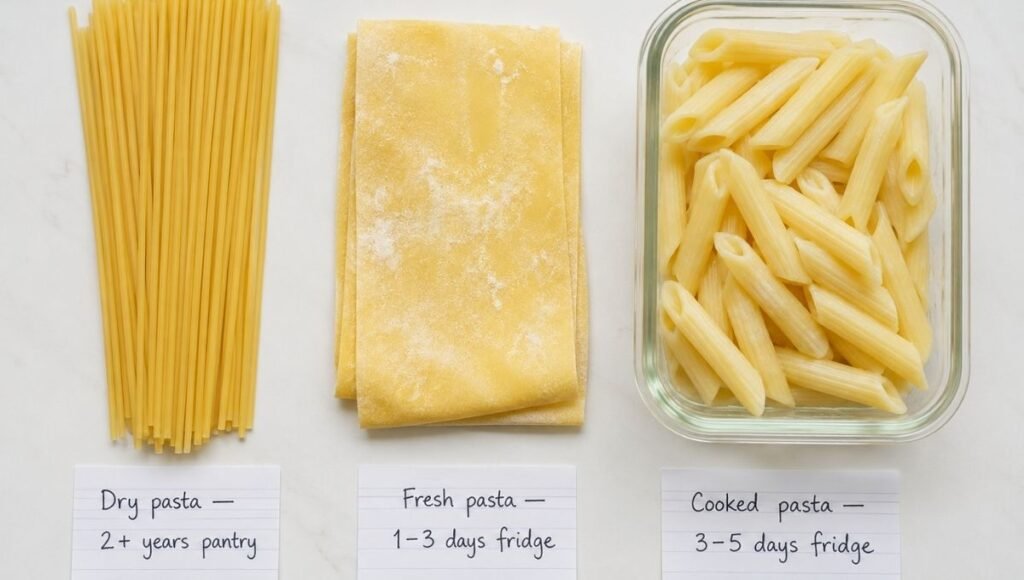
- The three types of pasta have dramatically different shelf lives. Dry pasta: 2+ years. Fresh pasta from a store: 1–3 days in the fridge. Cooked pasta: 3–5 days in the fridge. Treating them all the same is the most common pasta storage mistake.
- The real enemies of dry pasta are moisture, heat, light, and pantry pests — not time. A box of spaghetti stored in a cool, dark, dry cabinet is in better shape after 3 years than one stored in a warm, humid cabinet for 6 months.
- Opened dry pasta belongs in an airtight container, not folded back into the box. This single habit extends its quality life significantly and prevents the pantry moth problem that causes most dry pasta to be thrown away unnecessarily.
- At $0.89–$1.50/lb at Aldi or Walmart, dry pasta is one of the cheapest pantry staples available — buying in bulk when on sale and storing correctly is one of the most effective grocery savings strategies for any family.
You’re cleaning out the kitchen cabinets and you find it: a box of rigatoni that’s been living quietly in the back corner. The date says best by November 2022. You look at it. You look at the date. You look at it again.
It seems fine. No smell, no visible problems. But November 2022 was a while ago, and you’re not sure if pasta is one of those things that’s genuinely dangerous past the date or just “reduced quality” or whatever the food safety people say when they mean it’s actually fine.
This moment — the cabinet-cleaning pasta discovery — is one of the most universally relatable kitchen experiences. And the advice you’ll get varies wildly. Some sources say throw anything past the date immediately. Others say dry pasta lasts essentially forever. The truth, like most food storage truths, sits somewhere in between and depends heavily on which type of pasta you’re talking about.
This guide covers everything: the actual rules for dry pasta, fresh pasta, and cooked pasta, why those rules are so different, what storage conditions actually matter, and the questions most food blogs carefully avoid answering — including the one about finding small bugs in your pasta.
How Long Does Dry Pasta Last? The Real Answer
Dry pasta is one of the most shelf-stable foods that exists in a typical grocery store. To understand why, you need to understand what makes food go bad: moisture, which allows bacteria and mold to grow, and oxidation, which degrades fats and proteins.
Commercial dried pasta has almost no moisture — typically under 12% water content by weight, dried down from the fresh pasta state. Without moisture, bacteria can’t grow. Without significant fat content (standard semolina pasta has very little fat), rancidity isn’t a meaningful concern. This is why the USDA classifies commercially dried pasta as “indefinitely shelf-stable” when stored properly.
What the best-by date actually means:
Pasta manufacturers set best-by dates based on when they believe the product will be at peak quality — ideal texture, color, flavor, and cooking performance. After this date, the pasta may become slightly more brittle, dull in color, or less vibrant in flavor. None of these changes make it unsafe. They’re quality indicators, not safety indicators.
The practical windows:
Unopened dry pasta:
- Best quality: up to 2 years from purchase date (roughly 1–2 years past best-by date)
- Still safe and usable: 2–5 years past purchase if stored in good conditions
- Technically safe but declining quality: beyond 5 years, texture and flavor degrade noticeably
Opened dry pasta (in its original box):
- Best quality: 1 year if the box is kept dry and pest-free
- The box provides minimal protection — it’s not airtight
Opened dry pasta (transferred to airtight container):
- Best quality: 1–2 years
- Significantly better protection against moisture and pests than the original box
Editor’s take: The five-year pasta people on Reddit are telling the truth. They’re not getting sick. They may notice the pasta is slightly less springy after boiling, or the flavor is flatter than fresh — but it’s safe. The date on the box is a quality benchmark, not a safety deadline.
Why Storage Conditions Matter More Than the Date
This is the part most pasta guides get wrong. They focus on the date when the real question is: what has this pasta been through?
The Four Enemies of Dry Pasta
Moisture: The single most important factor. Pasta exposed to humidity — a kitchen with a steam-producing dishwasher, a cabinet near the stove, a pantry in a humid climate — will degrade much faster than the date suggests. In extreme cases, high humidity can enable mold growth on pasta that’s technically “in date.” A cabinet in a dry, climate-controlled environment will keep pasta in good condition well past its printed date.
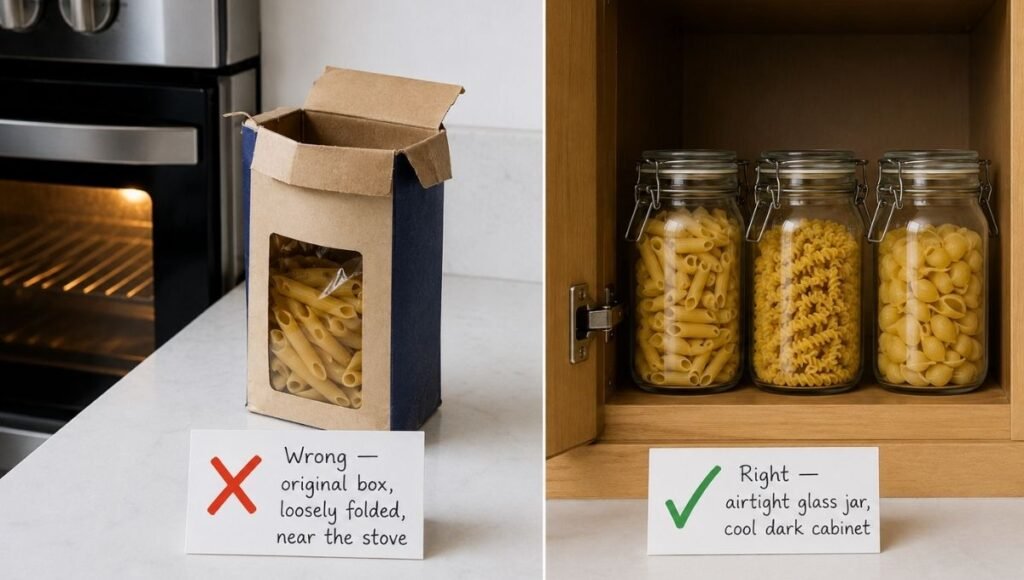
Heat: Sustained high temperatures (above 75–80°F) accelerate the breakdown of nutrients and can affect flavor. A cabinet above the stove or oven is the worst place to store pasta — and one of the most common places people put it.
Light: UV light degrades nutrients and can affect the color and flavor of pasta over time. Transparent packaging or clear containers in a brightly lit pantry is slightly worse than an opaque container in a dark cabinet, though this matters less than moisture and heat.
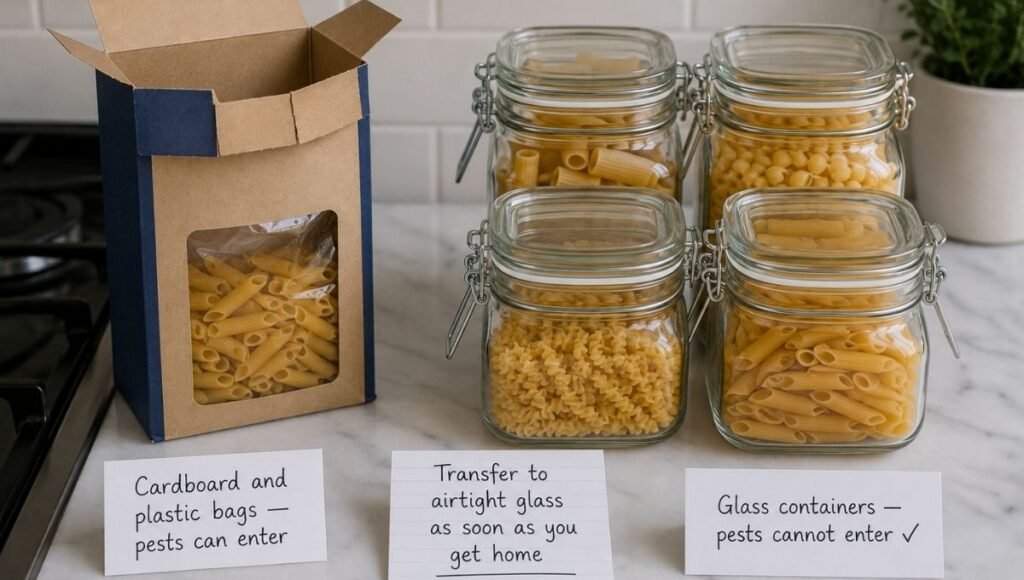
Pantry pests: This is the reason most dry pasta actually gets thrown away. Pantry moths (Indianmeal moths) and their larvae are the main offenders — they can penetrate cardboard boxes and even some plastic bags, laying eggs in dry goods including pasta. The larvae are small, whitish, and sometimes visible in the pasta; adult moths are distinctly different from house flies and have a characteristic resting wing position. More on this below.
The Best Storage Setup for Dry Pasta
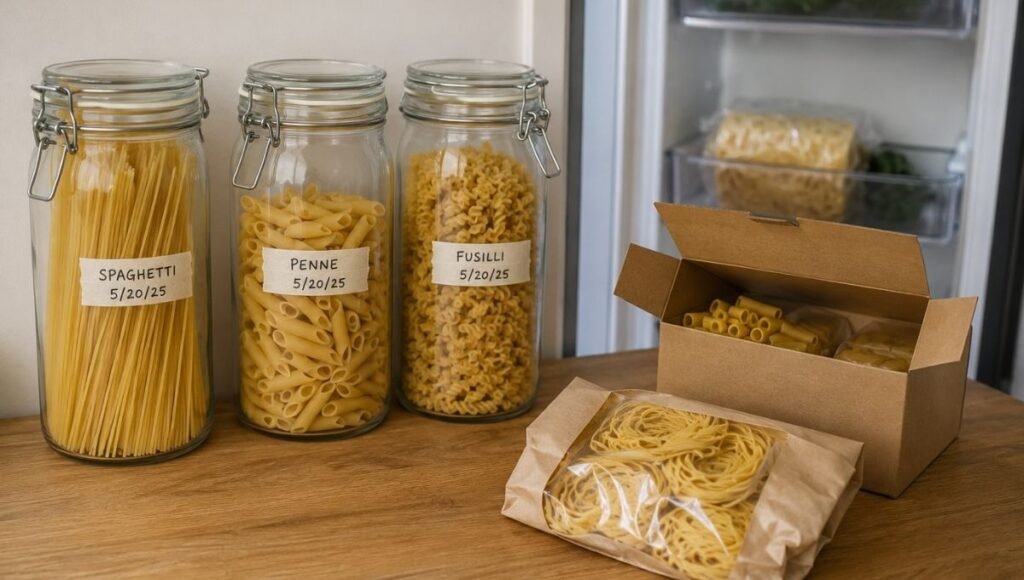
Ideal container: A glass or hard plastic airtight container with a snap or screw-top lid. Glass mason jars work well for smaller quantities and let you see what you have. Dedicated pasta storage containers (typically tall cylinders) are also good options.
Ideal location: A cool (under 70°F), dark, dry cabinet away from the stove, oven, dishwasher, and any heat-producing appliances. The back of a lower cabinet or a proper pantry with stable temperature and low humidity is ideal.
What to avoid: The box itself as long-term storage (not airtight), clear containers in direct light, any cabinet that gets warm when the oven is used.
How Long Does Fresh Pasta Last?
Fresh pasta is a fundamentally different product from dry pasta, and the rules are completely different. Fresh pasta contains eggs and moisture — both of which make it perishable.
Store-Bought Fresh Pasta (Refrigerated Section)
The pasta you find in the refrigerated section at the grocery store — typically sold in vacuum-sealed or modified atmosphere packages.
Unopened: Follow the sell-by date closely. These dates are set with the actual moisture and egg content in mind.
Opened: 1–3 days in the fridge, in an airtight container or sealed bag. The sell-by date is no longer relevant once you open the package.
Frozen: Up to 2 months. Fresh pasta freezes well — lay in a single layer on a parchment-lined baking sheet to freeze individually, then transfer to a freezer bag once solid. Cook directly from frozen, adding 1–2 minutes to the cooking time.
Homemade Fresh Pasta
Same day: Best option. Homemade pasta is at its absolute best cooked within a few hours of making.
In the fridge: 1–2 days. Loosely nest into portions and dust lightly with flour to prevent sticking.
Dried at home: Tricky. Home-dried pasta doesn’t achieve the same moisture reduction as commercial drying and often reabsorbs humidity from the air. Shelf life is much shorter than commercial dry pasta — maybe a few weeks in ideal conditions. Most home cooks are better off freezing excess fresh pasta rather than trying to dry it.
Frozen: Up to 2 months, same method as store-bought fresh.
How Long Does Cooked Pasta Last?
Cooked pasta has a very different profile from dry pasta — once you add water and heat, you’ve created a moist environment where bacteria can grow.
In the fridge: 3–5 days in an airtight container. Plain cooked pasta (no sauce) lasts closer to 5 days; pasta in sauce lasts closer to 3–4 days, and the protein in the sauce (meat sauce, seafood sauce) sets the actual timer.
In the freezer: Up to 2 months for plain cooked pasta. Sauced pasta dishes freeze well for 3–4 months.
Why Cooked Pasta Doesn’t Last As Long as You’d Expect
Cooking pasta in water dramatically increases its moisture content. Cooked pasta is roughly 60–65% water by weight; dry pasta is under 12%. That moisture change transforms pasta from a shelf-stable food into a perishable one. The same food safety clock that applies to other cooked foods applies here: bacteria multiply at refrigerator temperatures (just slowly), and by day 4–5 in the fridge, cooked pasta has accumulated a meaningful bacterial load.
Reheating Cooked Pasta
Add a small amount of water (1–2 tablespoons per cup of pasta) when reheating in the microwave or skillet — the pasta has absorbed some of its original cooking moisture and will be dry and sticky without it. The USDA recommends reheating leftovers to an internal temperature of 165°F.
The Pantry Bug Question: What To Do When You Find Pests in Pasta
This is the question Reddit users ask more than almost any other pasta storage question, and it’s the one most food blogs completely avoid. So let’s actually address it.
What are you likely seeing?
The most common pantry pests in dry goods like pasta are:
- Pantry moth larvae (Indianmeal moths): Small, cream-colored or slightly pinkish worms, often with a darker head. May also see webbing or silk threads in the pasta, and moths (small, brownish with copper-colored wing tips) flying in your pantry.
- Weevils: Tiny, dark brown beetles with a characteristic snout. More common in whole grain products but can affect pasta, particularly whole wheat varieties.
Where did they come from?
Almost always from the grocery store — eggs or larvae were already present in the packaging when you bought it. This is extremely common and says nothing about your kitchen’s cleanliness. Commercial pasta isn’t hermetically sterilized, and pantry moth eggs are microscopic.
Is it safe to eat pasta with bugs in it?
Technically, according to the FDA’s Defect Levels Handbook, very small numbers of insect fragments are acceptable in commercial pasta — the standards exist because complete elimination isn’t possible. Boiling water kills insects and larvae. However, most people reasonably prefer not to eat infested pasta regardless of technical safety.
The practical call:
- A few bugs or larvae visible, no webbing: Discard that box. Carefully check all other dry goods in the same cabinet — grains, flour, cereals, other pasta.
- Significant infestation, webbing throughout: Discard the pasta, check everything else in the cabinet, and do a thorough cabinet cleaning. Pantry moths can spread to multiple packages quickly.
- Weevils (tiny beetles): Same approach — discard and inspect everything else.
Prevention:
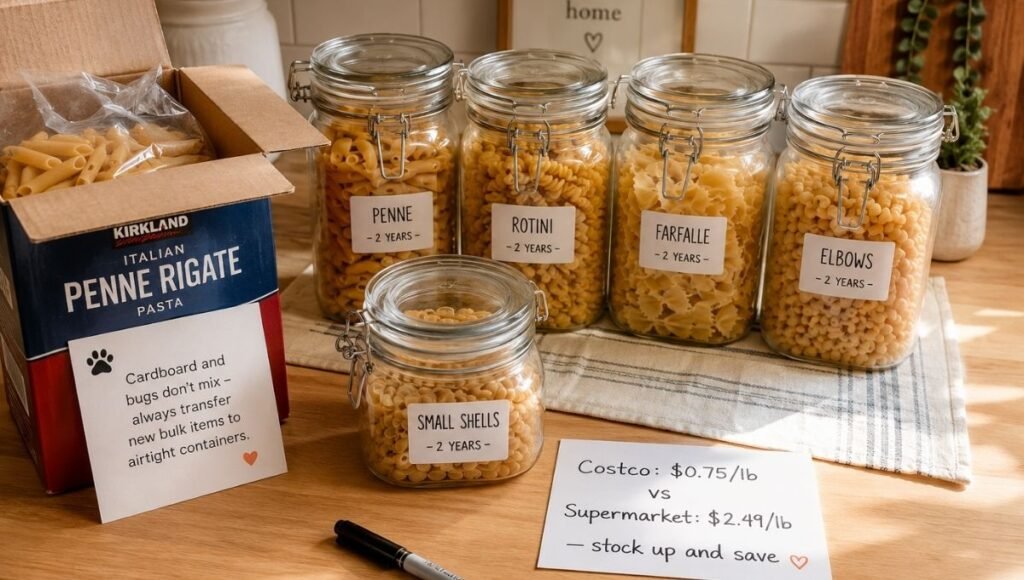
Transfer dry pasta to airtight glass or hard plastic containers as soon as you get home from the grocery store. Pantry moths can chew through plastic bags and cardboard boxes; they cannot penetrate glass or hard plastic with a properly sealed lid. This single habit prevents the vast majority of pantry pest problems with dry goods.
Different Types of Pasta: Do Storage Times Change?
Whole Wheat Pasta
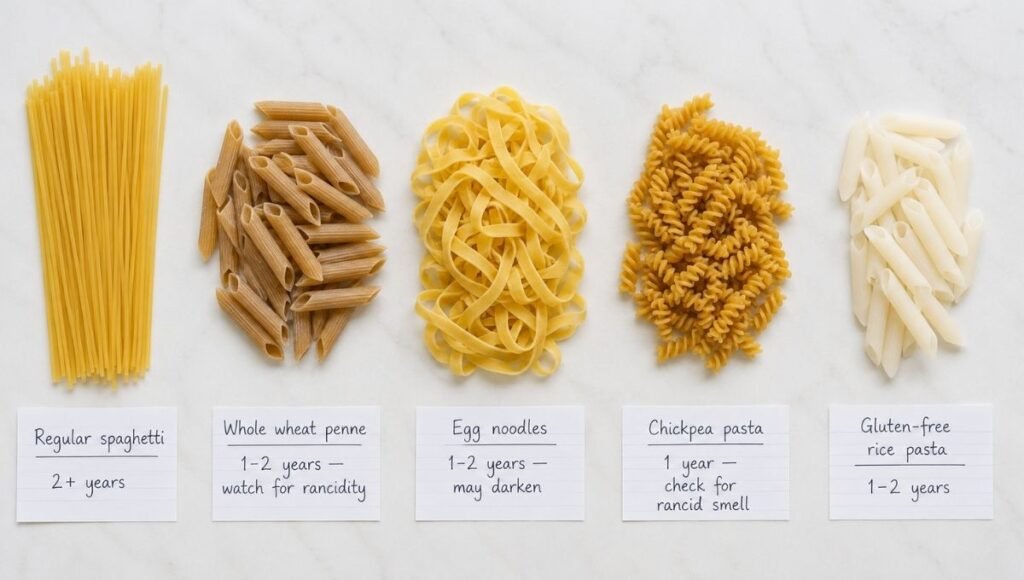
Whole wheat pasta contains more natural oils (from the wheat germ and bran) than refined semolina pasta. These oils can become rancid over time in ways that standard pasta doesn’t experience. Whole wheat pasta has a shorter effective shelf life — roughly 1–2 years from purchase rather than 2+ years.
How to tell if whole wheat pasta has gone rancid: A musty, slightly bitter, or “old grain” smell that’s different from the neutral smell of fresh whole wheat pasta. The texture may also become more crumbly than expected.
Egg Pasta (Egg Noodles)
Dry egg noodles contain dried egg, which affects their storage profile slightly. They’re stable at room temperature but may show color changes (darkening) and develop off-flavors faster than plain semolina pasta — typically best quality within 1–2 years.
Gluten-Free Pasta
Gluten-free pasta is made from a wide range of base ingredients — rice, corn, chickpeas, lentils, quinoa, a blend of these — and the storage behavior varies depending on the base.
Rice and corn pasta: Similar to standard semolina pasta, 1–2 years.
Legume-based pasta (chickpea, lentil, black bean): The higher natural oil and protein content from legumes makes these more prone to rancidity. Best within 1 year. After 1–2 years, smell it before using — rancid legume pasta has a noticeably unpleasant smell.
Flax-based pasta: High in natural oils, deteriorates faster than most. Best within 6–12 months.
Fresh Pasta vs Dry Pasta: The Value Comparison
Fresh pasta from a grocery store typically costs $3.50–$6.00 for 9–12 oz — roughly $5–$8/lb. Standard dry pasta at Aldi or Walmart runs $0.89–$1.50/lb.
For dishes where the pasta is a primary flavor component (simple butter and sage, cacio e pepe), fresh pasta’s texture makes a noticeable difference. For dishes where the pasta is supporting other ingredients (hearty meat sauces, pasta bakes, soups), the quality difference is minimal and the cost difference is significant.
The practical answer for most families: dry pasta as the everyday staple, fresh pasta as an occasional choice for simple preparations where its texture shines.
How to Tell If Pasta Has Gone Bad
Dry Pasta
The signs that actually matter:
Discard if: Visible mold (this requires moisture exposure and is unusual for dry pasta), obviously rancid or musty smell (most common in whole wheat or legume pasta), significant pest infestation, or pasta has become extremely brittle and falls apart when handled.
Still usable despite looking “off”: Slight color dulling or paling (normal aging), slight flour-like smell when the box is opened (normal), slightly more brittle than you remember (normal aging — it will still cook fine).
The honest test: When in doubt, cook a small amount and taste it. If it cooks to normal texture and tastes like normal pasta, it’s fine. If it has an off flavor or falls apart during cooking, it’s past its quality window.
Fresh Pasta (Store-Bought or Homemade)
Much clearer signals: any sour or “off” smell, visible mold, slimy texture, or significant discoloration. Fresh pasta that’s gone bad is unmistakable — it smells like it.
Cooked Pasta
Same as other cooked foods: sour smell, visible mold, slimy texture, or anything that looks wrong. The date in the fridge is your most reliable guide — if it’s been more than 5 days, discard it regardless of appearance.
The Bulk Buying Strategy: Why Pasta Is Worth Stocking Up On
Dry pasta is one of the highest-value bulk purchases available at any grocery store. Here’s why:
Price comparison (2026):
| Store | Price/lb | Notes |
|---|---|---|
| Aldi | $0.89–$0.99 | Best everyday price, limited shapes |
| Walmart Great Value | $0.89–$1.09 | Consistent quality, all shapes |
| Barilla (Walmart/Target) | $1.09–$1.39 | Major brand, consistent quality |
| Costco multipacks | $0.70–$0.85 | Best bulk value, large quantities |
| Regular supermarket | $1.29–$2.49 | Most expensive per pound |
The stocking strategy: Buy 6–10 lbs of pasta when Aldi or Walmart runs a sale. Transfer to airtight glass or plastic containers as soon as you get home. At $0.89–$0.99/lb stored properly, dry pasta gives you 1–2+ years of weeknight dinners as backup. When the fridge is sparse and you need dinner in 20 minutes, that well-stocked pasta shelf is worth its weight in takeout money saved.
FAQ
Q: Can you eat pasta past its expiration date?
Yes, in most cases — especially for dry pasta. The “best by” date on dry pasta is a quality indicator, not a safety deadline. The USDA considers commercially dried pasta indefinitely shelf-stable when stored properly. Pasta 1–2 years past its best-by date is almost always still fine. Cook a small amount and taste test if you’re uncertain — the pasta itself will tell you.
Q: How long does dry pasta last after opening?
In the original box (not resealed): roughly 1 year if kept dry and pest-free. In an airtight container: 1–2 years with noticeably better quality retention. The box provides minimal protection against moisture and pests — transferring to an airtight container as soon as you open it is the best single habit for extending opened pasta’s shelf life.
Q: Does pasta go bad in the pantry?
Standard dry semolina pasta essentially doesn’t “go bad” in the safety sense as long as it stays dry and pest-free. What happens over years is quality degradation — texture becomes more brittle, flavor becomes flatter. Whole wheat, egg, and legume-based pasta can go rancid faster due to their natural oil content. Fresh pasta and cooked pasta do go bad and should be treated as perishable foods.
Q: How long does cooked pasta last in the fridge?
3–5 days in an airtight container. Plain cooked pasta lasts closer to 5 days; pasta in sauce or pasta dishes with protein (chicken, meat sauce) lasts closer to 3–4 days, because the protein sets the safety window. Reheat to 165°F and add a small amount of water to restore moisture.
Q: Is pasta with bugs in it safe to eat?
Technically, boiling water kills insects and larvae. The FDA’s standards allow for small numbers of insect fragments in commercial pasta. Practically speaking, most people choose to discard obviously infested pasta. The more important action is checking all other dry goods in the same cabinet and transferring everything to airtight containers to prevent further spread.
Q: Does gluten-free pasta last as long as regular pasta?
It depends on the base. Rice and corn pasta last similarly to standard semolina (1–2 years). Legume-based pasta (chickpea, lentil, black bean) has more natural oils and lasts more like 1 year before quality declines. Flax-based pasta degrades fastest, best within 6–12 months. In all cases, smell it before cooking — rancid legume pasta has a distinctly unpleasant odor.
The Honest Bottom Line
How long pasta lasts depends almost entirely on which type you have and how it’s been stored. Dry pasta is remarkably stable and the date on the box is not a safety deadline — a well-stored box of spaghetti found two years past its best-by date is fine. Fresh pasta and cooked pasta are perishable foods that follow standard food safety timelines and need to be treated accordingly.
The habit that makes the biggest difference for dry pasta: airtight containers, not the original box. This prevents moisture absorption, keeps pests out, and gives you 1–2 years of quality storage instead of 6–12 months. Combined with buying in bulk at Aldi or Walmart prices, it’s one of the most effective and low-effort pantry savings strategies available.
For the complete guide on cooking pasta correctly once you’ve decided it’s still good — including the water ratio, salting technique, and the no-rinse rule — our how to boil pasta guide covers everything. And for building the kind of pantry that keeps your family eating well without constant grocery runs, our pantry staples guide is the natural next step.
References
- USDA Food Safety and Inspection Service. Shelf-Stable Food Safety — Pasta and Dry Goods. fsis.usda.gov
- FoodSafety.gov. FoodKeeper App — Pasta Storage Guidelines. foodsafety.gov
- FDA Center for Food Safety and Applied Nutrition. Defect Levels Handbook — Pasta Products. fda.gov
- USDA Agricultural Research Service. FoodData Central — Nutritional Data for Dry Pasta. fdc.nal.usda.gov
- PureWow Food. Does Pasta Go Bad? The Truth About Dry Pasta Shelf Life. purewow.com