
Key Takeaways
- “Olive oil” and “extra virgin olive oil” are not the same product. Regular olive oil is a blend of heat-refined oil and a small amount of unrefined oil — it has significantly fewer health-protective compounds. Extra virgin is unrefined, mechanically pressed, and retains the polyphenols and antioxidants linked to heart health.
- A UC Davis Olive Center study found that 69% of imported olive oils labeled “extra virgin” in the U.S. did not meet the official standard — making label literacy one of the most valuable grocery shopping skills you can develop.
- The American Heart Association recommends using olive oil — particularly extra virgin — as the primary cooking fat in place of saturated fats like butter and lard, citing its monounsaturated fat content and documented cardiovascular benefits.
- The two-bottle system — an affordable extra virgin for cooking, a better one for finishing raw — gives most families the full health and flavor benefit of quality olive oil without overspending on a single premium bottle.
- The best value extra virgin olive oils at major U.S. retailers are Kirkland Signature (Costco) and Aldi Specially Selected EVOO — both independently verified as genuine extra virgin at a fraction of specialty store prices.
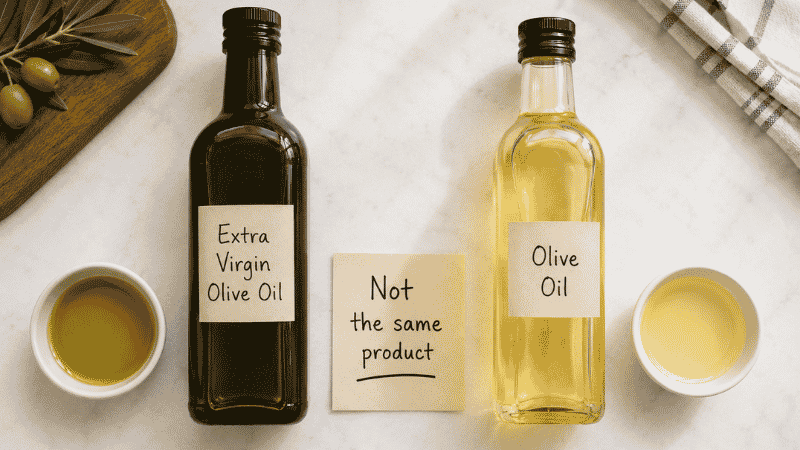
You’ve been buying olive oil your whole adult life. Probably the same brand, probably whatever was on sale, probably from the same spot on the shelf you always go to without really looking at the label. Then someone tells you that “olive oil” and “extra virgin olive oil” aren’t actually the same thing, and you start to wonder if you’ve been accidentally buying the wrong one for the last ten years.
The short answer is: maybe, and it depends what you’ve been using it for. The longer answer — the one that actually helps you make a better decision next time you’re standing in the aisle — is what this guide is for.
Olive oil and extra virgin olive oil are two distinct product categories that happen to share the same shelf space, similar-looking bottles, and overlapping price ranges. Understanding the difference takes about five minutes and will immediately change how you shop for one of the most important pantry staples a family kitchen relies on.
What “Olive Oil” Actually Means on a U.S. Label — and Why It Matters
Here’s the terminology problem: in everyday language, “olive oil” describes everything made from olives. On a U.S. grocery store label, “olive oil” (without “extra virgin” before it) has a specific and very different meaning.
What “extra virgin olive oil” means: The oil was extracted from olives purely by mechanical means — crushing, pressing, centrifuging — with no heat or chemical solvents. It passed both chemical testing (free acidity at or below 0.8%) and sensory testing (no flavor defects, positive fruity character). This is the least processed, most nutritionally intact form of olive oil.
What “olive oil” (alone) means on a label: A blend of two things — heat-refined olive oil (processed with high temperatures and sometimes chemical solvents to neutralize flavor defects and produce a neutral, shelf-stable oil) plus a small percentage of virgin or extra virgin oil added back for some flavor. Also sold as “pure olive oil,” “classic olive oil,” and “light olive oil.”
The refining process that produces regular olive oil eliminates most of what makes unrefined olive oil valuable:
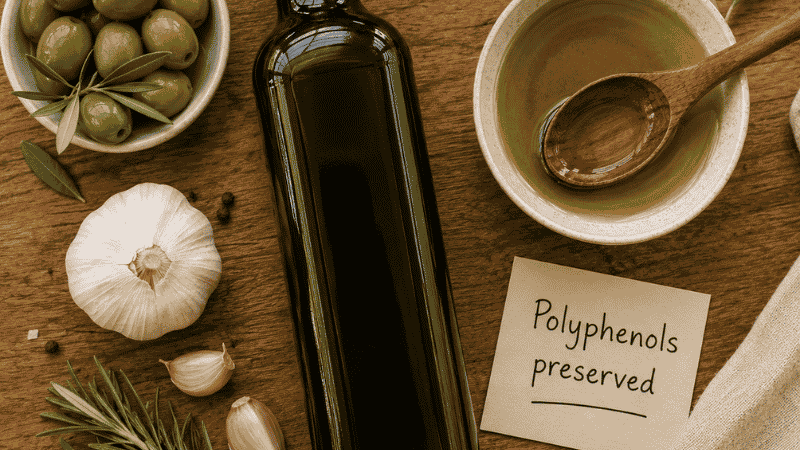
- Polyphenols, the anti-inflammatory compounds linked to cardiovascular protection, are largely destroyed by heat processing
- Vitamin E content is reduced
- The characteristic olive flavor is stripped to near-neutral
- The antioxidants that make extra virgin olive oil resistant to oxidation are diminished
This isn’t a subtle difference — it’s a fundamental difference in how the product was made and what’s in it.
The Health Difference Between Olive Oil and Extra Virgin Olive Oil
The health evidence for olive oil is almost entirely built on research using extra virgin olive oil, not refined olive oil blends. This distinction matters more than most people realize when they’re trying to apply the research to their grocery shopping.
What the Research Actually Shows
The landmark PREDIMED trial — published in the New England Journal of Medicine and one of the most comprehensive dietary studies ever conducted — followed over 7,000 adults at high cardiovascular risk for approximately 5 years. Participants supplemented with extra virgin olive oil (not regular olive oil) had a 30% lower rate of major cardiovascular events compared to the low-fat control group.
The mechanism is specific to unrefined olive oil: oleocanthal, a polyphenol found exclusively in genuine extra virgin olive oil, has been shown to inhibit the same inflammatory pathways as ibuprofen. The characteristic slight throat burn of good extra virgin olive oil is oleocanthal in action — it’s a marker of anti-inflammatory potency, not a flaw. This compound is largely absent from refined olive oil.
The American Heart Association classifies extra virgin olive oil as a heart-healthy fat and recommends it as a replacement for saturated fats. Their guidance specifically references the monounsaturated fat content and associated polyphenols — properties that are preserved in extra virgin and diminished in refined olive oil.
Does Regular Olive Oil Have Any Health Benefits?
Yes — but fewer. Regular olive oil still consists primarily of oleic acid, a monounsaturated fatty acid that is healthier than saturated fats. Simply replacing butter or lard with regular olive oil for cooking is a meaningful improvement. But the documented anti-inflammatory, antioxidant, and cardiovascular protective effects associated with olive oil research are primarily attributable to the polyphenols that survive only in unrefined extra virgin olive oil.
Olive Oil and Extra Virgin in the Kitchen: When Each One Makes Sense
This is the practical question that most comparison guides answer poorly — usually because they’re written from a nutrition or industry perspective rather than a home cooking one.
Use Extra Virgin Olive Oil For:
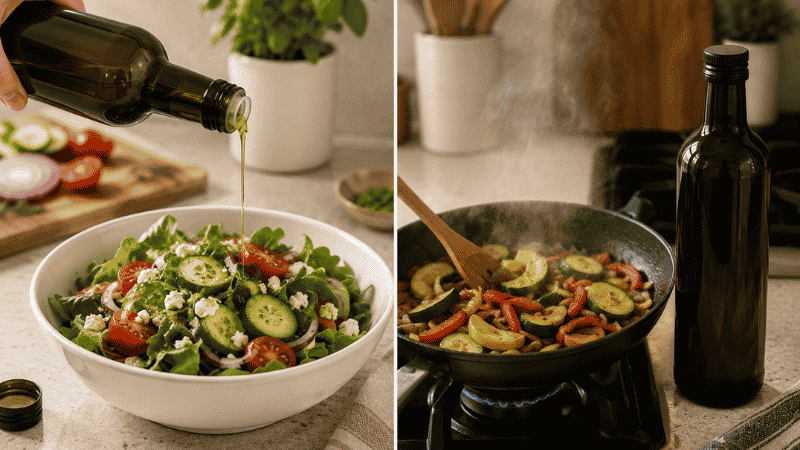
Salad dressings and raw finishing — This is where EVOO’s flavor is most noticeable and its polyphenol content is fully preserved. A drizzle of good extra virgin over a finished salad, a bowl of soup, or cooked pasta delivers both flavor and nutritional value. For raw applications, the quality of the oil matters most.
Everyday sautéing and roasting — Extra virgin olive oil is safe and appropriate for normal home cooking temperatures. Its smoke point (approximately 375–405°F / 190–207°C) covers the vast majority of everyday cooking — sautéing vegetables, cooking chicken, roasting at 375°F, making pasta sauce. The concern that EVOO “can’t handle heat” is a persistent myth. Research published in Food Chemistry found that extra virgin olive oil was actually more resistant to forming harmful oxidation compounds at cooking temperatures than many refined oils, due to its polyphenol content acting as a natural antioxidant.
Baking where olive flavor is welcome — Olive oil cakes, focaccia, and Mediterranean-style baked goods are designed around olive oil’s flavor. Use extra virgin for these.
Use Regular Olive Oil For:
High-volume deep frying — If you’re deep frying at sustained temperatures above 400°F for extended periods, refined olive oil’s higher smoke point and lower cost make it more practical. This is a specific, relatively uncommon home cooking scenario.
Baking where you want a completely neutral fat — Some cakes or quick breads call for a neutral oil and you don’t want any olive flavor. Regular olive oil (or any neutral refined oil) works here.
Cooking when budget is the primary concern — If EVOO simply isn’t in the budget for high-volume cooking, regular olive oil is a better choice than many highly processed seed oils for everyday use. But at current pricing, the gap between regular and value EVOO is smaller than most people assume.
How to Buy Olive Oil and Extra Virgin Without Getting Fooled
This is where the grocery shopping gets complicated. The label says “extra virgin” — but does that mean anything?
Based on independent testing, including the UC Davis Olive Center’s ongoing research, a significant portion of imported olive oils labeled extra virgin in U.S. grocery stores fail to meet the official standard. Some are oxidized or rancid. Some are blends of cheaper oils. Some are simply past their freshness peak. None of this is disclosed on the label.
Here’s how to shop smarter:
What to Look for on the Label
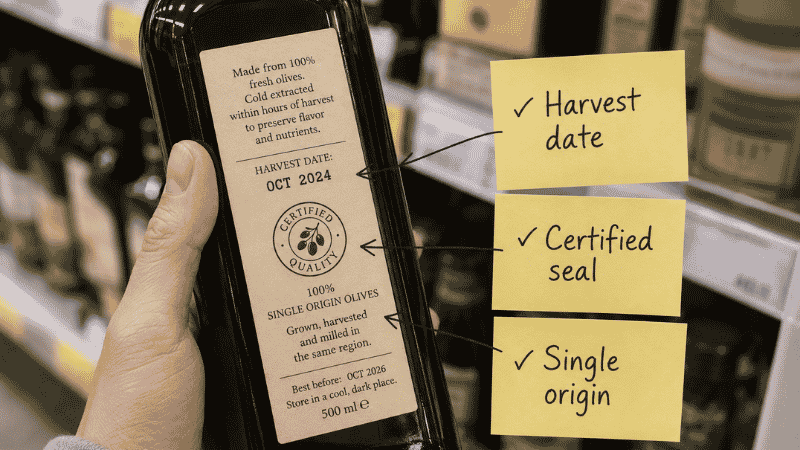
A harvest date — Not just a “best by” date. A specific harvest date (e.g., “Harvest: Nov 2024”) indicates a producer who understands that olive oil is a fresh product with a meaningful freshness window. Without a harvest date, you have no way to know if the oil on the shelf was pressed 6 months ago or 2 years ago.
Certification seals — The North American Olive Oil Association (NAOOA) seal means the oil has been independently tested against IOC standards. The California Olive Oil Council (COOC) seal on California oils indicates compliance with California’s stricter-than-federal extra virgin requirements. These seals provide genuine third-party verification.
Specific origin language — “Bottled in Italy” means nothing about where the olives were grown. Look for “100% Italian Olives,” “100% Spanish Olives,” or similar specific origin claims. Single-origin oils are generally more traceable and accountable than multi-country blends.
Dark glass or tin packaging — Light degrades olive oil. A producer who packages their oil in clear plastic is either cutting costs or doesn’t understand (or doesn’t care about) their product’s shelf stability. Dark green glass, amber glass, or tin are the correct packaging choices.
What to Ignore or Be Skeptical Of
“Cold pressed” — All genuine extra virgin and virgin olive oil is produced without heat by definition. In the U.S., “cold pressed” is unregulated marketing language that adds no verified information.
“First pressed” — Same situation. Modern production uses centrifuges, not traditional presses, and “first pressed” is a legacy term with no current regulatory meaning.
“Product of Italy” — Italy is a major importer and blender of olive oils from Spain, Greece, Turkey, and Tunisia. “Product of” or “bottled in” Italy is meaningless as a quality indicator.
Extremely low prices — A 33-oz bottle of “extra virgin olive oil” for $3.99 is a red flag. Genuine extra virgin production has real cost floors. Very cheap “EVOO” is almost certainly not what the label says.
The Best Value Olive Oil and Extra Virgin Options at Major U.S. Stores
Based on Consumer Reports testing, UC Davis certification data, and third-party quality assessments:
Best Everyday Extra Virgin (Under $0.50/oz)
Kirkland Signature Organic EVOO (Costco) — Bureau Veritas certified as genuine extra virgin. Has passed UC Davis third-party testing. At approximately $0.30/oz for a 2-liter bottle, it’s the best cost-per-quality ratio at a major U.S. retailer. Decant weekly portions into a smaller dark bottle and keep the main jug sealed in a cool cabinet.
Aldi Specially Selected EVOO — Named a Smart Buy by Consumer Reports in blind tasting. Certified quality at approximately $0.45–$0.50/oz. One of the best genuine extra virgin options available without a warehouse club membership.
Walmart Great Value EVOO — Adequate for everyday cooking at about $0.35–$0.40/oz. Not independently certified at the same level as Kirkland or Aldi Specially Selected, but a reasonable choice for high-heat applications where polyphenol retention is reduced regardless.
Best Mid-Range Extra Virgin ($0.60–$0.90/oz)
Carapelli Original EVOO — America’s Test Kitchen’s top scorer among top-selling supermarket brands. Grassy aroma, medium-intensity fruity finish, reliable freshness. Widely available at Walmart, Target, and most grocery chains.
California Olive Ranch EVOO — Made from California-grown olives, which means stricter labeling requirements and more transparent origin. Buttery, clean flavor profile. Good for raw finishing.
Filippo Berio EVOO — Consistent mid-range quality, widely distributed, passes third-party authenticity tests regularly. A safe choice when other options aren’t available.
The Two-Bottle System: Getting the Most From Olive Oil Without Overspending
Most families don’t need one expensive bottle of olive oil for everything. They need a system.
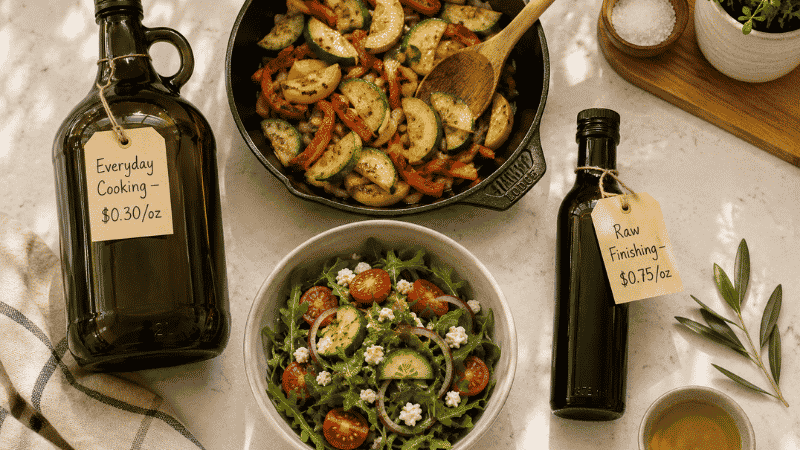
Bottle 1 — The Workhorse: Kirkland Signature or Aldi Specially Selected for all everyday cooking — sautéing, roasting, making pasta sauce, cooking proteins, frying eggs. A 2-liter Costco jug runs about $22 and lasts 3–4 months for a typical family. At these quantities and temperatures, you’re getting genuine extra virgin quality at a commodity price.
Bottle 2 — The Finisher: A mid-range bottle (Carapelli, California Olive Ranch, or a well-reviewed import with a recent harvest date) for raw applications — salad dressings, drizzling over finished dishes, dipping bread, finishing soups. A 375ml bottle used only for these purposes lasts 2–3 months. This is where flavor and polyphenol content are fully preserved and actually noticeable.
The economics: Two-bottle system cost per quarter: approximately $22 (Costco jug) + $10–$14 (mid-range finisher) = $32–$36. Compare this to randomly buying mid-priced grocery store EVOO for everything — often $7–$9 per 17-oz bottle, replaced every 6–8 weeks — which runs similarly in cost but with less intentionality about freshness and quality for each use.
How to Store Olive Oil and Extra Virgin to Preserve Quality
The three enemies of olive oil quality are heat, light, and oxygen. This isn’t abstract chemistry — they have real effects on the flavor and nutritional value you’re buying.
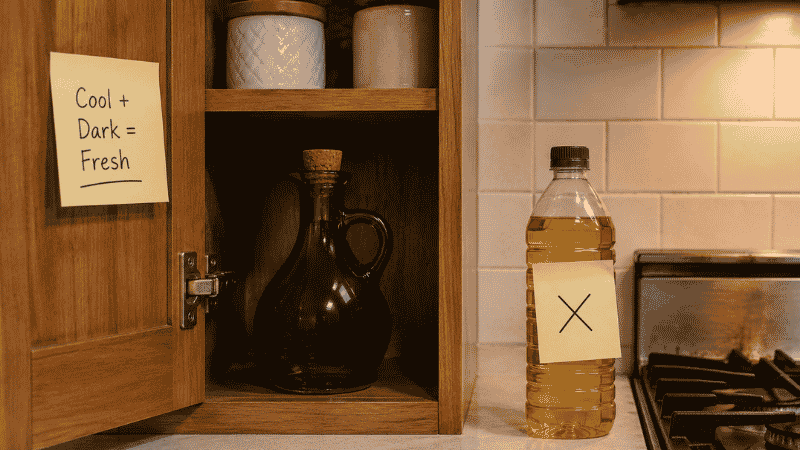
Keep it away from the stove. The most common storage mistake in most kitchens is a decorative bottle next to the range. The ambient heat from cooking accelerates oxidation and rancidity dramatically. Store in a cool cabinet, preferably across the kitchen from heat sources.
Dark container, dark location. If you bought oil in a clear container, keep it in a closed cupboard. For the Costco 2-liter jug, decant about a week’s worth into a small dark glass cruet for counter use, and keep the main jug sealed and cool.
Use it within the right window.
- Unopened, stored properly: 12–18 months from harvest date
- Opened, stored properly: 3–6 months at peak quality
Most families are using oil past its flavor prime without realizing it. Buy in quantities appropriate to your usage rate — not the largest bottle available if it’ll take you 8 months to finish it.
How to tell if it’s gone off: Rancid olive oil smells like wax, crayons, or cardboard — distinctly different from the grassy, slightly peppery smell of fresh EVOO. Flat, tasteless oil has oxidized and lost its polyphenol content even if it doesn’t smell actively unpleasant. When in doubt, smell it before using it for a raw application where you’ll taste the oil directly.
When You’re Short on Time: The 10-Minute Olive Oil Decision
If you have 10 minutes in the grocery store and want to make a better olive oil choice without extensive label research, here’s the fastest reliable shortcut:
- Pick a bottle in dark glass or tin. Eliminate all clear plastic.
- Look for a harvest date on the label. If you see one, that’s already a positive signal.
- Choose Kirkland (Costco), Aldi Specially Selected, or Carapelli if available — these have the most consistent third-party verification.
- Avoid anything labeled only “olive oil,” “pure olive oil,” or “light olive oil” — these are refined products.
- Avoid anything priced significantly below the surrounding bottles — genuine extra virgin has a cost floor.
That’s the entire decision tree. Five checkpoints, under a minute, meaningfully better outcome than a random grab.
FAQ
Q: What is the difference between olive oil and extra virgin olive oil?
Extra virgin olive oil is mechanically extracted from olives without heat or chemical solvents and must pass strict chemical and sensory tests — including zero flavor defects and free acidity at or below 0.8%. Regular “olive oil” is a blend of heat-refined olive oil (processed with heat to remove defects and produce a neutral flavor) and a small amount of virgin or extra virgin oil. The refining process removes most polyphenols and antioxidants. They are fundamentally different products despite similar packaging.
Q: Is it worth buying extra virgin olive oil instead of regular olive oil?
For everyday family cooking, yes — for several reasons. The health evidence for olive oil’s benefits (heart health, anti-inflammatory properties, antioxidant activity) is built almost entirely on research using extra virgin olive oil, not refined blends. The price premium is real but modest: a good value EVOO like Kirkland or Aldi Specially Selected costs $0.30–$0.50/oz, while regular olive oil runs $0.25–$0.40/oz. The health and quality gap is larger than the price gap.
Q: Can you cook with extra virgin olive oil at high heat?
Yes, for normal home cooking. Its smoke point (375–405°F) covers sautéing, roasting at typical temperatures, pan-frying, and most baking. The concern about EVOO “breaking down” at cooking temperatures is not supported by research for normal home cooking. Some polyphenols are reduced at sustained high heat, but the oil remains stable and significantly more nutritious than most refined seed oils. For sustained deep frying above 400°F, a refined oil with a higher smoke point is more appropriate.
Q: How can you tell if extra virgin olive oil is real?
At the store: look for a harvest date, a certification seal (NAOOA or COOC), specific origin language (“100% Italian Olives,” not just “bottled in Italy”), and dark glass or tin packaging. At home: smell it — fresh EVOO smells grassy, fruity, and slightly peppery; rancid oil smells waxy or cardboard-like; neutral oil may have been mislabeled as extra virgin. The refrigerator test (EVOO begins to cloud or solidify after 30–60 minutes of refrigeration) can also help identify highly refined oils, though it’s not definitive.
Q: What does “pure olive oil” mean?
“Pure olive oil” is a marketing name for what is technically labeled “olive oil” — a blend of heat-refined olive oil and a small percentage of virgin or extra virgin oil. The word “pure” sounds premium but has no regulatory meaning for quality. It does not mean the oil is unadulterated or unrefined. In fact, the refining process is what makes it “pure” in the sense of neutral and defect-free — not pure in the sense of minimally processed.
Q: How long does olive oil last after opening?
Extra virgin olive oil at peak quality: 3–6 months from opening when stored in a sealed bottle in a cool, dark location. After this window, flavor degrades even if the oil isn’t technically unsafe. Buy in quantities you’ll finish within this window — a 2-liter Costco jug is appropriate for a family using olive oil daily; a smaller 17-oz bottle is better for lighter users. Always smell before using for raw applications where the oil’s flavor is prominent.
Q: Which is healthier — olive oil or extra virgin olive oil?
Extra virgin olive oil is more nutritionally complete. Both consist primarily of oleic acid (a heart-healthy monounsaturated fat), but extra virgin retains the polyphenols, antioxidants, and oleocanthal that are responsible for most of the specific health benefits documented in research. Regular olive oil has some benefits compared to saturated fats, but at a significantly lower level of anti-inflammatory and antioxidant activity.
The Honest Bottom Line
Olive oil and extra virgin olive oil are not interchangeable — they’re different products with different production methods, different nutritional profiles, and different appropriate uses. For a family’s everyday cooking, extra virgin is the right default choice: it’s the grade that delivers the health benefits, it works well across all standard cooking methods, and the price difference from regular olive oil is modest when you buy strategically.
The label matters because a meaningful percentage of what’s sold as extra virgin in U.S. stores doesn’t meet the standard. A harvest date, a certification seal, dark packaging, and a price above the bare minimum are the signals that tell you a bottle is likely the real thing.
For a deeper look at specific brand recommendations and how the best budget options compare, our extra virgin olive oil buying guide covers the full picture. And if you’re comparing Costco and Trader Joe’s side by side — which is genuinely the most common family decision in this category — our Costco vs. Trader Joe’s olive oil comparison gives you the direct answer with real prices.
References
- Estruch R, et al. (2013). Primary prevention of cardiovascular disease with a Mediterranean diet. New England Journal of Medicine. doi:10.1056/NEJMoa1200303
- UC Davis Olive Center. Imported Olive Oil Quality Testing. University of California, Davis. olivecenter.ucdavis.edu
- American Heart Association. Healthy Cooking Oils. heart.org
- Lozano-Castellón J, et al. (2020). Domestic sautéing with EVOO: Change in the phenolic profile. Antioxidants. doi:10.3390/antiox9010077
- North American Olive Oil Association. Olive Oil Standards and Grades Explained. aboutoliveoil.org