
Key Takeaways
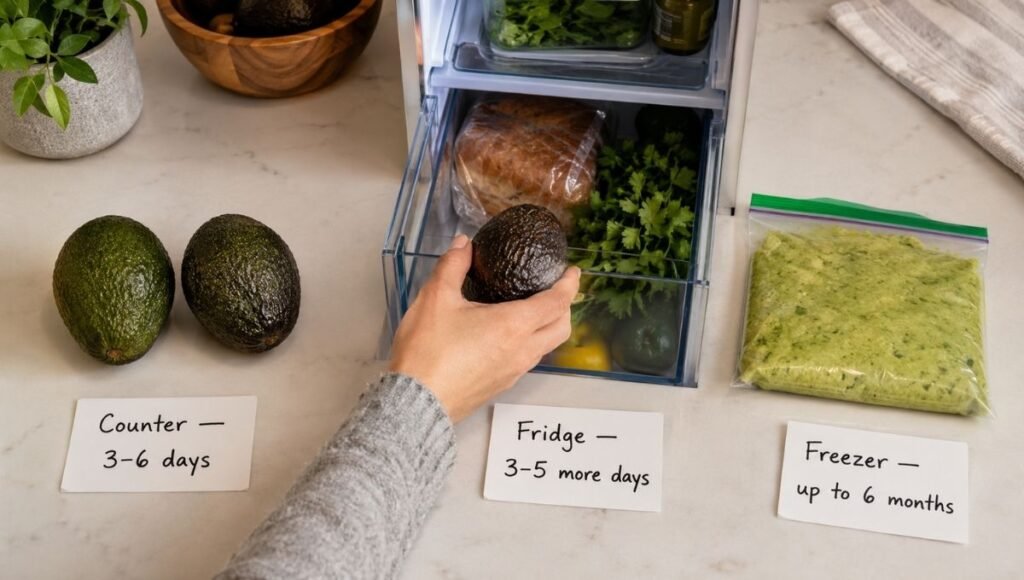
- Avocado storage depends entirely on ripeness stage. An unripe avocado should sit on the counter. A ripe avocado needs the fridge immediately. A cut avocado needs an airtight seal and acid. Getting this wrong in any stage is why most people lose avocados to waste.
- The average American spends approximately $2.50–$3.50 per avocado at regular grocery prices. Buying in bulk when on sale and storing correctly can cut that effective cost by 40–60%.
- Ripe avocados last 3–5 days in the refrigerator — cold temperature significantly slows the ripening enzymes without stopping them completely. This is your most underused tool for getting more days out of a perfectly ripe avocado.
- Frozen avocado lasts 3–6 months at best quality and is excellent for smoothies, guacamole, dressings, and baked goods — with one caveat: the texture changes after freezing, making it unsuitable for sliced applications.
- The lemon juice trick actually works — acid prevents oxidative browning by inhibiting polyphenol oxidase, the enzyme that turns avocado flesh brown when exposed to air.
Every avocado has a window. It’s roughly 48 hours wide, arrives without warning, and closes while you’re at work on a Tuesday. You bought it on Sunday, it was rock solid. Wednesday morning it’s perfect. By Wednesday night you’ve missed it.
Sound familiar? Avocado timing is the small but persistent frustration of every household that loves them — and at $2–$4 each, every wasted one stings a little. The problem isn’t that avocados are inherently difficult. The problem is that most people apply one storage approach to every stage, when what avocados actually need changes completely depending on how ripe they are.
This guide covers the entire arc: how to buy avocados at the right stage, how to store them correctly at every point from purchase to the last spoonful, how to keep a cut avocado from browning, and — for the bulk buyers and sale hunters — how to freeze them properly so a great Aldi deal translates into months of affordable avocado instead of a race against the clock.
How to Tell What Stage Your Avocado Is At Before You Store It
Everything in this guide starts here, because the correct storage method depends entirely on where your avocado is in its ripening process. Applying the fridge rule to an unripe avocado kills the ripening process — you’ll end up with a firm, flavorless avocado that never reaches its potential. Leaving a ripe avocado on the counter means you’re watching the window close in real time.
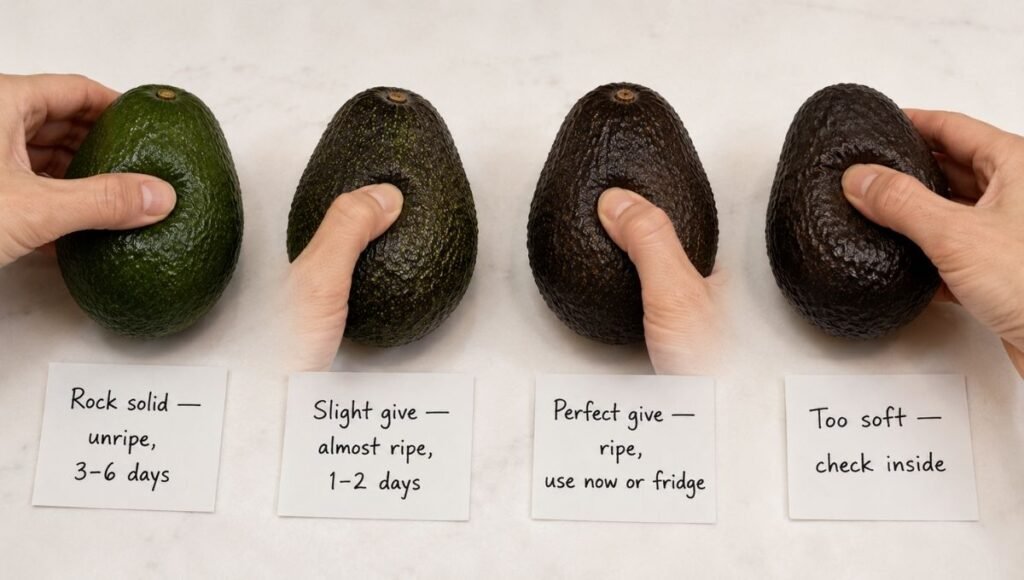
The Squeeze Test
Hold the avocado in your palm and apply gentle pressure — not finger pressure, palm pressure — from the sides.
Rock solid, no give: Unripe. Needs 3–6 days at room temperature. Don’t refrigerate yet.
Slight give but still mostly firm: Starting to ripen. 1–2 more days on the counter. You can refrigerate now to slow the process if you need more time.
Gentle but distinct give, springs back slightly: Perfectly ripe. Use today or tomorrow, or refrigerate immediately.
Soft and slightly mushy, gives easily: Overripe. May still be usable for guacamole, dips, or smoothies — the flavor may be more intense or slightly off. Cut and check before using.
Very soft or feels hollow in spots: Likely bruised or too far gone. Smell and check inside before using.
The Stem Test
Remove the small stem button at the top of the avocado:
- Stem comes off easily and reveals bright green underneath: Ripe.
- Stem comes off and reveals brown underneath: Overripe, likely brown inside.
- Stem doesn’t come off easily: Not ready.
Editor’s take: The stem test gets a lot of attention online and it’s genuinely useful as a second check — but the squeeze test is more reliable for day-to-day judgment. Use both together when you’re uncertain.
How to Store Avocados That Aren’t Ripe Yet
An unripe avocado belongs on the counter, full stop. The refrigerator cold does more than just slow ripening — at temperatures below 50°F, it can permanently disrupt the ripening enzymes responsible for developing the buttery texture and full flavor avocados are known for. An avocado that’s been refrigerated before it’s ripe may soften eventually, but it often develops an uneven, slightly stringy texture and less developed flavor.
Counter storage for unripe avocados:
- Keep at room temperature (65–75°F is ideal)
- Away from direct sunlight — heat from sun speeds browning more than it speeds good ripening
- A fruit bowl is fine; a kitchen counter away from the stove is fine
- Expected ripening time: 3–6 days depending on how firm it was when purchased
Speed Hacks for Faster Ripening
The banana trick (genuinely works): Place your avocado in a paper bag with a ripe banana or apple. Both fruits emit ethylene gas as they ripen — a natural ripening hormone that speeds the process for other nearby fruits. The paper bag traps the ethylene, concentrating the effect. You’ll typically cut ripening time by 1–2 days.
The oven hack (emergency method): Wrap an unripe avocado in foil and bake at 200°F for 10–15 minutes. The heat softens it quickly, but the texture and flavor won’t match natural ripening. Think of this as a “I need guacamole tonight” solution, not a storage strategy.
The rice method: Bury the avocado in a bowl of dry uncooked rice. The rice absorbs ethylene and creates a slightly warmer microenvironment. Less effective than the banana bag but useful if you have a lot of avocados to ripen simultaneously.
How to Store Ripe Avocados in the Fridge
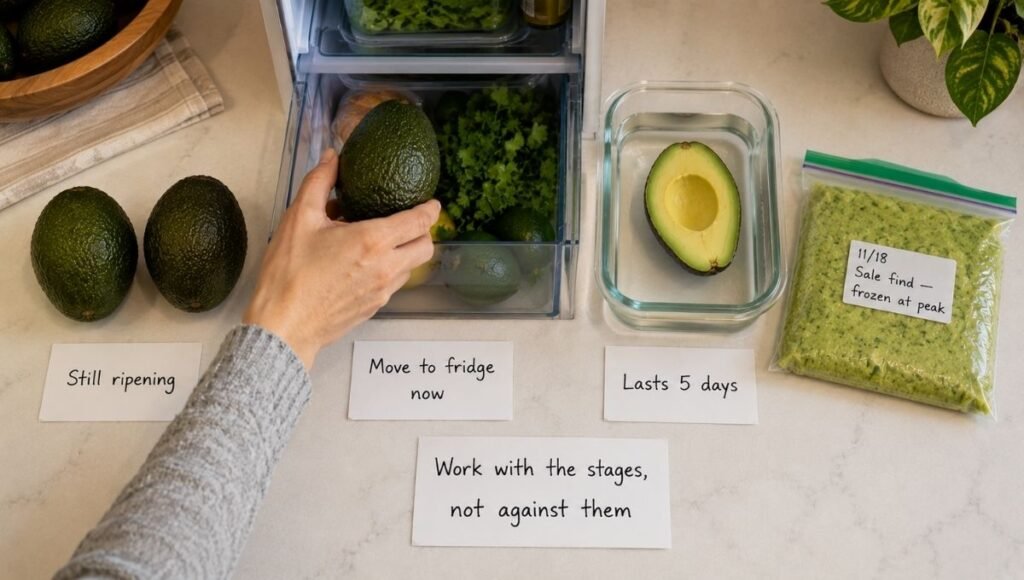
The moment your avocado reaches peak ripeness — that perfect give under gentle pressure — the refrigerator becomes your best friend. Cold temperatures slow the ripening enzymes dramatically without stopping them completely, giving you an additional 3–5 days of peak ripeness you wouldn’t have if you left it on the counter.
Whole ripe avocado in the fridge:
- Store as-is, unwashed, in the coldest part of your refrigerator (not the door)
- The skin acts as its own protective barrier — no wrapping needed
- Use within 3–5 days for best quality
- You may notice very slight darkening of the skin — this is normal and doesn’t indicate interior spoilage
This is the habit that changes avocado management for most families. The moment the avocado feels right — put it in the fridge. Don’t leave it on the counter for “one more day.” The fridge adds 3–4 days; the counter removes them.
Life hack from actual experience: On Sunday grocery runs, buy a mix of firm and slightly soft avocados. Let the firm ones ripen on the counter while you use the soft ones first. As the counter ones ripen, move them to the fridge. Stagger the whole week.
How to Store a Cut Avocado Without It Turning Brown
Cut avocado browning is caused by polyphenol oxidase — an enzyme that activates when the flesh is exposed to oxygen and reacts with phenolic compounds in the fruit to produce brown-colored melanins. It’s the same process that browns a cut apple. The browning is cosmetically unappealing but not a food safety concern; slightly browned avocado is safe to eat.
That said, nobody wants to open a container and find their avocado has turned gray. Here’s what actually works:
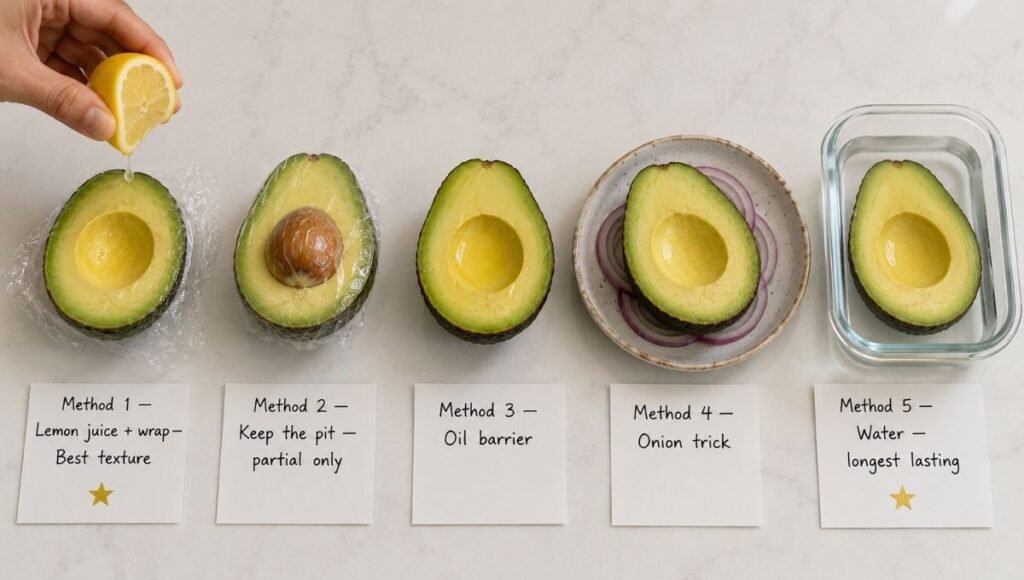
Method 1: Lemon or Lime Juice + Airtight Container (Most Effective)
Squeeze fresh lemon or lime juice over all cut surfaces. The citric acid lowers the pH of the flesh surface, which inhibits the enzyme activity. Press plastic wrap directly against the cut surface (eliminating air pockets), then store in an airtight container.
Effective for: 1–2 days in the refrigerator before noticeable browning begins.
Method 2: Keep the Pit In the Half You’re Saving
This is one of the most-repeated avocado tips online — and it’s partially true. The pit protects the specific area of flesh directly beneath it from browning, but the surrounding exposed flesh still browns normally. The pit creates a physical oxygen barrier over a small area, not a chemical one.
Effective for: Slowing browning directly under the pit. Doesn’t help the rest of the half.
Better approach: Keep the pit AND squeeze lemon juice over the entire cut surface AND use plastic wrap pressed directly against the flesh.
Method 3: Olive Oil or Avocado Oil Coating
Brush a thin layer of olive oil over all cut surfaces. The oil creates a physical barrier against oxygen. Works similarly to plastic wrap but adds a mild flavor.
Effective for: 1–2 days. The oil barrier eventually gets disrupted, especially if you’re dipping in and out of the container.
Method 4: Red Onion Layer Hack
Place the cut avocado face-down on a plate with a few slices of red onion beneath it. The sulfur compounds emitted by the onion appear to inhibit browning enzymes. This is a legitimate technique with food science support, though it adds a mild onion flavor to the avocado.
Effective for: 1–2 days. Best for avocado you’ll use in dishes where a mild onion note is acceptable (guacamole, dips).
Method 5: Water Submersion
Fill a container with cold water and submerge the cut avocado half (pit in). This works by completely cutting off oxygen access to the flesh.
Effective for: Up to 5 days in the refrigerator, making this the longest-lasting method by a significant margin.
The catch: The flesh absorbs some water, which can slightly change the texture — making it a bit more watery. Fine for guacamole or blended applications; not ideal if you want clean avocado slices.
My honest ranking: Water submersion wins for maximum shelf life. Lemon juice + plastic wrap wins for best texture preservation. Use whichever matches how you plan to use the avocado.
How to Store Avocados in the Freezer (The Budget Strategy)
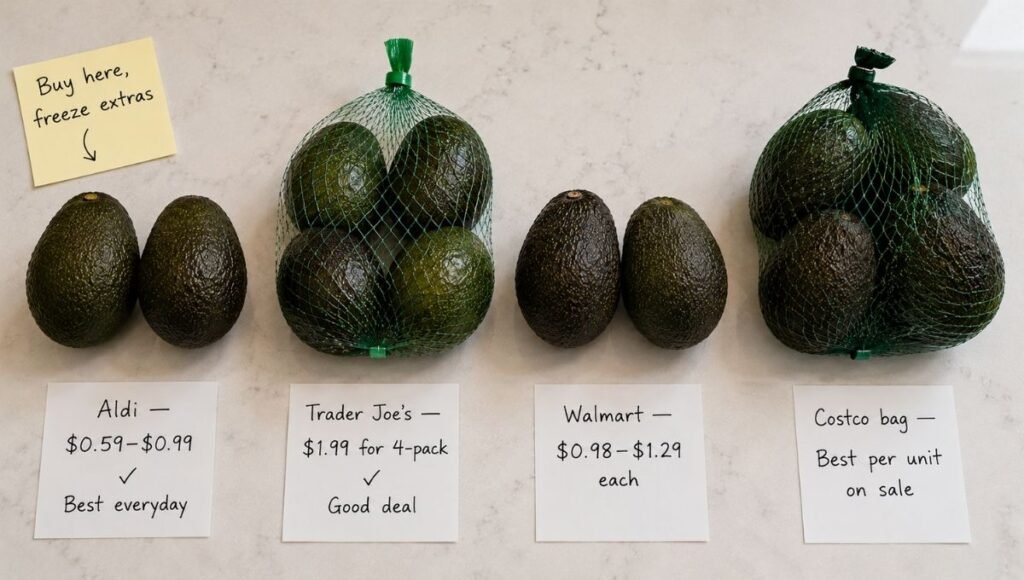
Freezing avocados is the move when you find a genuinely good deal — Aldi sometimes sells avocados at $0.49–$0.69 each, Trader Joe’s occasionally does a 4-pack for $1.99, and Costco sells large bags at significant discount. These prices are worth capturing, and freezing is how you capture them without waste.
What changes after freezing: Texture. Frozen and thawed avocado is softer and slightly more watery than fresh. It’s excellent for guacamole, smoothies, dressings, soups, and baked goods. It doesn’t work for applications where you want avocado to hold its shape — salads, toast toppings, sushi.
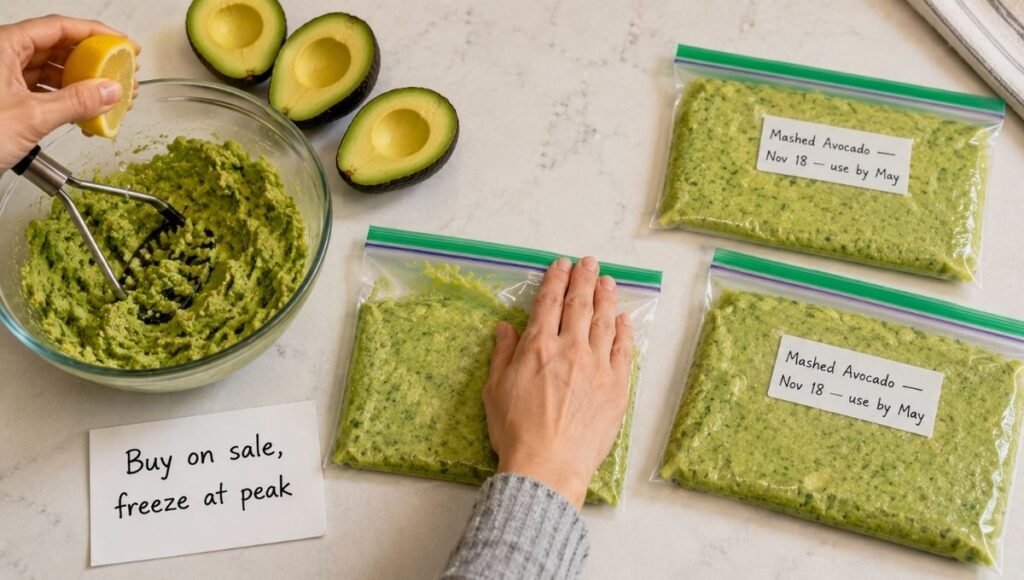
How to Freeze Avocados Properly
Method A: Mashed (Best for Guacamole and Smoothies)
- Cut, pit, and scoop flesh into a bowl.
- Mash with a fork until smooth.
- Add 1 tablespoon of lemon or lime juice per avocado — the acid prevents browning during freezing and after thawing.
- Portion into freezer bags in the amount you typically use at one time (roughly half an avocado per serving for guacamole).
- Press flat, squeeze out all air, seal.
- Label with date and contents. Freeze.
Method B: Halves or Slices (For Smoothies or Blending)
- Cut avocado in half, remove pit, scoop or slice flesh out.
- Coat all surfaces with lemon juice immediately.
- Arrange pieces on a parchment-lined baking sheet, not touching.
- Freeze until solid (2–3 hours).
- Transfer to freezer bags, press out air, seal, label.
The pre-freezing on the baking sheet prevents the pieces from freezing together into a solid mass — you can then pull out exactly the amount you need.
Freezer life: 3–6 months at best quality. Still food-safe after that, but flavor and texture degrade progressively.
How to Thaw Frozen Avocado
Refrigerator thaw (best): Move from freezer to fridge the night before. Thaws overnight, best texture retention.
Counter thaw: 30–60 minutes at room temperature for smaller portions.
Direct to blender: Frozen avocado can go directly into a blender for smoothies — no thawing needed.
Never microwave thaw for anything other than smoothie applications — the heat creates uneven soft spots and affects flavor.
The Avocado Buying Strategy That Saves Money
This section is the one most storage guides skip — how to buy avocados intelligently so you’re spending less and wasting less over time.
Which Stage to Buy For Different Use Cases
Buy firm (3–6 days out): When you find a great sale price and plan to freeze most of them, or when you want to stagger ripening across the week.
Buy slightly soft (1–2 days out): When you’re planning to eat avocado in the next day or two and want guaranteed availability.
Never buy very soft avocados unless they’re deeply discounted and you’re cooking immediately — they’re past their window for most applications.
Store Price Comparison (2026)
| Store | Typical Price | Sale Price | Notes |
|---|---|---|---|
| Aldi | $0.69–$0.99 each | $0.49–$0.59 | Best consistent everyday price |
| Trader Joe’s | $0.79–$0.99 each | $1.99 for 4-pack | Good value for mixed-ripeness bags |
| Walmart | $0.98–$1.29 each | Varies | Consistent availability |
| Costco | $6.99–$9.99/bag (5–6 count) | Occasional mark-downs | Best per-unit price when on sale |
| Regular supermarkets | $1.29–$2.99 each | Occasional $0.99 | Watch the weekly circular |
The bulk buying window: When Aldi or Trader Joe’s drops below $0.70/avocado, that’s a freeze-worthy price. Buy 6–10, ripen what you’ll use this week, freeze the rest as they reach peak ripeness (don’t freeze unripe avocados — let them ripen first, then freeze).
How to Tell If an Avocado Has Gone Too Far
You’ve done everything right, but maybe time slipped away. Here’s how to check before you commit to cooking:
Brown or black skin: Normal, especially in Hass variety. Don’t judge by skin color.
Cut it open and check: Light brown or yellow-green interior with no smell — likely overripe but still usable for guacamole or blended applications. Dark brown or gray throughout with a rancid or sour smell — discard.
Stringy texture: Overripe but often still usable for cooked applications.
Hollow spaces or very dark pockets: Overripe. Scoop around the bad spots.
Mold (fuzzy growth on flesh): Discard completely.
The honest test: taste a small piece. Your palate will tell you if it’s still pleasant or has crossed into “off” territory. A slightly overripe avocado often tastes more intensely avocado-flavored, which some people actually prefer for guacamole.
Practical Storage Scenarios: What to Do When
You bought 4 avocados at Aldi and they’re all firm: → Leave 2 on the counter, put 2 in a paper bag with a banana. Stagger the ripening. As each one reaches peak, refrigerate it or use it.
You have one perfectly ripe avocado and you’re not eating it until tomorrow: → Refrigerate immediately. Do not leave on counter.
You used half an avocado and the other half needs to last 2 days: → Keep the pit, squeeze lemon juice over all surfaces, press plastic wrap directly against the flesh, store in an airtight container or submerge in water.
You found avocados on sale for $0.59 and want to stock up: → Buy 8–10. Let them ripen on the counter over the next few days, monitoring daily. As each reaches peak, freeze immediately using the mashed method. Label and date.
Your avocado has been in the fridge for 6 days: → Cut it open. If the interior is yellow-green to light brown and smells fine, use it today in guacamole. If it’s dark brown or smells sour, discard.
FAQ
Q: How long do avocados last at room temperature?
Unripe avocados typically ripen in 3–6 days at room temperature (65–75°F). Once ripe, they’ll continue to overripen on the counter within 1–2 days. Move ripe avocados to the refrigerator immediately — cold storage extends peak ripeness by 3–5 days.
Q: Can you put avocados in the fridge before they’re ripe?
You can, but you shouldn’t unless you want to very significantly slow the ripening process. Temperatures below 50°F disrupt the enzymatic processes responsible for full ripening, and avocados refrigerated while still firm may develop an uneven, less flavorful texture. Only refrigerate once the avocado has reached ripeness or is very close to it.
Q: Does lemon juice actually prevent avocado from browning?
Yes, genuinely. Citric acid inhibits polyphenol oxidase, the enzyme responsible for browning when avocado flesh is exposed to oxygen. Lime juice works equally well. For best results, combine with plastic wrap pressed directly against all cut surfaces to also minimize air exposure.
Q: How long can you keep avocado in the freezer?
Frozen avocado maintains best quality for 3–6 months. It remains food-safe beyond that but quality (texture and flavor) deteriorates progressively. Always freeze at peak ripeness, not before — unripe avocado doesn’t develop proper flavor in the freezer.
Q: Is brown avocado safe to eat?
Brown avocado is generally safe to eat and is simply the result of oxidation — the same process that browns a cut apple. It’s cosmetically unappealing and may have a slightly altered flavor, but it’s not a food safety concern. Brown avocado is best used in cooked or blended applications (guacamole, dips, smoothies) where the color isn’t visible. Discard only if there’s mold, a sour or rancid smell, or the flesh tastes unpleasant.
Q: What’s the best way to store avocado for meal prep?
For meal prep, the water submersion method provides the longest fridge life (up to 5 days) for cut avocado. Fill a container with cold water, submerge the cut avocado half (pit side down), and refrigerate. Alternatively, freeze mashed avocado in 2-tablespoon portions in ice cube trays, then transfer to a freezer bag — these thaw in minutes and are perfect for adding to smoothies or spreading.
The Honest Bottom Line
Avocados are forgiving if you work with their stages rather than against them. The single habit change that helps most families: move ripe avocados to the refrigerator immediately instead of leaving them on the counter. That one shift adds 3–5 days to your window and dramatically reduces waste.
Beyond that — buy in bulk when the price is right, freeze at peak ripeness using the mashed method with lemon juice, and stop worrying about browning. A slightly brown avocado is not a ruined avocado. It’s just an avocado that has some oxidation, and it’s still good in your guacamole.
For more on building grocery habits that reduce waste and save real money week over week, our how to save money on groceries guide covers the complete system. And for the pantry staples that work alongside fresh produce to round out a week of meals, our pantry staples guide is the natural companion.
References
- USDA Agricultural Research Service. FoodData Central — Avocado Nutritional Data and Ethylene Production. fdc.nal.usda.gov
- Adeyemi, O.S., et al. (2011). Browning in avocado fruit: enzymatic mechanisms and control. Food Chemistry. Elsevier. sciencedirect.com
- University of California Cooperative Extension. Avocado: Post-Harvest Quality Maintenance Guidelines. ucanr.edu
- USDA Food Safety and Inspection Service. Freezing and Food Safety. fsis.usda.gov
- California Avocado Commission. Avocado Ripeness and Storage Guidance. californiaavocado.com