
You pull a carton of eggs from the back of the refrigerator, notice the date has passed, and wonder if they’re still safe to use. It’s a common kitchen dilemma, and the shell alone won’t tell you much. That’s why so many perfectly good eggs end up being thrown away.
If you’ve ever wondered how to tell if eggs are still good, you don’t need to rely on the date alone. A quick shell check, float test, crack test, and smell are usually enough to tell whether an egg is still good to cook with or it’s time to toss it.
This guide explains how each test works, how to read egg carton dates, and the best ways to store eggs so they stay fresh longer and help you waste less food.
Overview: The Quick Answer
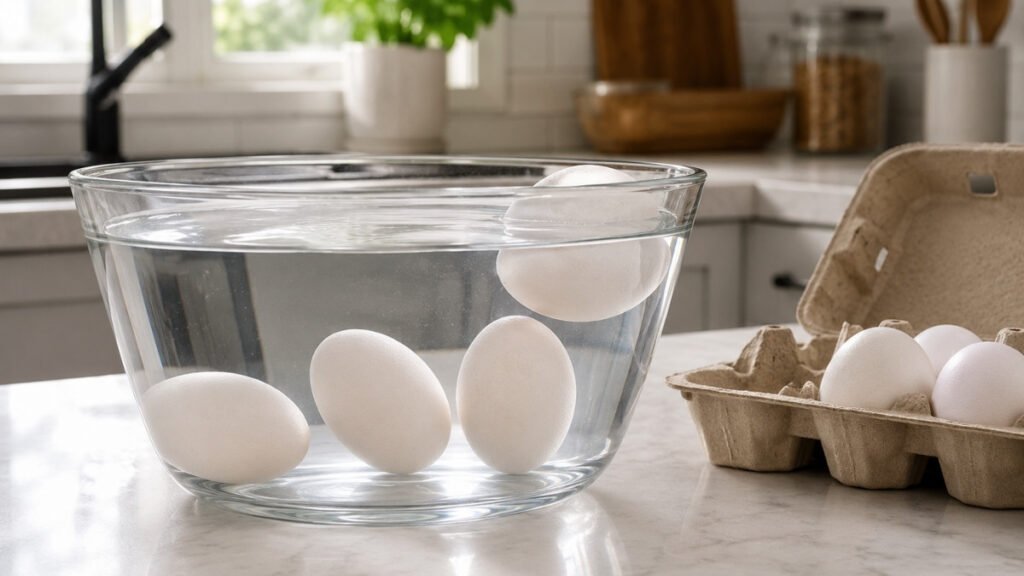
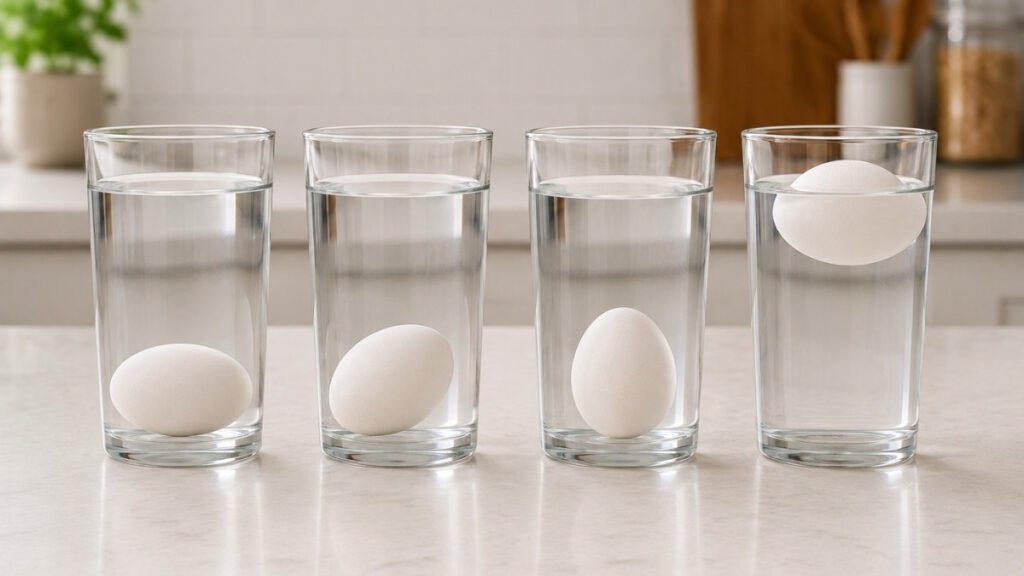
The fastest way to check an egg is the float test: place it in a bowl of water. If it sinks flat, it’s very fresh. If it stands upright on the bottom, it’s older but usually still safe. If it floats, don’t panic — just check it further before deciding.
Always crack a questionable egg into a separate bowl first, never directly into your batter or pan. And no matter what the float test shows: a rotten, sulfur-like smell means throw it away immediately — no further testing needed.
Egg Float Test Guide
| Water Position | Meaning | Next Step |
|---|---|---|
| Flat | Very fresh | Use normally |
| Tilted | Fresh | Use soon |
| Upright | Older | Crack into a separate bowl |
| Floating | Old | Smell and inspect before deciding |
How to Check If an Egg Is Still Good
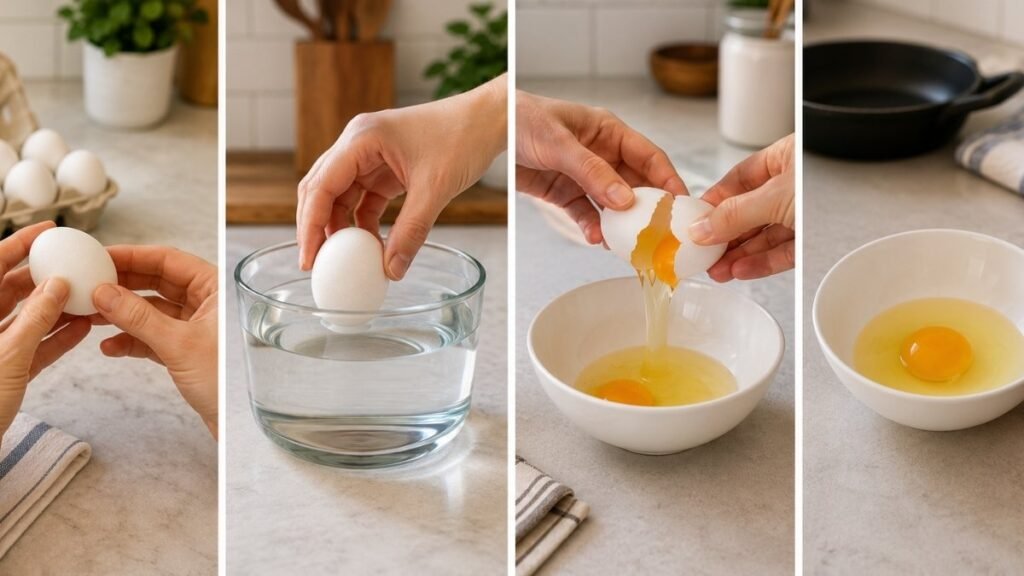
Checking an egg only takes a minute, and using the same four steps each time makes the decision much easier. Start with the shell, then the float test, crack it into a separate bowl, and finish with a quick smell before cooking.
Check the Shell First
Before anything else, look the egg over. Discard any egg with a cracked shell, visible slime, or mold on the surface — these are clear signs to skip the rest of the process and toss it right away.
Try the Float Test
Fill a bowl or glass with enough water to fully submerge an egg, then gently place it in. Where it settles tells you roughly how fresh it is, based on the table above.
Crack Into a Separate Bowl
This step matters more than people realize. Always crack an egg — especially one you’re not fully sure about — into a separate small bowl rather than directly into your mixing bowl, batter, or pan. If something’s wrong, you’ll catch it before it ruins the rest of your ingredients.
Smell Before You Cook
Once it’s cracked into that separate bowl, take a moment to smell it. A fresh egg has little to no smell. A spoiled one has an unmistakable rotten, sulfur-like odor that’s impossible to miss.
If you’re generally unsure how long different staples hold up once they’re in your fridge, it’s worth keeping a broader reference on how long food lasts in the fridge handy — eggs are just one piece of a much bigger storage puzzle.
Checking one egg separately like this is a small habit that prevents a much bigger problem — nobody wants to find out an egg was bad after it’s already mixed into a full batch of pancake batter or a dozen deviled eggs.
What a Floating Egg Really Means
The first time I saw an egg floating in a bowl of water, I assumed it belonged in the trash. As it turns out, a floating egg usually means it’s older—not automatically spoiled. Understanding why eggs float makes it much easier to decide whether an egg is still safe to use.
Why Eggs Float
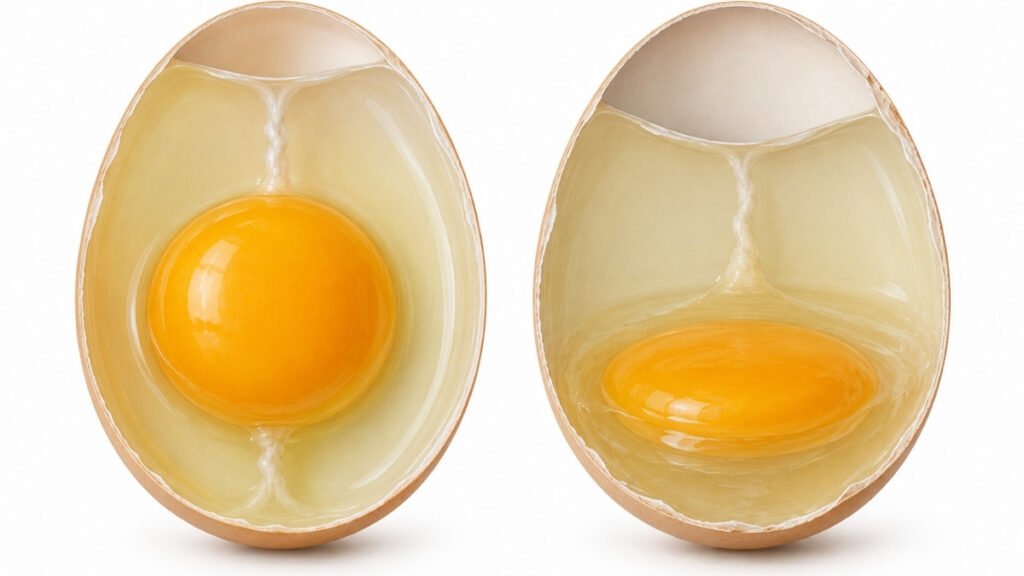
Every egg has a small air cell inside the shell, and that air cell grows larger over time as moisture and gases pass through the shell’s tiny pores. A bigger air cell means more buoyancy, which is why older eggs float higher in water than fresh ones.
Freshness vs. Safety
This is the key distinction: the float test measures age, not safety. A floating egg has simply lost more moisture through its shell over time — it hasn’t necessarily developed harmful bacteria. That said, age and spoilage risk are loosely related, which is exactly why floating eggs deserve a closer look rather than an automatic pass or automatic toss.
Should You Use a Floating Egg?
In many cases, yes — after checking it further. Crack it into a separate bowl, check for a normal appearance, and give it a smell. If everything checks out, it’s fine to use, and often even better suited for something like hard-boiling (more on that later). If it shows any of the spoilage signs covered in the next section, discard it.
Checking floating eggs individually, rather than tossing the whole carton the moment one egg floats, can save several perfectly good eggs from ending up in the trash for no real reason.
How to Tell If a Cracked Egg Has Gone Bad
Once you crack an egg open, checking it becomes much easier. A spoiled egg usually gives itself away with a strong rotten smell, long before you have to wonder whether it’s safe to eat.
The Smell Test
A spoiled egg has a strong, unmistakable rotten sulfur smell the moment it’s cracked. This is by far the clearest and most reliable sign of spoilage, and it’s not subtle — if you’re wondering whether what you’re smelling counts as “off,” it almost certainly doesn’t count as spoiled yet.
Normal Aging vs. Spoilage
It’s easy to mistake normal aging for spoilage, so here’s the distinction:
- Thin, watery egg whites — normal in older eggs, not a spoilage sign
- Flatter yolks that don’t hold their shape as firmly — also just age, not spoilage
- Mold or unusual colors anywhere in the egg — a genuine spoilage sign
- Any rotten smell — a genuine spoilage sign requiring immediate disposal
Blood Spots and Chalaza
Two things people often mistake for spoilage:
- Blood spots — small red or brown spots that occasionally occur during egg formation. They’re harmless and don’t indicate spoilage; you can remove them with a spoon if you prefer, or simply cook around them.
- Chalaza — the thick, white, stringy bit attached to the yolk. This is a completely normal structural part of the egg that holds the yolk in place, not a sign of anything wrong.
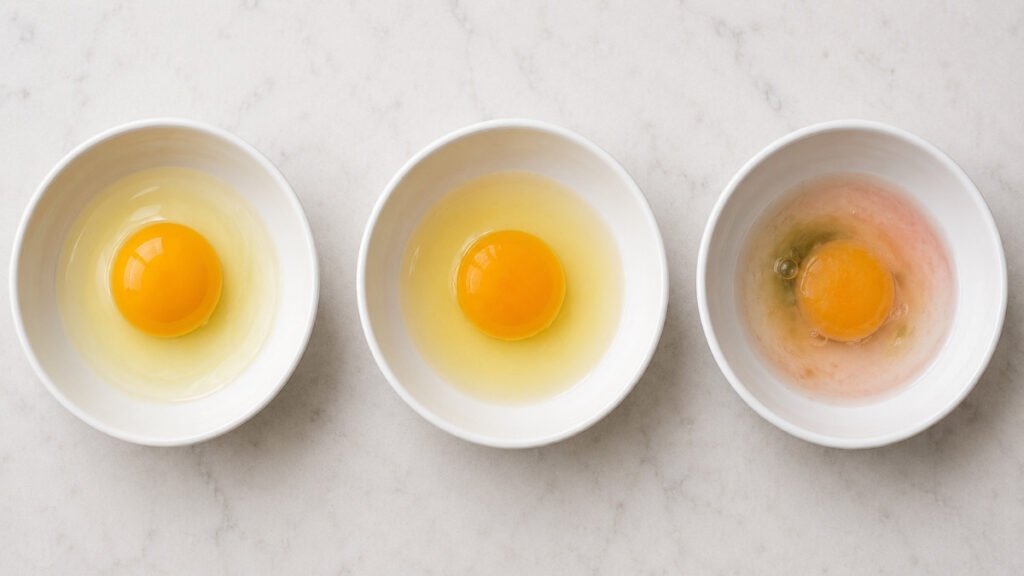
Fresh vs. Older vs. Spoiled Eggs
| Sign | Fresh | Older | Spoiled |
|---|---|---|---|
| Smell | Neutral | Neutral | Rotten |
| Egg White | Thick | Thinner | Abnormal |
| Yolk | High, rounded | Flatter | Discolored |
| Shell | Clean | Clean | Moldy or leaking |
Watery egg whites in an older egg often worry people more than they should — it’s simply a sign of age as moisture passes through the shell over time, not an indication that anything has gone wrong. The smell test remains the real decision-maker.
How to Read Egg Carton Dates
It’s easy to assume the date on an egg carton tells you exactly when the eggs should be thrown away, but that’s not how it works. Knowing what each date means can help you use more of your eggs and waste less food.
Sell-By vs. Best-By
The Sell-By date tells the store how long to display the carton — it’s inventory guidance, not a safety cutoff for you at home. The Best-By date (sometimes labeled “Best if Used By”) reflects the manufacturer’s estimate of peak quality, and eggs are often still perfectly good for some time after it passes, especially if refrigerated consistently.
Reading the Julian Pack Date
Many cartons include a three-digit Julian pack date stamped on the end — a number from 001 to 365 representing the day of the year the eggs were packed (001 is January 1st, 365 is December 31st). This is actually more useful than the printed Sell-By date if you want to compare freshness between two cartons on the shelf.
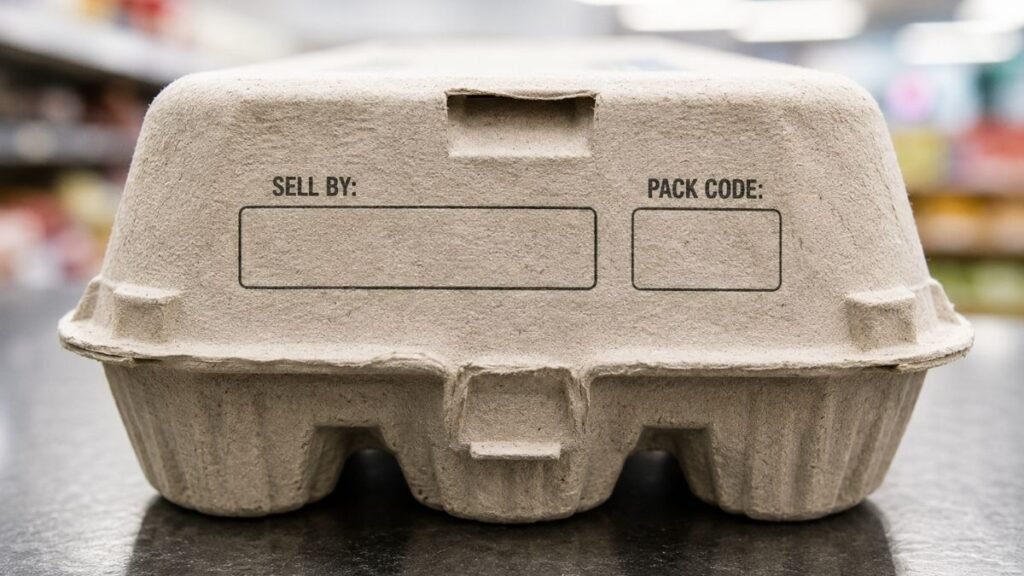
Picking the Freshest Carton
When shopping, comparing the Julian pack date between a few cartons — rather than just the printed Sell-By date — lets you pick the one packed most recently, which often isn’t the one at the front of the shelf.
Egg Carton Date Guide
| Label | Meaning | Shopping Tip |
|---|---|---|
| Sell-By | Store inventory guidance | Compare cartons, don’t rely on it alone |
| Best-By | Estimated peak quality | Check egg condition even if this has passed |
| Expiration | Varies by region/brand | Follow local labeling guidance |
| Pack Date (Julian) | The actual day eggs were packed | Choose the newest carton available |
Comparing two cartons side by side while shopping — checking the Julian pack date rather than just grabbing the first one — is a simple habit that can add real days to how long your eggs stay fresh at home.
How to Store Eggs and Make Them Last Longer
Good storage habits make a bigger difference than most people realize. Keeping eggs cold, leaving them in their original carton, and storing them on an interior refrigerator shelf can help them stay fresh much longer.
Best Refrigerator Storage
- Keep eggs refrigerated at or below 40°F (4°C) at all times.
- Store them in their original carton — it protects the shell and helps prevent eggs from absorbing odors from other foods.
- Place the carton on an interior shelf, not the refrigerator door, since the door experiences more temperature fluctuation every time it’s opened.
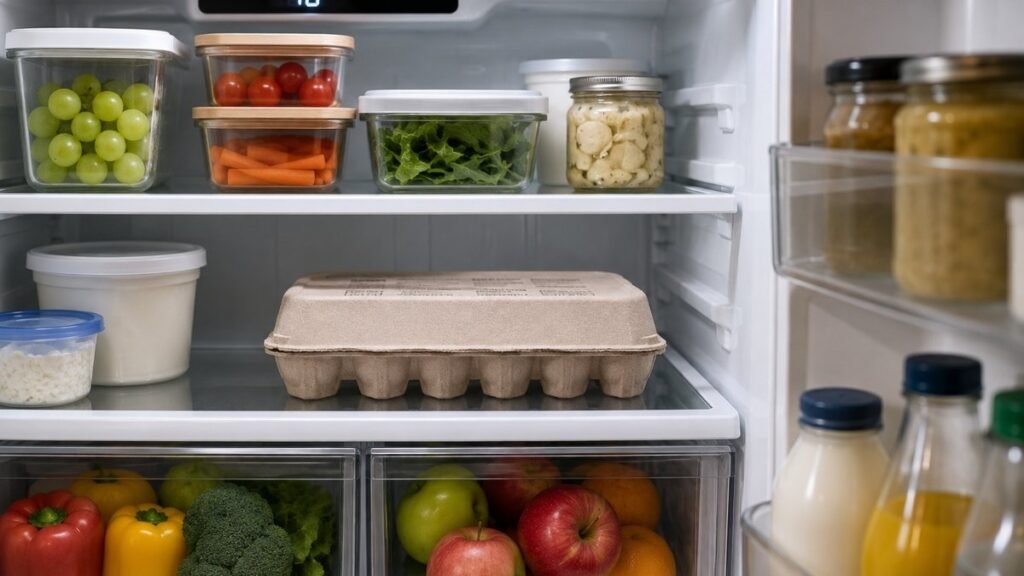
Farm-Fresh vs. Store-Bought Eggs
Store-bought eggs in the U.S. are washed, which removes the natural protective coating (the “bloom”) on the shell — this is exactly why they require consistent refrigeration. Farm-fresh eggs that still have their bloom intact can sometimes be stored at room temperature for a short time, but once washed (or once refrigerated), they should stay refrigerated going forward.
Store-Bought vs. Farm-Fresh Eggs
| Factor | Store-Bought | Farm-Fresh |
|---|---|---|
| Protective bloom | Removed (washed) | Usually intact |
| Refrigeration | Required | Depends on handling |
| Washing | Don’t rewash | Wash only right before use, if needed |
Can You Freeze Raw Eggs?
Yes — raw eggs freeze well, just not in the shell. Crack them into a container or freezer-safe tray, lightly whisk to combine the yolk and white, and freeze in individual portions (an ice cube tray works well for this). This is a great way to use up surplus eggs before a large carton nears the end of its usable window.
Egg Storage Checklist
- [ ] Refrigerate promptly after purchase
- [ ] Use the original carton, not a loose bowl or open shelf
- [ ] Avoid storing eggs in the refrigerator door
- [ ] Rotate older cartons to the front so they get used first
- [ ] Freeze surplus eggs without the shell if you won’t use them in time
A household working through a large 30-count carton often does best by rotating older eggs to the front for immediate use, and freezing a portion of the surplus early on — rather than letting the back half of the carton sit forgotten until every egg needs the float test at once.
Best Ways to Use Older but Still-Good Eggs
I’ve stopped saving only the freshest eggs for every recipe. Once an older egg passes the freshness check, it’s often the one I reach for when making hard-boiled eggs or baking, where it works just as well—or sometimes even better.
Why Older Eggs Peel Better
Fresh eggs are notoriously difficult to peel once hard-boiled, because the egg white clings tightly to the shell membrane. As eggs age, that air cell grows and the pH of the white changes slightly, which makes the shell separate much more easily after boiling. This is exactly why older eggs are often the better choice for hard-boiling, not a consolation prize.
Best Recipes for Older Eggs
- Hard-boiled eggs (easier peeling)
- Baking, where structure matters more than a perfectly rounded yolk
- Casseroles and egg bakes
- Scrambled eggs and frittatas
When Fresh Eggs Are Better
Very fresh eggs shine in dishes where appearance and texture are front and center — frying (for a firm, rounded yolk) and poaching (where a thick white holds its shape better in the water).
Best Uses by Egg Freshness
| Egg Condition | Best Uses |
|---|---|
| Very fresh | Frying, poaching |
| Fresh | Everyday cooking |
| Older | Hard-boiled eggs, baking, casseroles |
| Spoiled | Discard |
Standing eggs — the ones that pass the float test but sit upright rather than lying flat — are often perfect candidates for a batch of hard-boiled eggs instead of sitting in the fridge until they’re questionable. It’s a simple way to use up aging eggs deliberately, rather than letting uncertainty turn into food waste. And once those hard-boiled eggs are made, the same kind of caution applies to how long they’ll keep — it’s worth checking how long leftovers last in the fridge so a batch of hard-boiled eggs doesn’t quietly overstay its welcome either.
Frequently Asked Questions
Does a floating egg always mean it has gone bad and must be thrown away? No. A floating egg simply means it’s older, since the air cell inside grows over time. Crack it into a separate bowl and check its smell and appearance before deciding — many floating eggs are still perfectly good to use.
How long do store-bought eggs actually last past the printed expiration date? Properly refrigerated eggs are often still good for several weeks past the Sell-By or Best-By date. Rather than relying on the date alone, use the float test along with a smell and appearance check after cracking to confirm.
What is the most reliable way to tell if an egg is truly rotten before cooking? Smell is the clearest and most reliable sign. A rotten, sulfur-like odor after cracking an egg into a separate bowl means it should be discarded immediately, regardless of what the float test showed beforehand.
Why should you crack eggs into a separate bowl before adding them to your recipes? This lets you catch a spoiled egg before it ruins an entire batch of batter, dough, or mixed ingredients. It only takes a few extra seconds and can save you from wasting everything else in the bowl.
Are older, floating eggs better for making hard-boiled eggs? Yes, generally. As eggs age, the shell separates more easily from the white after boiling, making them noticeably easier to peel than very fresh eggs. As long as an older egg passes the smell and appearance check, it’s a great candidate for hard-boiling.
Does a blood spot or watery egg white mean the egg is spoiled? No. A blood spot is a harmless occurrence from egg formation and can simply be removed if you’d prefer, or cooked around. Watery egg whites are a normal sign of age, not spoilage — the smell test is what actually confirms whether an egg has gone bad.
How do you test and store unwashed farm-fresh eggs compared to store-bought eggs? Farm-fresh eggs with an intact protective bloom can sometimes be kept at room temperature briefly, but once washed or refrigerated, they should stay refrigerated consistently, just like store-bought eggs. The same float test, shell inspection, and smell check apply to both types.
Can you freeze raw eggs to extend their shelf life before they go bad? Yes. Crack them out of the shell into a container or freezer tray, whisk lightly, and freeze in individual portions. This is a practical way to use up a surplus of eggs before they age past the point you’d want to use them fresh.
Final Thoughts
If you’ve ever wondered how to tell if eggs are still good, you don’t have to rely on guesswork anymore. A quick look at the shell, a simple float test, cracking the egg into a separate bowl, and one last smell are usually all it takes to make a confident decision.
Most of us have thrown away eggs simply because we weren’t sure if they were still safe to eat. With a few easy checks and good storage habits, you can waste less food, save more from every carton, and feel a little more confident every time you open the refrigerator. Sometimes, the best way to stretch your grocery budget starts with knowing that an older egg is still perfectly good to use.
🥚 Pantry Notes: The Thinking Behind This Guide
Knowing whether eggs are still good isn’t about memorizing dates—it’s about making confident decisions in your own kitchen.
That’s why this guide focuses on simple checks that anyone can use, from the float test and smell test to proper storage habits that help eggs stay fresh longer.
This guide is built around three essentials:
- 🥚 Check Eggs with Confidence — Use simple tests to tell whether an egg is still safe to cook with.
- 🧊 Store Eggs the Right Way — Keep eggs fresher longer with practical refrigerator and freezer tips.
- 💰 Reduce Food Waste — Avoid throwing away perfectly good eggs just because the date on the carton has passed.
Because good food storage isn’t about guessing.
It’s about wasting less, saving more, and feeling confident every time you open the refrigerator.
📚 Continue Building Smarter Food Storage Habits
Knowing whether an egg is still good is just one part of reducing food waste and getting more value from every grocery trip. These practical guides can help you store everyday foods safely, make smarter shopping decisions, and keep your kitchen running more efficiently.
- How Long Do Leftovers Last in the Fridge? — Learn safe storage times for cooked meals, leftovers, and everyday foods before they spoil.
- How to Save Money on Groceries — Simple shopping habits and storage tips that help your food budget go further.
- How to Tell If Chicken Is Bad — Learn the warning signs of spoiled chicken before it reaches your plate.
- How Long Does Cooked Chicken Last in the Fridge? — Find out how long cooked chicken stays safe to eat and the best ways to store it.
- Pantry Staples List — Build a well-stocked pantry with everyday essentials that last longer and make meal planning easier.
Keeping your refrigerator and pantry organized isn’t just about food safety—it’s one of the easiest ways to waste less, save more, and feel more confident every time you cook.
❤️ A Final Note
Making the most of your groceries isn’t about being perfect—it’s about making small, informed choices every day.
At Pantryva, we create practical food storage, grocery, and kitchen guides that help everyday households waste less, spend smarter, and feel more confident about the food they bring home. Every article is built around clear, reliable advice you can trust in real life.
Helping you make smarter food decisions, save more on every grocery trip, and get the most from every item in your pantry.