
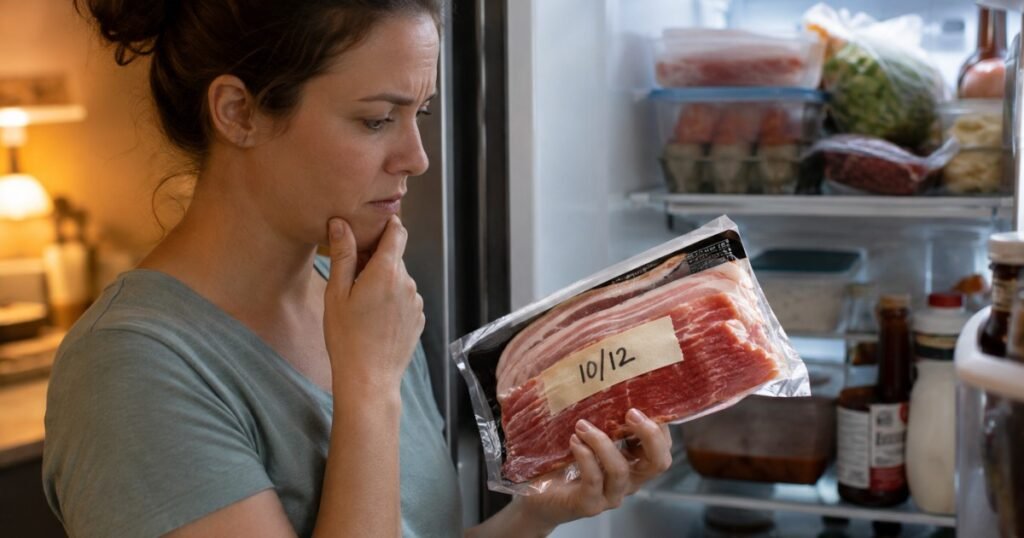
You’re standing in front of the open fridge, holding half a package of bacon, and you just can’t remember when you opened it. Was it Sunday? Maybe Saturday? The date on the package says “sell by” something that’s already passed, and you’re doing the mental math while the cold air drifts out and your coffee gets cold.
You don’t want to waste it. It looks fine. It smells fine. But “looks fine” and “is safe” aren’t always the same thing, and somewhere in the back of your head, you know that.
Here’s the thing: checking the calendar alone isn’t enough. Bacon storage isn’t just about dates — it depends on the type you bought, whether it’s been opened, where you’re storing it in the fridge, and a few habits that make the difference between a package that lasts and one you end up throwing away half-used. This guide covers all of it: how long different types of bacon actually last, how to know when it’s genuinely gone bad, and how to buy the big Costco pack without wasting a single strip.
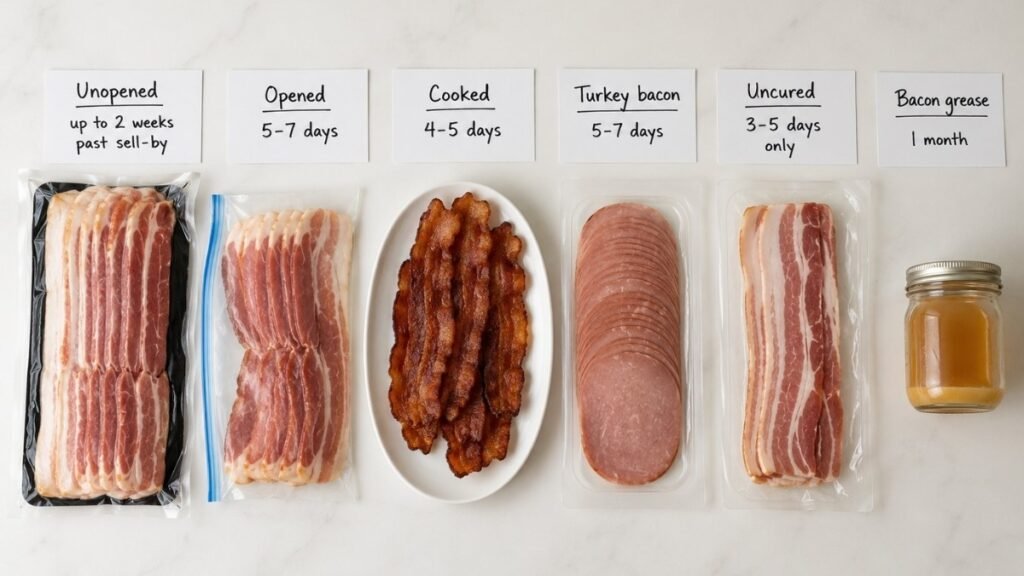
The Quick Answer: Bacon Storage Time at a Glance
| Bacon Type | Refrigerator | Freezer | Best Practice |
|---|---|---|---|
| Unopened bacon (cured) | Up to 2 weeks past sell-by | 6–8 months | Keep sealed until ready to use |
| Opened bacon | 5–7 days | 6 months | Reseal tightly, remove air, store in back of fridge |
| Cooked bacon | 4–5 days | 1 month | Store in airtight container, layer with paper towels |
| Turkey bacon (unopened) | Up to 1 week past sell-by | 6 months | Use sooner — flavor degrades faster |
| Turkey bacon (opened) | 5–7 days | 6 months | Same rules as regular bacon |
| Uncured bacon (opened) | 3–5 days | 6 months | Shorter window — no nitrates to slow spoilage |
| Bacon grease | 1 month (fridge) | 3 months (freezer) | Store in sealed glass jar, strain before storing |
Print it, save it, or bookmark it—the next time you’re wondering whether bacon is still good, you’ll have the answer in seconds.
Before You Trust the Calendar, Know Which Type of Bacon You Bought
Most food safety guides treat bacon like one uniform product. It isn’t. The type of bacon in your fridge has a real effect on how long it’s safe to keep — and “it’s been less than a week” can mean very different things depending on what’s in the package.
Cured vs. Uncured Bacon
Standard bacon is cured with sodium nitrate or sodium nitrite — preservatives that slow bacterial growth and give bacon its characteristic pink color and extended shelf life. Uncured bacon is made without synthetic nitrates, often using natural sources like celery powder instead.
Here’s where it matters: uncured bacon typically has a shorter refrigerator window after opening — usually 3–5 days instead of the standard 5–7. The label often says “no nitrates or nitrites added” and the bacon itself tends to look slightly different — more of a grayish-brown than a bright pink. It’s not worse, it’s just more perishable. If you regularly buy uncured or “natural” bacon from Whole Foods, Trader Joe’s, or a farmers market, plan to use it faster or freeze it sooner.
Regular Bacon vs. Turkey Bacon
From a storage standpoint, turkey bacon follows almost the same rules as pork bacon — the same temperature requirements, similar timeframes, same signs of spoilage. Where they differ is flavor degradation. Turkey bacon tends to lose its fresh taste faster than pork bacon, even within the safe storage window. It won’t make you sick on day 6, but it probably won’t taste great either. If you buy turkey bacon, aim to use it within 4–5 days of opening rather than pushing to 7.
Does Thick-Cut Bacon Last Longer?
It doesn’t. Thickness affects cooking time and texture, but it doesn’t change how quickly bacteria multiply on the surface of the meat or how the curing process works. A thick-cut strip and a regular strip from the same package have the same safe storage window. The thickness question comes up often enough that it’s worth saying plainly: thicker is not safer. Different bacon, same clock.
How Long Does Raw Bacon Last in the Fridge?
Raw bacon doesn’t have one simple expiration date. How long it stays safe depends on one key question: Has the package been opened? Once the seal is broken, the storage timeline changes quickly, so it’s important to know which rule applies to the bacon in your fridge.
Unopened Bacon
An unopened package of cured bacon can safely last up to 2 weeks in the refrigerator beyond the sell-by date when stored at 40°F or below. The sell-by date is an inventory date for the store — not a hard cutoff for safety. The use-by date is different and should be taken more seriously; that date reflects the manufacturer’s assessment of when quality meaningfully declines.
The sealed packaging does real work here. The vacuum-sealed environment inside a standard bacon package limits oxygen exposure, which slows both bacterial growth and oxidation. Once that seal is broken, you’re working with a different product and a different clock.
Opened Bacon
After opening, the USDA recommends using bacon within 7 days — refrigerated at or below 40°F. In practice, most food safety experts consider 5–7 days a reasonable window for opened cured bacon when it’s been properly resealed and stored toward the back of the fridge (colder and more consistent temperature than the door or front shelves).
Seven days is a food safety guideline — not a challenge to beat. I’ve definitely looked at bacon on day eight hoping it would magically still count as day seven. It doesn’t.
What If It’s Been Sitting for Two Weeks?
This comes up regularly, and Reddit has strong opinions on it. You’ll find plenty of people who say they’ve eaten two-week-old opened bacon and felt fine. That’s probably true. Here’s why it doesn’t make it safe:
Not everyone who eats questionable bacon gets visibly sick. Individual immune response varies, bacterial load varies, and mild foodborne illness is often attributed to something else entirely — a stomach bug, something you ate out, stress. The absence of obvious symptoms after the fact doesn’t mean the risk wasn’t real. Two weeks of opened bacon in a home refrigerator that’s opened and closed multiple times daily is outside the range where the guideline gives you meaningful protection. It might be fine. It might not. That’s the definition of unnecessary risk.
Can You Still Eat Bacon If It Looks Fine?
This is the section that actually matters. The visual check feels decisive because we trust our eyes, but bacon spoilage doesn’t always announce itself with the obvious signals people expect.
When Appearance Can Fool You
Salmonella, Listeria, and Staphylococcus aureus — three of the bacteria most commonly associated with pork products — don’t change the color, texture, or appearance of bacon at levels that can cause serious illness. Pink bacon can be contaminated. Bacon that looks unchanged from when you bought it can be past safe use. The surface appearance of raw bacon tells you something about freshness, but it doesn’t tell you about bacterial load.
Why Smell Isn’t Enough
A sour or “off” smell is a reliable signal that bacon has spoiled. But the absence of smell is not a reliable signal that it’s safe. This is the distinction that trips people up most often. Some of the dangerous bacteria associated with meat spoilage produce no detectable odor at illness-causing concentrations. If bacon smells wrong, trust that signal completely. If it smells normal, you still need to consider the date.
Why Cooking It Extra Crispy Won’t Make It Safe
This is one of the most persistent kitchen myths, and it comes up constantly. The logic sounds reasonable: heat kills bacteria, so more heat kills more bacteria. The problem is that it’s the wrong question.
The concern with bacon that’s been in the fridge too long isn’t just live bacteria — it’s the toxins that some bacteria produce as they multiply. Staphylococcus aureus, in particular, produces toxins that are heat-stable. Cooking bacon to 160°F kills the bacteria, but the toxins they’ve already produced don’t break down at normal cooking temperatures. “I’ll just fry it longer” doesn’t undo what’s already happened. If the bacon was unsafe before cooking, cooking it doesn’t make it safe.
How to Tell If Bacon Has Gone Bad in 30 Seconds
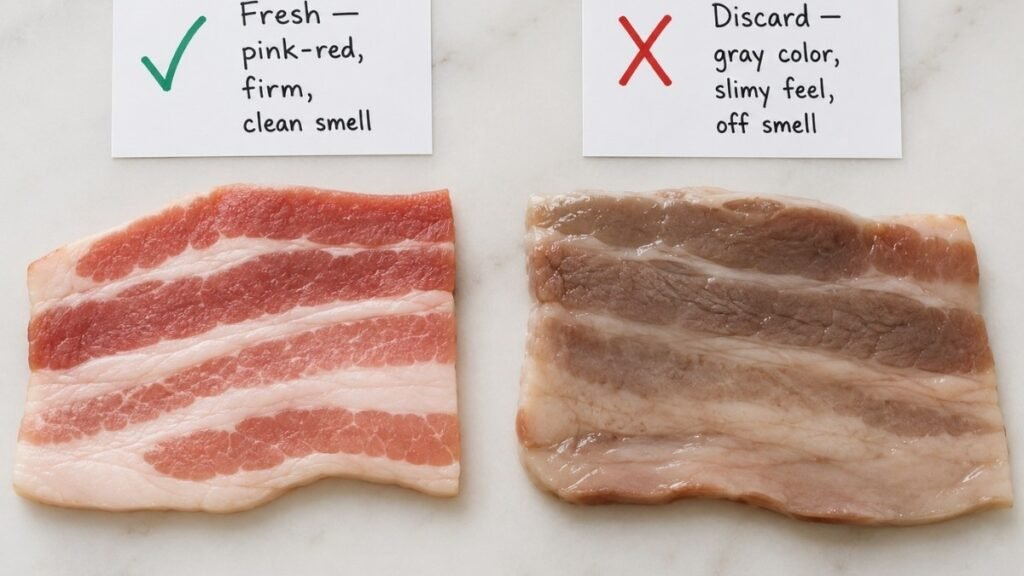
Before you toss a pack of bacon—or take a risky bite—take 30 seconds to check it properly. These simple signs can help you recognize obvious spoilage and make a safer, more confident decision in your kitchen.
Check the Color
Fresh raw bacon is pink to reddish-pink with white or pale yellow fat. Bacon that has started to turn will develop gray, brown, or greenish tones — particularly visible in the fat. Some surface discoloration is normal as bacon oxidizes, but a significant color change throughout the strip is a warning sign.
Feel for Sliminess
Run a strip of bacon between your fingers. Fresh bacon has a slightly moist surface. Bacon that has started to spoil develops a slimy or sticky coating that’s different from normal surface moisture — tacky rather than damp. If the surface of the bacon feels slimy, don’t taste-test it. Discard it.
Smell Carefully
Unwrap the bacon and smell it at close range. Fresh bacon smells like smoke, salt, and cured meat. Spoiled bacon smells sour, sulfurous, or like rotten meat. The difference is usually unambiguous once you’ve experienced it. If something smells wrong, that’s your answer.
When in Doubt, Throw It Out
A package of bacon costs $4–$8 at Aldi or Walmart. A case of foodborne illness costs you a day or more of work, potential medical costs if it escalates, and a level of physical misery that’s genuinely not worth a few dollars of savings. The calculus on “when in doubt” is straightforward: throw it out.
Cooked Bacon Storage: Perfect for Meal Prep
Cooked bacon has a shorter refrigerator window than raw — 4–5 days in an airtight container, according to USDA guidelines — but it gives you significant convenience during the week.
Storing cooked bacon: Let it cool completely on a paper towel-lined plate. Layer with paper towels in an airtight container — the towels absorb any remaining grease and keep the strips from sticking together. Refrigerate. For freezing, store in a single layer in a freezer bag for up to 1 month.
Reheating: 20–30 seconds in the microwave between paper towels, or 1–2 minutes in a skillet over medium heat. Either method restores the texture reasonably well.
Breakfast prep: A batch of cooked bacon on Sunday covers weekday breakfasts without any morning cooking. Pair with hard-boiled eggs (also prepped Sunday), and breakfast for the week is handled in about 15 minutes of Sunday prep time.
Lunch sandwiches: Cooked bacon keeps well in sandwiches if you pack it separately and add it at lunchtime. Bacon that has sat in a sandwich since morning tends to go limp and slightly soggy.
Freeze Bacon the Smart Way (Without Wasting Half the Package)
I buy bacon at Costco when it goes on sale — usually 3 lbs or more at a time. For a while, I’d stick the whole thing in the freezer, and then defrost the entire package every time I wanted a few strips. Half of it would refreeze poorly, and the texture after the second thaw was never quite right. Once I figured out portion freezing, I basically stopped wasting bacon entirely.
The Accordion Freezing Method
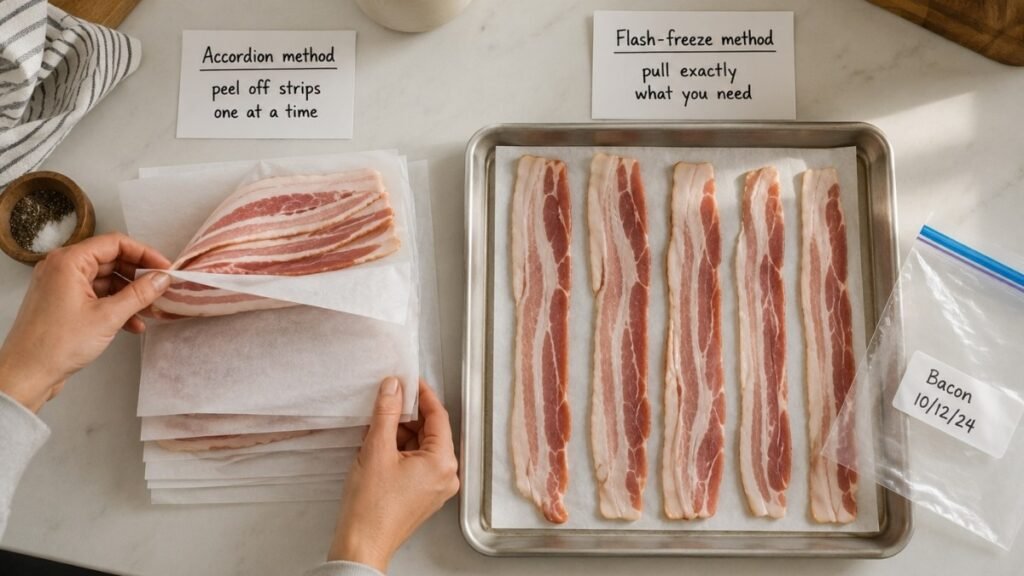
Lay a strip of raw bacon across a sheet of wax paper or parchment, fold the paper over it, lay the next strip, fold again — like folding an accordion. When you’re done, you have a neat stack of individually separated strips inside one piece of paper. Place the whole thing in a freezer bag. When you need a few strips, peel off exactly what you want from the accordion and return the rest to the freezer without disturbing it.
Flash-Freeze Individual Strips
Alternatively: lay strips flat on a parchment-lined sheet pan without touching, freeze for 1–2 hours until firm, then transfer to a freezer bag. The strips don’t stick together, and you can pull out exactly 2 strips — or 5 strips, or whatever you need — without thawing anything else.
Best Containers for Home Kitchens
You don’t need a vacuum sealer. The goal is just removing air contact:
- Zip-top freezer bags with air pressed out before sealing work very well
- Wax paper or parchment as an interlayer between strips, inside a freezer bag
- Heavy-duty aluminum foil wrapped tightly around portioned strips, placed inside a freezer bag for double protection
Label each bag with the date. Bacon frozen within 1–2 days of purchase and properly stored keeps well for 6 months without meaningful quality loss.
Budget Kitchen Tips to Make Bacon Last Longer After Opening
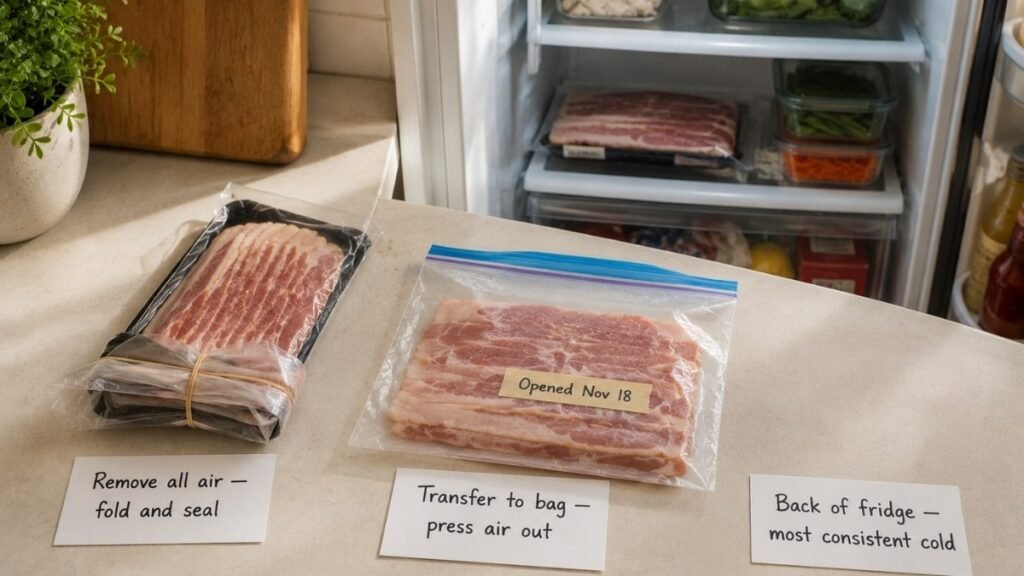
The package is open. Here’s how to get the most out of what’s left.
Remove as much air as possible. Press the bacon strips flat inside the packaging, fold the open end over itself multiple times, and secure with a rubber band or binder clip. Or transfer to a zip-top bag and press the air out before sealing. Air contact is the primary driver of oxidation and bacterial growth in opened bacon.
Reseal thoughtfully. The original packaging is fine if the seal is intact and you can reseal it tightly. If the bag is torn or the seal is damaged, transfer to a new zip-top bag.
Store in the back of the fridge, not the door. Door shelves experience the most temperature fluctuation of any location in the refrigerator — every time the door opens, warm air hits the door contents directly. The back of a middle shelf maintains the most consistent cold. This is where bacon, deli meat, and any other opened protein should live.
Divide and date. If you opened a large package and know you won’t use it all in 5 days, immediately portion what you won’t use into freezer-ready portions and freeze them. Don’t wait until day 4 — freeze while it’s still at peak quality.
Label with the date opened. A piece of masking tape and a marker. Five seconds. Eliminates all the “when did I open this?” uncertainty that leads to either throwing away good bacon or eating questionable bacon.
Don’t Throw Away the Bacon Grease
For years, I poured bacon grease straight down the drain (which is also a plumbing mistake) or into the trash. Then I started saving it and using it to cook eggs, and I genuinely haven’t bought as much butter since. It’s one of those small kitchen habits that feels minor until you realize you’ve been throwing away a free cooking fat with excellent flavor for your entire adult life.
How Long Bacon Grease Lasts
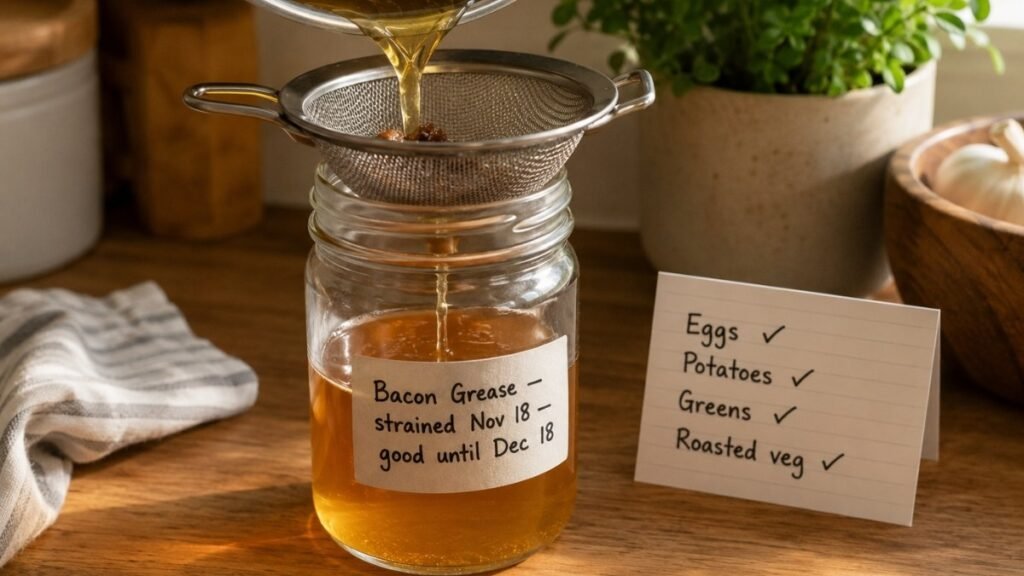
Strained and properly stored bacon grease lasts approximately 1 month in the refrigerator and up to 3 months in the freezer. The key word is strained — grease that contains bacon bits or food particles spoils significantly faster than pure, strained grease.
Best Container
A glass jar with a tight-fitting lid is the standard recommendation, and it’s correct. Glass doesn’t absorb odors or flavors, tolerates temperature changes without leaching, and is easy to clean between uses. A wide-mouth mason jar works perfectly. Avoid storing in the original pan or in plastic containers — plastic absorbs the fat over time and can affect flavor.
Let the grease cool slightly after cooking, then pour it through a fine mesh strainer into the jar. Let it cool to room temperature before refrigerating.
Easy Ways to Use It
- Scrambled eggs or fried eggs: A teaspoon in the pan instead of butter. The flavor improvement is immediate and noticeable.
- Roasted potatoes: Toss cubed potatoes with melted bacon grease instead of olive oil before roasting. Easily one of the best potato applications.
- Sautéed greens: A spoonful in the pan when cooking collard greens, kale, or green beans adds a depth of flavor that no other fat replicates in quite the same way.
- Roasted vegetables: Toss any root vegetable — carrots, parsnips, beets — with bacon grease before roasting. The smokiness works particularly well with sweet vegetables.
This is what zero-waste cooking actually looks like in a real kitchen. Not elaborate composting systems or complicated meal planning — just using the cooking fat you already produced instead of buying another container of something else.
Common Bacon Storage Mistakes That Waste Money
Leaving it in the original packaging after opening. The original packaging isn’t designed to reseal effectively. Once open, it provides minimal air protection compared to a properly sealed bag.
Thawing the whole package when you only need a few strips. This is why the accordion method or flash-freezing matters. Repeatedly thawing and refreezing degrades texture and shortens safe storage windows.
Storing on door shelves. Already covered above, but worth repeating — door shelves are the warmest, most temperature-variable location in any refrigerator.
Opening the package repeatedly without resealing properly each time. Each opening introduces air and handling. If you use bacon frequently, consider dividing the package into two portions on purchase day — one for immediate use, one sealed tightly for later in the week.
Assuming no smell means safe. The smell test catches obvious spoilage. It doesn’t catch the bacteria that don’t announce themselves. The date is the more reliable guide.
Buying more than you can use without a plan for the excess. Many families’ problem isn’t that they don’t know how to store bacon — it’s that they forget the half-package is even in there until it’s too late. The label-with-date habit solves this better than any other single change.
Quick Bacon Storage Cheat Sheet
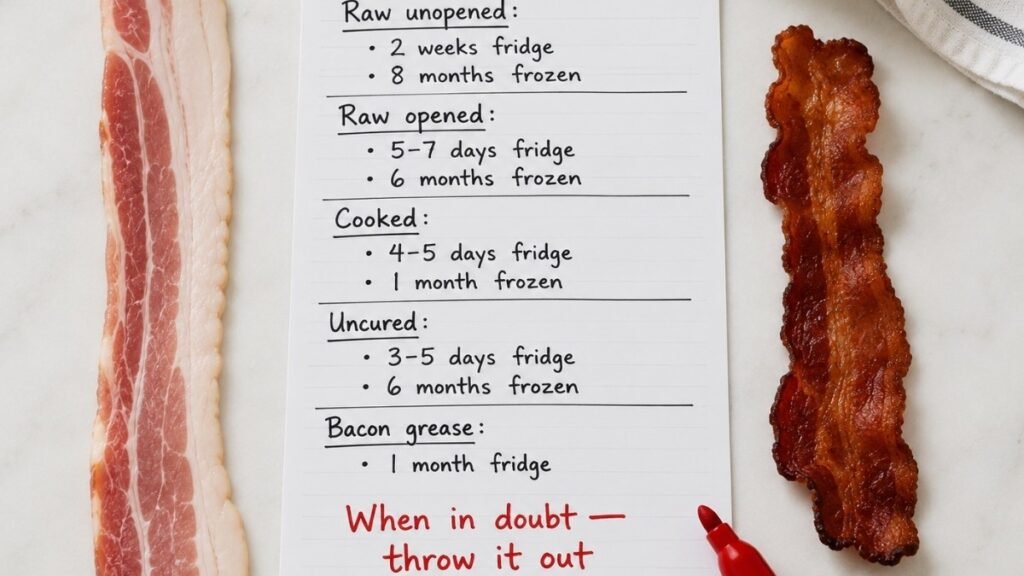
Raw, unopened: Up to 2 weeks past sell-by in the fridge. Up to 8 months frozen.
Raw, opened: 5–7 days in the fridge. Up to 6 months frozen in portions.
Cooked: 4–5 days in an airtight container in the fridge. 1 month frozen.
Uncured/natural bacon: 3–5 days opened. Freeze sooner.
Turkey bacon: 5–7 days opened. Flavor degrades faster — use by day 5 for best taste.
Bacon grease: 1 month in the fridge in a sealed glass jar. 3 months frozen.
Golden rule: When in doubt, throw it out. The money saved isn’t worth the risk.
FAQ
Q: Can you eat bacon 10 days after opening?
Ten days is beyond the USDA’s recommended 7-day window for opened bacon stored in the refrigerator. Whether it’s safe depends on exactly how it was stored, how consistently cold your fridge runs, and factors you can’t assess visually. The smell test and visual check provide some information, but not complete assurance. The official guidance says no. The practical advice is: if it’s been more than a week, the risk isn’t worth it.
Q: Is bacon still safe after the sell-by date?
Yes — the sell-by date is a retailer inventory date, not a safety cutoff. Unopened, properly refrigerated cured bacon is generally safe for up to 2 weeks past the sell-by date. Once opened, the sell-by date becomes less relevant — the 7-day rule from the date of opening is the operative guideline.
Q: Can bacon smell normal and still be bad?
Yes. This is one of the most important food safety facts about bacon. Some harmful bacteria — including strains of Salmonella and Listeria — don’t produce detectable odors at levels that cause illness. A normal smell tells you the bacon hasn’t obviously spoiled. It doesn’t tell you the bacon is safe. The date matters more than the smell.
Q: Does uncured bacon spoil faster than regular bacon?
Yes. Uncured bacon doesn’t contain sodium nitrate or nitrite — the preservatives that extend shelf life in conventional bacon. Without these compounds slowing bacterial growth, uncured bacon typically has a shorter window after opening: 3–5 days rather than the standard 5–7. Check the label and plan accordingly.
Q: Can frying bacon kill harmful bacteria?
Cooking bacon to 160°F does kill most harmful bacteria. But the more relevant question is whether the bacon has been stored long enough to produce bacterial toxins — specifically from Staphylococcus aureus. These toxins are heat-stable and don’t break down at normal cooking temperatures. “I’ll fry it longer” addresses the bacteria but not the toxins. If bacon was questionable before cooking, cooking it doesn’t resolve the safety concern.
Q: What’s the best way to freeze bacon one strip at a time?
Flash-freezing is the most practical method: lay strips flat on a parchment-lined baking sheet without touching, freeze for 1–2 hours until firm, then transfer to a freezer bag. The strips remain separate and you can pull exactly what you need without thawing the rest. Alternatively, the accordion method with wax paper between strips inside a freezer bag produces the same result with less freezer space.
Q: How long does bacon grease last in the refrigerator?
Strained bacon grease stored in a sealed glass jar lasts approximately 1 month in the refrigerator. Unstrained grease containing food particles spoils faster — closer to 1–2 weeks. In the freezer, strained grease keeps well for up to 3 months.
Q: Should bacon be stored in its original package after opening?
The original package can work if it seals effectively, but most original bacon packaging doesn’t reseal well enough to provide meaningful air protection after opening. Transferring to a zip-top bag with air pressed out, or folding and securing the original packaging tightly before placing in a bag, is more reliable. The goal is minimal air contact.
Final Thoughts
Food storage isn’t really about memorizing how many days bacon lasts.
It’s about building a kitchen where fewer groceries end up forgotten, fewer meals go to waste, and buying in bulk actually saves money instead of creating more trash.
Every package you label, every portion you freeze, and every small habit you build makes the next grocery trip a little smarter.
That’s the kind of savings that lasts far longer than a single pack of bacon.
🍳 Pantryva Kitchen Note: Why Bacon Gets Wasted More Often Than It Should
Most bacon doesn’t end up in the trash because people don’t know the expiration date.
It gets wasted because half-used packages disappear into the back of the fridge, bulk purchases aren’t portioned, or leftovers simply get forgotten.
This guide focuses on practical habits that make a real difference:
🥓 Understanding Safe Storage Windows
Know how long unopened, opened, cooked, and frozen bacon actually stays safe under normal home refrigeration.
🧊 Portion Freezing That Prevents Waste
Learn how separating bacon into individual portions lets you cook only what you need while keeping the rest fresh for weeks.
🛒 Buying More Without Throwing More Away
Smart storage techniques that help families take advantage of grocery sales without sacrificing food safety.
Because reducing food waste isn’t about taking chances.
It’s about storing food the right way from the very beginning.
Continue Building Your Pantryva Kitchen
Knowing how to store bacon is a great start—but every everyday ingredient has its own storage habits.
Explore these practical guides to keep your groceries fresher, reduce waste, and make every shopping trip go a little further.
For more on building a kitchen that wastes less and costs less across the board, our how to save money on groceries guide covers the full system. And for the food storage times across every major refrigerator staple, our how long do leftovers last guide is the natural companion to this one.
🍳 A Final Note from Pantryva
Good food deserves better habits.
At Pantryva, we’re here to help you waste less, shop smarter, and get more from every grocery trip with practical advice you can trust.
Because every well-managed kitchen starts with one simple habit.