
Key Takeaways
- Sweet potatoes belong in the pantry, not the fridge — refrigerator temperatures convert their starches to sugar and cause the interior to harden and lose flavor. A cool, dark cabinet or pantry shelf is the correct location, where they last 2–4 weeks.
- Asparagus stored upright in water lasts 10–14 days — more than double the 3–5 days most people get from storing it lying flat in a produce bag. This single change is one of the highest-impact vegetable storage adjustments available.
- Corn on the cob is the most time-sensitive vegetable on this list — sugars convert to starch within hours of picking and the process doesn’t stop in the fridge. Eat it within 1–2 days of purchase. Blanch and freeze anything you can’t use by then.
- Broccoli should never be washed before refrigerating — moisture on the florets is the primary cause of the yellowing and bacterial rot that ruins most broccoli within a few days. Wash only when you’re ready to cook.
- The paper towel method applies to nearly every vegetable in this guide: a sheet of paper towel in the bag or container absorbs excess moisture, extending shelf life by 2–5 days for leafy greens, broccoli, cabbage, kale, and spinach.
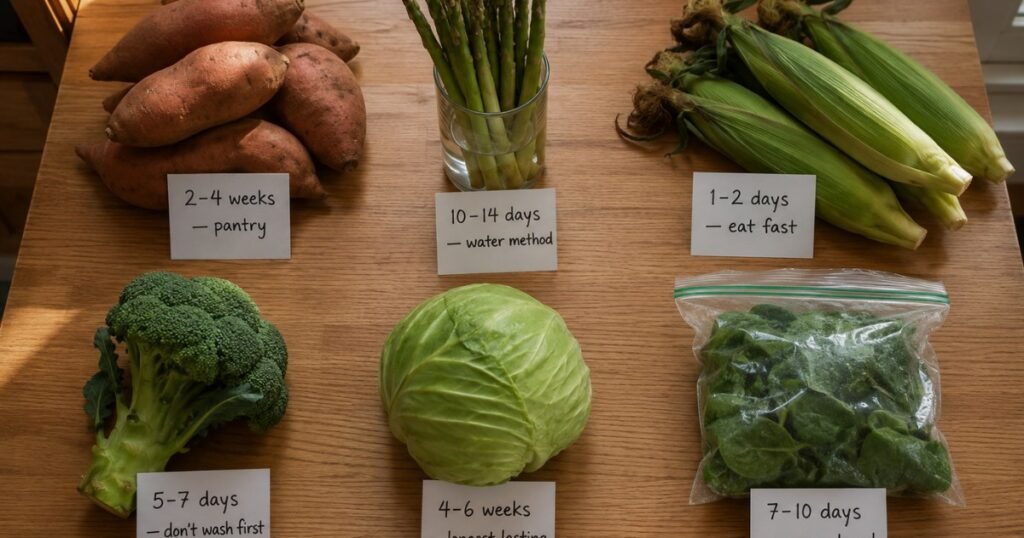
You’ve already read the first vegetable storage guide and made a few changes — the mushrooms are now in a paper bag, the celery is standing in water, and you transferred the potatoes to a cool cabinet away from the onions. Things are lasting longer. But there’s a second shelf in that crisper drawer, and it’s full of the vegetables this guide covers.
The asparagus you bought on Sunday is starting to look sad by Wednesday. The sweet potatoes have been in the fridge since you bought them three weeks ago and you just discovered they’ve hardened and lost their sweetness. The corn you planned to grill on Thursday is already starchy and dull on Tuesday. And the bag of spinach you opened four days ago is already threatening to become a slime situation.
This guide covers the 11 vegetables most commonly bought by American families that weren’t covered in the first guide — with specific, counterintuitive, and genuinely useful storage instructions for each one.
Sweet Potatoes: The Fridge Is the Wrong Place
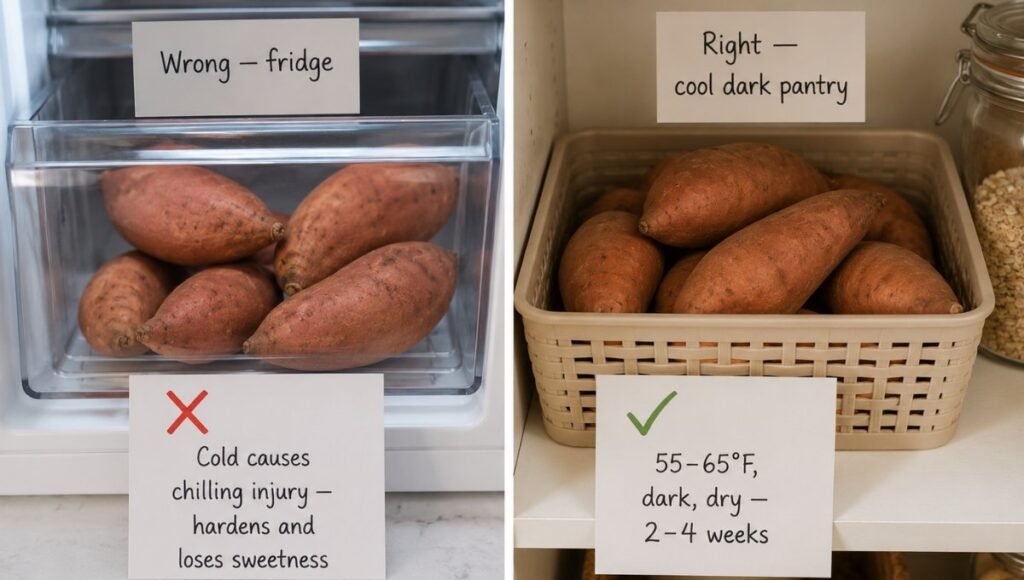
Where: Cool, dark pantry or cabinet — NOT the refrigerator How long: 2–4 weeks at room temperature in ideal conditions; 3–5 weeks in a true root cellar environment How: A ventilated basket, paper bag, or cardboard box in a cool (55–65°F), dark, dry location. Keep away from heat sources, direct sunlight, and direct contact with the floor (which tends to be the coolest spot but also the most humid in many homes).
The refrigerator mistake with sweet potatoes is the same as with regular potatoes, but with an additional problem: cold temperatures cause a condition called “hardcore” or “chilling injury” in sweet potatoes — the interior becomes hard, dry, and discolored even after cooking, and the natural sweetness that makes them worth buying diminishes significantly. If your baked sweet potato has ever come out starchy and not quite sweet enough, refrigerator storage before cooking may be part of the reason.
How long do sweet potatoes last? At room temperature in a cool, dark place: 2–4 weeks. In a warm kitchen: 1–2 weeks. In a true root cellar (55°F, high humidity): up to 3–5 months. Cooked sweet potatoes in the fridge: 3–5 days.
Signs they’ve gone too far: Very soft spots that feel hollow, visible mold, or an unpleasant fermented smell. Small soft spots can be cut away generously with the rest still usable. Deep discoloration or a pervasive musty smell means discard the whole potato.
Freezing sweet potatoes: Cook first (bake, steam, or boil), then mash or cube, cool completely, and freeze in airtight bags. Keeps 6–8 months. Raw sweet potatoes don’t freeze well — the cellular structure breaks down into a grainy, unpleasant texture.
Asparagus: The Water Glass Method Changes Everything
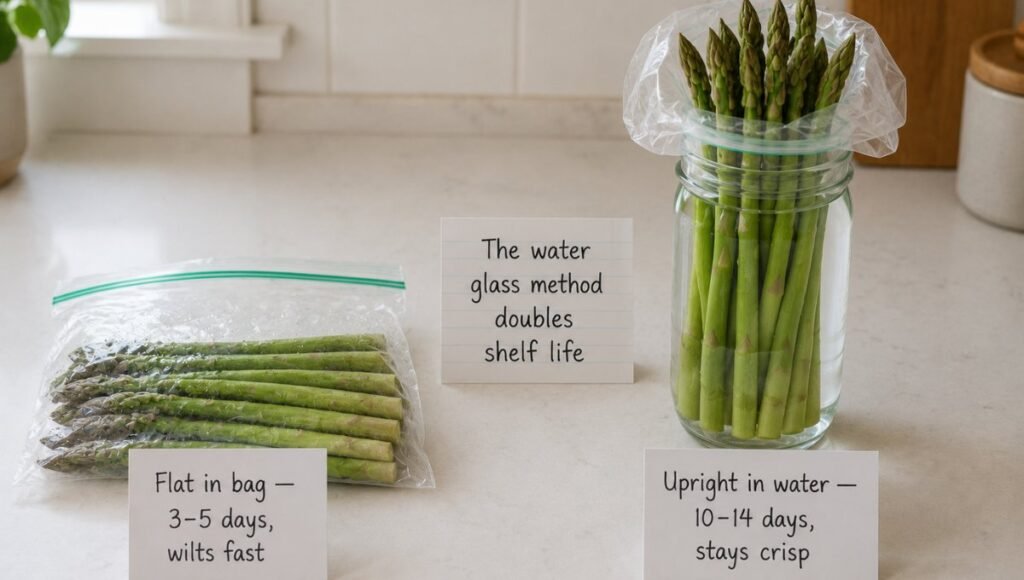
Where: Refrigerator — standing upright in water How long: 10–14 days using the water method; 3–5 days lying flat in a bag How: Trim about half an inch off the bottom of the stems. Stand the spears upright in a jar or glass with 1–2 inches of cold water at the bottom, like a bouquet of flowers. Cover the tops loosely with a plastic bag. Refrigerate. Change the water every 2 days.
This is the storage method that produces the most dramatic improvement in asparagus freshness, and it’s genuinely underused. Asparagus is a stalk vegetable that continues drawing moisture and nutrients through its cut end even after harvest — placing that end in water keeps the process going in a beneficial way, maintaining crispness and flavor far longer than any bag-based storage method.
The flat-in-a-bag problem: When asparagus lies on its side in a produce bag, the cut ends dry out and the spears lose moisture through their surfaces. The middle and bottom portion of each spear becomes woody and stringy much faster than with water storage.
Which spears to choose at the store: Thicker asparagus spears hold up longer in storage than thin ones. Thin asparagus has its place (quicker cooking, more delicate texture) but for buying ahead, thicker spears give you more storage flexibility. The tips should be tightly closed — any opening or feathering indicates older asparagus.
Freezing asparagus: Blanch trimmed spears in boiling water for 2–3 minutes, transfer immediately to ice water, dry thoroughly, arrange in a single layer on a sheet pan, freeze for 2 hours, then transfer to a freezer bag. Keeps 10–12 months. Use directly from frozen in stir-fries, pasta, and roasted dishes.
Corn on the Cob: The Fastest Clock in the Produce Section
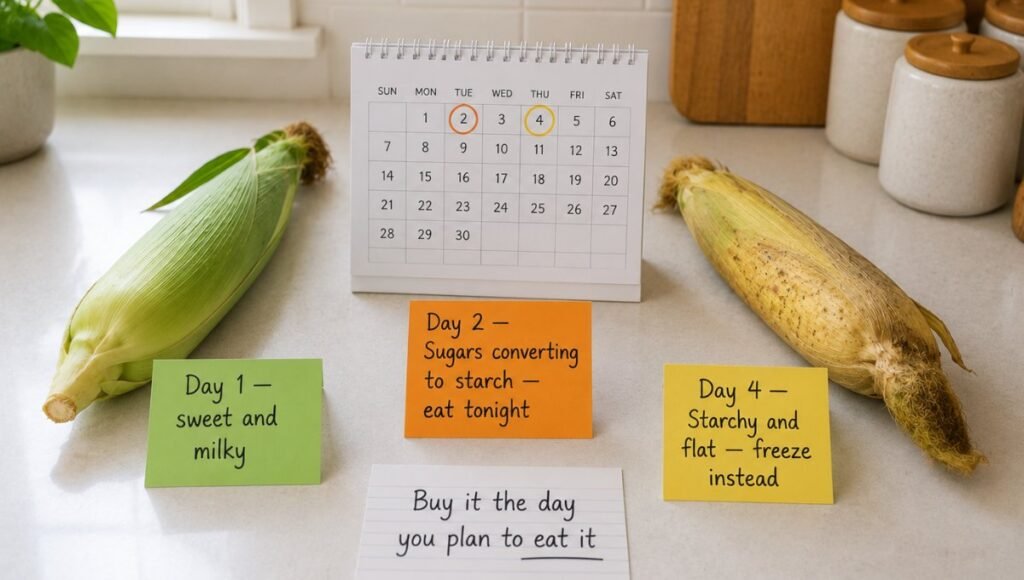
Where: Refrigerator, in the husk How long: 1–2 days maximum for best flavor; safe but declining in quality for 3–4 days How: Keep corn in its husk until you’re ready to cook it. The husk provides the best natural moisture barrier available. Store in a loose produce bag in the high humidity crisper.
Corn is the most time-sensitive vegetable on this list — and one of the most time-sensitive in the entire produce section. The moment corn is picked, the enzymes in the kernels begin converting sugar to starch. This process continues in the refrigerator, just more slowly. The sweet, milky flavor that makes fresh corn worth buying diminishes noticeably within 24 hours of harvest, and by day 3 in the fridge, most corn tastes decidedly starchy rather than sweet.
The buy-and-cook rule for corn: Buy it the day you plan to eat it, or the day before. If you get to the store and find a great deal on corn but can’t use it for 4 days — buy it anyway and freeze it.
How to store corn on the cob: Leave the husk on. Don’t wash it. Don’t remove the silk. The husk is doing real work. Store in the coldest part of your refrigerator.
How to freeze corn on the cob: Blanch husked ears in boiling water for 3–4 minutes (whole cobs) or 2 minutes (kernels cut off). Transfer to ice water immediately. Dry well. Freeze whole cobs or cut kernels flat in a freezer bag. Frozen corn keeps 10–12 months and is genuinely excellent — most frozen corn in the grocery store was processed within hours of picking, which is exactly what you’re replicating at home.
Lettuce and Salad Greens: The Moisture Balance Problem
Where: Refrigerator, high humidity crisper How long: 7–10 days for whole heads; 5–7 days for cut or loose; 5 days for pre-washed bags once opened How: The goal is to maintain humidity without creating direct moisture contact with the leaves. Two methods work well:
Method 1 (whole heads or large pieces): Remove any damaged outer leaves. Don’t wash. Wrap loosely in a dry paper towel, then place in a zip-top bag with some air left in it — don’t seal completely flat. Store in the high humidity crisper.
Method 2 (for already-cut or loose leaf lettuce): Wash and spin completely dry in a salad spinner. Line a large container or zip-top bag with paper towels. Add the dry lettuce. Place another paper towel on top. Seal and refrigerate. Change the paper towels when they become saturated.
Why iceberg lasts longer than romaine which lasts longer than baby greens: Moisture content and leaf structure. Denser, more tightly packed heads like iceberg have lower moisture content and less exposed surface area, which slows both wilting and bacterial growth. Delicate baby greens are already at their most processed state at purchase, with maximum surface area exposed.
Revival for wilted lettuce: Submerge in ice water for 10–15 minutes. The leaves reabsorb water through osmosis and often revive significantly. Works best for romaine and iceberg; less effective for delicate baby greens that have already gone soft.
Broccoli: Don’t Wash It Until You’re Ready to Cook
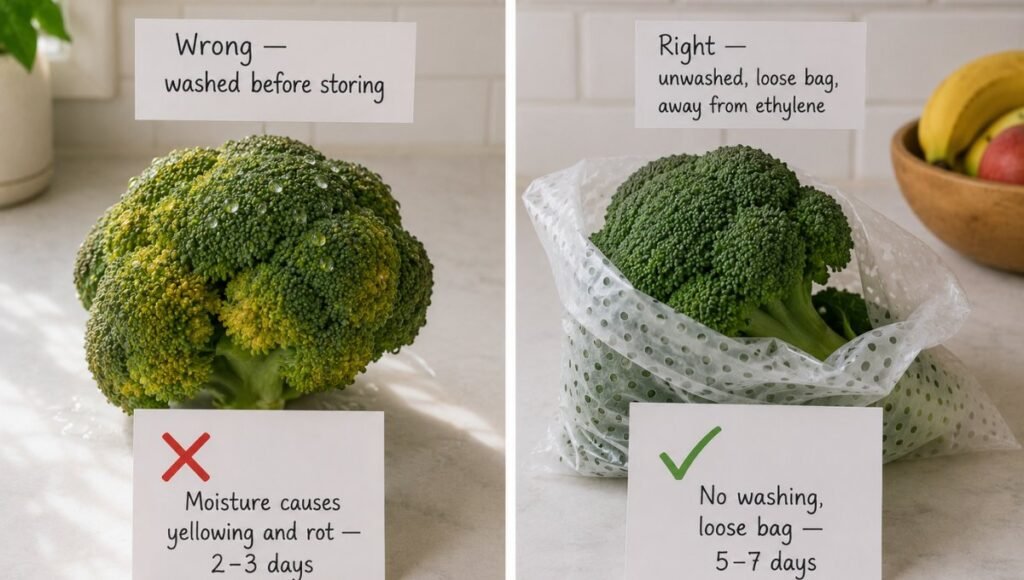
Where: Refrigerator, high humidity crisper How long: 5–7 days unwashed; 3–4 days after washing How: Keep broccoli unwashed in a loose perforated bag or an open bag in the high humidity crisper. The most important storage rule for broccoli: do not wash it before refrigerating. Moisture on the florets is the primary driver of yellowing and early bacterial rot. Wash only immediately before cooking.
Broccoli is also ethylene-sensitive, which means proximity to apples, bananas, or tomatoes will accelerate its yellowing. Keep it in a separate crisper from ethylene-producing fruits.
The yellowing question: Broccoli florets turn yellow as the chlorophyll breaks down during the aging process. Slightly yellowed broccoli is safe to eat and perfectly fine for cooked applications (roasting, soups, stir-fries) — it just doesn’t look great raw. Broccoli that has turned completely yellow throughout or has developed soft, slimy spots should be discarded.
How to freeze broccoli: Cut into florets. Blanch in boiling water for 3 minutes, then ice water immediately. Dry completely. Spread in a single layer on a parchment-lined sheet pan, freeze for 2 hours. Transfer to freezer bags. Keeps 10–12 months. Frozen broccoli goes directly into soups, stir-fries, and pasta without thawing.
Green Beans: Eat Them Early in the Week
Where: Refrigerator, crisper How long: 3–5 days (one of the shorter storage windows among common vegetables) How: Keep green beans unwashed in a perforated produce bag or loose plastic bag in the crisper. If they came in a sealed plastic bag from the grocery store, open one corner to allow some air exchange — completely sealed bags trap ethylene and moisture that accelerate deterioration.
Green beans are sensitive to cold injury below 40°F, so avoid storing them in the very coldest part of the refrigerator (directly against the back wall or near the freezer section). The crisper maintains a more stable, slightly less cold environment that suits them better.
The snap test: Fresh green beans snap crisply when bent. Green beans that bend instead of snapping have lost significant moisture and are past their best, though still usable in cooked dishes where texture is less critical.
Freezing green beans: One of the best vegetables to freeze. Trim ends, blanch for 2–3 minutes in boiling water, ice bath immediately, dry thoroughly, freeze in a single layer, then bag. Keeps 10–12 months. Frozen green beans are excellent in soups, stews, and casseroles — nearly indistinguishable from fresh in cooked applications.
Beets: The Tops Are the Enemy
Where: Refrigerator, high humidity crisper How long: 2–3 weeks (one of the longest-lasting vegetables in this guide) How: The most important step when you get beets home: immediately cut off the greens, leaving 1–2 inches of stem attached to the root. The leafy tops draw moisture from the beet root, causing it to become soft and wrinkled within days. With the tops removed, beet roots last 2–3 weeks in the crisper in a loose plastic bag.
Don’t wash before storing. Moisture on the skin accelerates mold and bacterial growth. Wash right before using.
The greens: Beet greens are edible and nutritious — taste similar to Swiss chard. If you plan to use them, store separately in a bag with a paper towel and use within 2–3 days. They’re delicious sautéed in olive oil with garlic.
Cooked beets: Cooked beets in an airtight container last 5–7 days in the refrigerator and 2–3 months in the freezer. Roasting a full batch of beets on the weekend for the whole week is one of the most efficient vegetable prep moves — they’re ready to use in salads, grain bowls, and sides without any additional work mid-week.
Kale: Built for Longevity
Where: Refrigerator, high humidity crisper How long: 5–7 days for bunched kale; 3–5 days for pre-cut bagged kale after opening How: Store unwashed kale stems-down in a slightly damp paper towel, wrapped loosely in a bag in the high humidity crisper. Alternatively, place the stems in a jar with a small amount of water (like asparagus) and store in the fridge — kale held this way can last up to 2 weeks.
Kale is one of the more forgiving leafy greens for storage — its sturdy leaves withstand refrigerator conditions better than delicate baby greens or loose spinach. The outer leaves may yellow and become tougher first; peel those off and the interior leaves remain in better condition.
The massage trick: Kale leaves have a slightly bitter, tough character when raw. Massaging torn kale leaves with a small amount of olive oil and salt for 2–3 minutes breaks down the cellular structure, making the leaves more tender and less bitter for raw applications. This also seems to slightly extend the usable life of kale that’s approaching its limit for fresh salads.
Spinach: The Paper Towel Is Non-Negotiable
Where: Refrigerator, high humidity crisper How long: 5–10 days for fresh loose spinach; 5–7 days for pre-washed bags after opening How: The paper towel method is more important for spinach than for almost any other vegetable. Line a container or bag with paper towels on all sides, add dry spinach, add a paper towel on top, seal, and refrigerate. Replace paper towels when saturated (typically every 2–3 days). Don’t wash until ready to use.
Spinach’s high moisture content makes it particularly prone to sliminess when wet leaves compress against each other in a sealed container. The paper towels absorb this excess moisture continuously, keeping the environment humid (preventing wilting) without wet (preventing sliminess).
How long does spinach last in the fridge? With the paper towel method in a proper container: 7–10 days. In its original sealed bag without modification: 3–5 days. The difference is significant enough that it’s worth the extra step of transferring to a towel-lined container immediately after purchase.
Spinach that’s gone slightly wilted but not slimy: Use in cooked applications — pasta, soups, stir-fries, omelets, smoothies. Wilted spinach in these applications is indistinguishable from fresh. Slimy spinach: discard.
Cabbage: The Longest-Lasting Vegetable on This List
Where: Refrigerator, high humidity crisper How long: 1–2 weeks cut; 4–6 weeks whole and uncut (one of the most shelf-stable fresh vegetables available) How: Store whole, uncut cabbage loosely wrapped in the crisper. The outer leaves act as a natural protective layer — don’t remove them until you’re ready to use. Once cut, wrap the cut face tightly in plastic wrap, store in the crisper, and use within 1–2 weeks.
Cabbage’s longevity makes it one of the best-value vegetables for families who do a weekly grocery shop and want something that will last the entire week and then some. A full head of green cabbage from Aldi or Walmart runs $0.69–$1.29 and feeds a family of four across multiple meals.
The cut edge trick: When you cut into a head of cabbage and use part of it, the exposed cut surface begins to discolor and dry out within a day or two. Before using the remainder, slice off a thin layer from the cut face — the interior remains fresh even when the cut surface has dried. This works for up to 1–2 weeks of incremental use.
Cabbage as a lettuce substitute: When lettuce is expensive or not available, shredded cabbage does much of the same work in salads, slaws, tacos, and wraps — with a longer shelf life, a lower price, and arguably better texture for slaw and stir-fry applications.
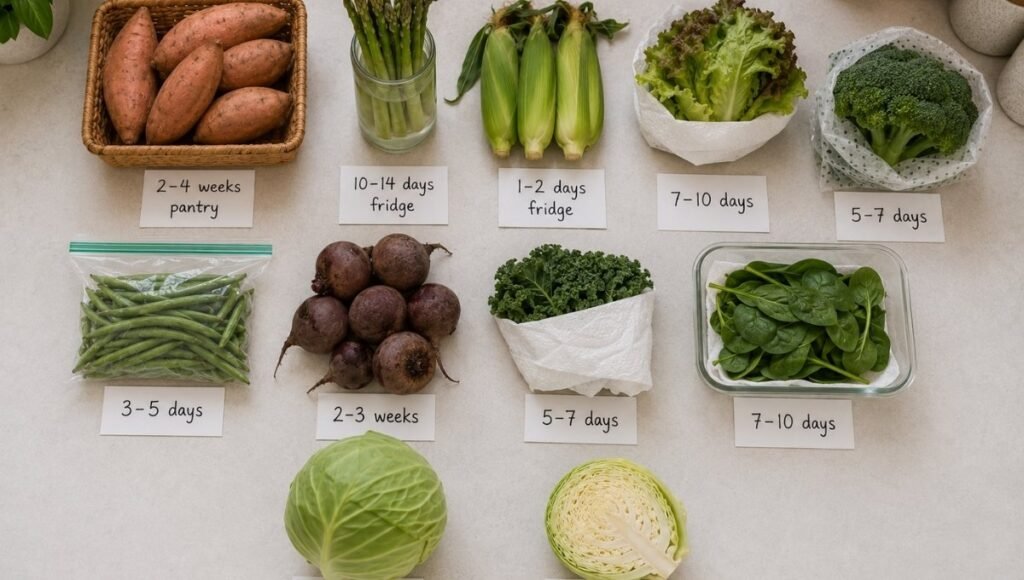
Quick Reference: All 11 Vegetables at a Glance
| Vegetable | Where | How Long | Most Important Rule |
|---|---|---|---|
| Sweet potatoes | Cool dark pantry | 2–4 weeks | Never refrigerate raw |
| Asparagus | Fridge, upright in water | 10–14 days | Water glass method doubles shelf life |
| Corn on the cob | Fridge, in husk | 1–2 days | Eat immediately — sugars convert fast |
| Lettuce | Fridge, paper towel bag | 7–10 days | Spin dry before storing |
| Broccoli | Fridge, loose bag | 5–7 days | Never wash before refrigerating |
| Green beans | Fridge, perforated bag | 3–5 days | Use early in the week |
| Beets (raw) | Fridge, tops removed | 2–3 weeks | Cut tops off immediately |
| Kale | Fridge, damp paper towel | 5–7 days | Outer leaves go first — peel and use interior |
| Spinach | Fridge, paper towel container | 7–10 days | Paper towel on all sides — replace when wet |
| Cabbage (whole) | Fridge, outer leaves on | 4–6 weeks | Most shelf-stable on this list |
| Cabbage (cut) | Fridge, plastic-wrapped | 1–2 weeks | Slice off cut face before using remainder |
The Weekly System: Using Everything Before It Turns
With 11 vegetables, the question isn’t just how to store each one individually — it’s how to plan your week so that the most time-sensitive things get used first and the longest-lasting things carry you through to the end.
Use within 1–2 days: Corn on the cob, fresh asparagus (if not using water method)
Use within 3–5 days: Green beans, broccoli, fresh spinach (without paper towel system), cut lettuce
Use within 5–7 days: Kale, loose lettuce (with paper towel system), whole broccoli, spinach (with paper towel system)
Use within 1–2 weeks: Cabbage (cut), beets, whole lettuce heads
Use within 2–4 weeks: Sweet potatoes (in pantry), whole cabbage, beets (trimmed of tops)
The “use it up” dinner: Once a week, build a meal around whatever is approaching its storage limit. Sheet pan vegetables, stir-fries, soups, and grain bowls can all absorb a wide variety of vegetables simultaneously. This single habit — intentionally using what’s about to turn rather than noticing too late — recovers $10–$20 worth of produce per week for most families.
FAQ
Q: Can sweet potatoes go in the fridge?
Not raw — cold temperatures cause chilling injury in sweet potatoes, hardening the interior and diminishing their natural sweetness even after cooking. Raw sweet potatoes belong in a cool (55–65°F), dark, dry location — a pantry, cabinet, or root cellar. Cooked sweet potatoes (baked, mashed, or cubed) can be refrigerated for 3–5 days or frozen for 6–8 months.
Q: How do you keep asparagus fresh longer?
The water glass method: trim half an inch off the stems, stand upright in a jar with 1–2 inches of cold water, cover the tops loosely with a bag, and refrigerate. Change the water every 2 days. This method keeps asparagus fresh for 10–14 days — more than double the 3–5 days most people get from storing it lying flat in a produce bag.
Q: Why does broccoli turn yellow so fast?
The two primary causes: washing it before refrigerating (moisture on the florets accelerates yellowing and bacterial growth) and storing it near ethylene-producing fruits like apples or bananas (ethylene accelerates the breakdown of chlorophyll, which causes yellowing). Store broccoli unwashed in a loose bag away from ethylene producers, and it will last 5–7 days rather than 2–3.
Q: How long does corn on the cob last in the fridge?
1–2 days for best flavor, 3–4 days before it becomes noticeably starchy. Corn converts sugar to starch rapidly after harvest — a process that refrigeration slows but doesn’t stop. Buy corn the day you plan to use it, or freeze it within 24 hours of purchase by blanching and bagging.
Q: What’s the best way to store spinach so it doesn’t get slimy?
Line a container or large zip-top bag with paper towels on all sides. Add dry spinach (don’t wash before storing). Place another paper towel on top. Seal and refrigerate. Replace paper towels when they become saturated. The paper towels absorb the excess moisture that causes spinach to go slimy. With this method, spinach lasts 7–10 days; without it, 3–5 days.
Q: How long does cabbage last in the fridge?
Whole, uncut cabbage with outer leaves intact: 4–6 weeks in the high humidity crisper. Cut cabbage, wrapped tightly with the cut face covered in plastic wrap: 1–2 weeks. Cabbage is one of the most shelf-stable fresh vegetables available, making it an excellent value buy even for small households.
The Honest Bottom Line
The vegetables in this guide have something in common: most families lose 30–50% of them to spoilage before they get used, not because they bought too much, but because one or two storage details were wrong. The sweet potato goes into the fridge. The asparagus lies flat in a bag. The broccoli gets washed before being put away. The corn waits four days before being eaten.
None of these are difficult fixes. Most of them take 30 seconds when you’re unpacking groceries. And collectively, they add up to hundreds of dollars in recovered produce value per year — food that was bought, paid for, and actually eaten rather than quietly thrown away on Friday.
🥕 Pantryva Field Notes
The easiest way to reduce food waste isn’t always buying less — it’s learning how each ingredient wants to be stored.
Before putting groceries away, spend a few extra minutes sorting your produce:
- Keep moisture-loving vegetables hydrated.
- Keep storage vegetables cool, dark, and dry.
- Use delicate greens earlier in the week.
- Save longer-lasting vegetables for later meals.
A simple storage routine can turn one grocery trip into a full week of easier meals.
Keep Building Your Food Storage System
Learning how to store vegetables properly is just one part of creating a smarter kitchen routine. Once you understand how different ingredients behave, it becomes easier to plan meals, reduce waste, and make every grocery trip go further.
Continue building a more organized and budget-friendly kitchen with these helpful guides:
- Pantry Staples Guide: Essential Foods Every Kitchen Should Keep
- Kitchen Essentials Guide: Simple Tools That Make Cooking Easier
- Cheap Easy Meals for Family: Simple Dinner Ideas That Stretch Your Budget
- Cheap Meals for Family Guide: Affordable Ways to Feed Everyone Without Overspending
Better storage habits are only the beginning. With the right pantry setup, simple kitchen tools, and practical meal ideas, it becomes much easier to turn the food you buy into meals your family actually uses.