
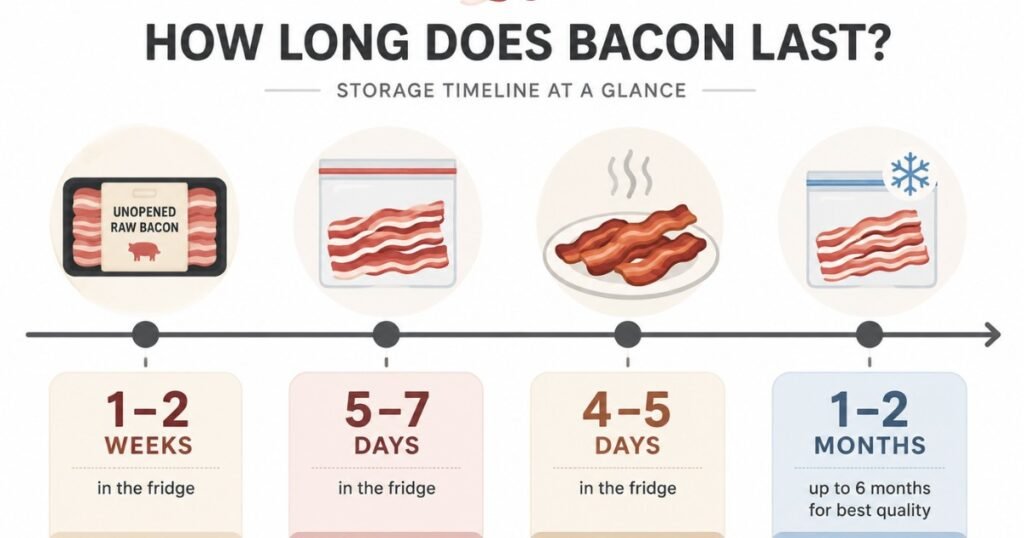
An opened pack of bacon can easily get forgotten in the back of the fridge. A few days—or even a week—later, you’re checking the date and asking yourself, “Is this still good?” It’s a common situation, especially if you only cook a few slices at a time.
The good news is that bacon often lasts longer than people think when it’s stored properly. Knowing how long unopened, opened, cooked, or frozen bacon stays fresh can help you avoid food waste, save money, and decide with confidence whether it’s still safe to eat.
This guide walks through exactly how long bacon lasts in the fridge in every common situation, how to tell if it’s actually gone bad, and how to store it so you get the most out of every pack you buy. We’ll keep it practical, because the goal here isn’t just food safety — it’s making sure you’re not throwing away perfectly good bacon, or money, by mistake.
Overview: The Quick Answer
In most cases, unopened raw bacon lasts 1–2 weeks in the fridge, while opened bacon is best used within 5–7 days. Cooked bacon keeps for about 4–5 days. If frozen, raw bacon stays at its best for 1–2 months (up to 6 months for quality), and cooked bacon keeps well for about 1 month.
These are general guidelines, not hard rules. Storage time also depends on your refrigerator temperature, whether the package has been opened, and the type of bacon. The table below gives you a quick answer, and the rest of this guide explains the details.
One final tip: when in doubt, throw it out. Don’t rely on the date printed on the package alone—it doesn’t always mean the bacon has gone bad. We’ll explain why next.
Quick Bacon Storage Cheat Sheet
| Bacon Type | Fridge (Unopened) | Fridge (Opened) | Freezer |
|---|---|---|---|
| Raw bacon | 1–2 weeks | 5–7 days | 1–2 months (up to 6 for best quality) |
| Cooked bacon | — | 4–5 days | About 1 month |
| Thawed bacon (raw) | — | 3–5 days, don’t refreeze raw | Don’t refreeze once thawed raw |
| Turkey bacon | 1–2 weeks | 5–7 days | 1–2 months |
| Uncured bacon | 1 week or less | 3–5 days | 1–2 months |
How Long Does Bacon Last in the Fridge?
The honest answer is: it depends on whether your bacon is unopened, opened, cooked, thawed, or labeled “uncured” — the printed date alone doesn’t tell the whole story. Each type behaves a little differently in the fridge, so it helps to know which category your bacon falls into before deciding whether it’s still good.
Unopened Raw Bacon
An unopened package of raw bacon typically lasts 1 to 2 weeks in the refrigerator, even if that stretches slightly past the date on the label. This is because the vacuum-sealed or tightly wrapped packaging limits air exposure, which is one of the biggest factors in how fast bacon spoils.
Opened Raw Bacon
Once you break the seal, plan to use raw bacon within 5 to 7 days. Exposure to air introduces bacteria faster, and the clock starts ticking the moment the package is opened — regardless of what the original date said.
Cooked Bacon
Cooked bacon stored in an airtight container in the fridge lasts about 4 to 5 days. It’s a great option for meal prepping breakfasts or adding to lunches throughout the week, especially if you’re already batch-cooking other proteins as part of a broader meal prep lunch ideas guide.
Thawed Bacon
If you’ve thawed raw bacon in the fridge (not on the counter), it’s safe to cook within 3 to 5 days. Raw bacon that’s been thawed should not be refrozen without cooking it first, since the repeated temperature changes increase the risk of bacterial growth.
Turkey Bacon vs. Regular Bacon
Turkey bacon follows nearly identical storage timelines to regular pork bacon — about 1–2 weeks unopened and 5–7 days once opened. Don’t assume it spoils faster just because it’s leaner; fat content isn’t the main driver of shelf life here, proper sealing and temperature are.
Uncured Bacon
Uncured bacon (meaning it’s cured with natural sources like celery powder instead of synthetic sodium nitrite) tends to have a slightly shorter shelf life, often closer to 1 week unopened and 3–5 days once opened. It lacks some of the preservative effects of traditionally cured bacon, so it’s worth using it a bit sooner.
How Refrigerator Temperature Affects Shelf Life
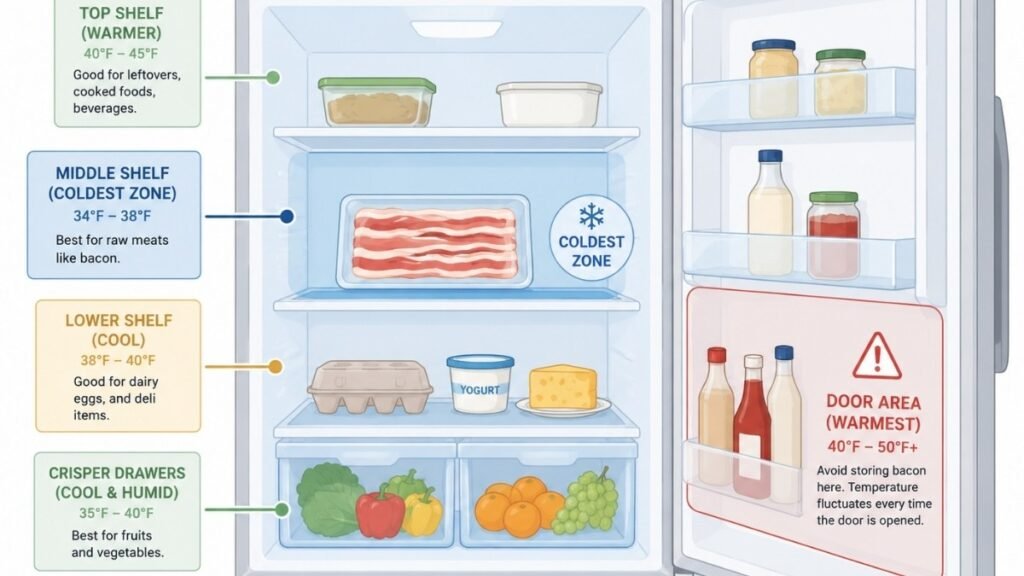
The USDA recommends keeping your refrigerator at or below 40°F (4°C). Every few degrees above that shortens how long bacon — and really any perishable food — stays safe. If your fridge tends to run warm, or the door gets opened often during the day, your bacon may not last as long as these general timelines suggest.
Storage Times by Bacon Type
| Type | Unopened (Fridge) | Opened (Fridge) | Frozen |
|---|---|---|---|
| Regular raw bacon | 1–2 weeks | 5–7 days | 1–2 months |
| Turkey bacon | 1–2 weeks | 5–7 days | 1–2 months |
| Uncured bacon | About 1 week | 3–5 days | 1–2 months |
| Cooked bacon | — | 4–5 days | About 1 month |
Key takeaway: Storage time depends on whether the bacon is unopened, opened, cooked, thawed, or uncured — not just the printed date.
It’s also worth noting a pattern many households run into: buying a large, discounted family pack of bacon because it’s cheaper per pound, but then only using a few slices at a time. That leftover bacon sits opened in the fridge, quietly running down its shelf life while the rest of the week goes by. If that sounds familiar, the freezing section further down is going to be especially useful.
What Do Sell-By, Use-By, and Expiration Dates Actually Mean?
These dates are guides for quality, not hard safety deadlines — which means unopened bacon can often still be perfectly fine for several days (or even a week or two) after the printed date, as long as it’s been stored properly.
Sell-By vs. Use-By
A sell-by date tells the store how long to display the product for sale — it’s inventory information, not a warning to consumers. A use-by date (sometimes called “best-by”) is the manufacturer’s estimate of when the product will be at peak quality, not necessarily when it becomes unsafe.
Why Dates Aren’t Safety Timers
None of these dates are regulated food safety indicators in the way many people assume. That’s an important distinction, because it’s surprisingly common for shoppers to throw away a completely unopened, properly refrigerated package of bacon simply because the date on the label has technically passed — when in reality, it may still be several days from actually spoiling.
| Date Type | What It Actually Means | Does It Mean “Unsafe After This Date”? |
|---|---|---|
| Sell-By | Guidance for store inventory/rotation | No |
| Best-By / Use-By | Manufacturer’s estimate of peak quality | No |
| Expiration Date | Rare on bacon; more common on baby formula/some perishables | Closer to yes, if present |
That said, dates should never fully replace your own judgment. The next section covers exactly how to check bacon using your senses, which is a far more reliable method than the calendar alone.
Key takeaway: Package dates guide quality — not always food safety.
How Can You Tell If Bacon Has Gone Bad?
The most reliable way to check bacon is to look, smell, and touch it — spoiled bacon usually shows more than one warning sign at once, so it’s worth checking all three before deciding.
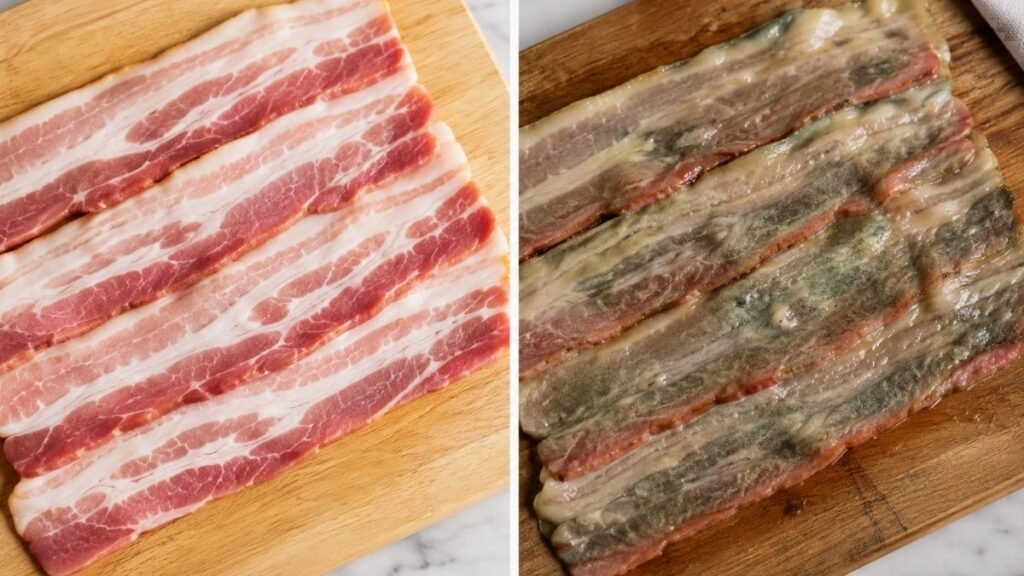
Check the Color
Fresh raw bacon is typically pink to reddish with white, cream-colored fat streaks. If it’s turned gray, brown, or greenish, or if you notice dull, faded coloring throughout, that’s a signal something has changed.
Smell Test
This is often the fastest way to know. Fresh bacon has a mild, slightly smoky or meaty smell. Spoiled bacon smells sour, ammonia-like, or distinctly “off” — a smell most people recognize immediately, even if they can’t quite describe it.
Feel the Texture
Bacon is naturally a little oily and tacky to the touch — that’s completely normal and not a sign of spoilage. What you’re checking for is an actual slimy or sticky film, which feels noticeably different from normal fattiness and usually indicates bacterial growth.
Signs You Should Never Ignore
- Any visible mold (fuzzy spots, unusual colored patches)
- A strong sour or ammonia smell
- A slimy film that doesn’t wipe away easily
- Gray or greenish discoloration throughout the meat
If you notice any one of these signs clearly, don’t try to “rinse it off and cook it anyway” — that’s a common instinct, but heat doesn’t reliably eliminate all the risks associated with spoiled meat.
Fresh Bacon vs. Spoiled Bacon
| Sign | Fresh Bacon | Spoiled Bacon |
|---|---|---|
| Color | Pink/red with white fat | Gray, brown, or greenish |
| Smell | Mild, meaty, slightly smoky | Sour, sharp, or ammonia-like |
| Texture | Slightly oily, tacky | Slimy, sticky film |
| Surface | Consistent color | Discolored spots or mold |
3-Step Bacon Safety Check
- Look — Check for consistent color; watch for gray, green, or moldy spots.
- Smell — A sour or sharp odor means it’s time to discard it.
- Touch — Normal oiliness is fine; a slimy film is not.
Many beginners mistake the natural oiliness of bacon for a spoilage sign and end up discarding good bacon unnecessarily. The real giveaway is smell — trust your nose first, and use color and texture to confirm what you’re already sensing.
Key takeaway: Use smell, appearance, and texture together — not just one sign.
How to Store Bacon Properly So It Lasts Longer
Storing bacon well comes down to two things: keeping it cold and keeping air away from it. Get those two factors right, and you’ll consistently stretch bacon’s shelf life toward the longer end of its range instead of the shorter one.
Best Spot in the Refrigerator
Store bacon on a middle or lower shelf toward the back of the fridge, where temperatures stay most consistent. Avoid the door — it’s the warmest part of the fridge and the temperature there fluctuates every time it’s opened, which shortens shelf life for any perishable food.
How to Reseal an Open Package
Once opened, the original packaging usually isn’t airtight enough on its own. Press out as much air as possible and wrap the bacon tightly in plastic wrap, then place it in a resealable bag or airtight container. The goal is to minimize the bacon’s contact with air, which slows bacterial growth and prevents that dried-out, discolored edge you sometimes see on old bacon.
Vacuum Sealing vs. Ziploc Bags vs. Original Packaging
| Method | Air Removal | Best For | Notes |
|---|---|---|---|
| Original packaging | Poor once opened | Short-term (1–2 days) | Not ideal after opening |
| Ziploc/resealable bag | Good | Everyday fridge storage | Press out air manually before sealing |
| Vacuum sealer | Excellent | Freezer storage, bulk buys | Best for extending shelf life significantly |
If you regularly buy bacon in bulk, a basic vacuum sealer is one of those kitchen tools that quietly pays for itself. It’s a mid-range purchase, worth considering if you find yourself freezing a lot of meat generally — but a well-sealed freezer bag with the air pressed out works almost as well for most households, so it’s not a must-have.
Proper Bacon Storage Checklist
- [ ] Store bacon on a middle/lower shelf, not the door
- [ ] Keep fridge temperature at or below 40°F (4°C)
- [ ] Reseal opened packages tightly, pressing out excess air
- [ ] Use within 5–7 days once opened
- [ ] Move to the freezer if you won’t use it within that window
A mistake that comes up constantly: leaving bacon in its original opened retail package, folded over or held shut with a chip clip. That packaging simply isn’t designed to reseal, and bacon stored that way tends to dry out or spoil faster than bacon that’s been properly rewrapped.
Key takeaway: Less air and colder temperatures significantly extend bacon freshness.
How to Freeze Bacon Without Wasting Half the Package
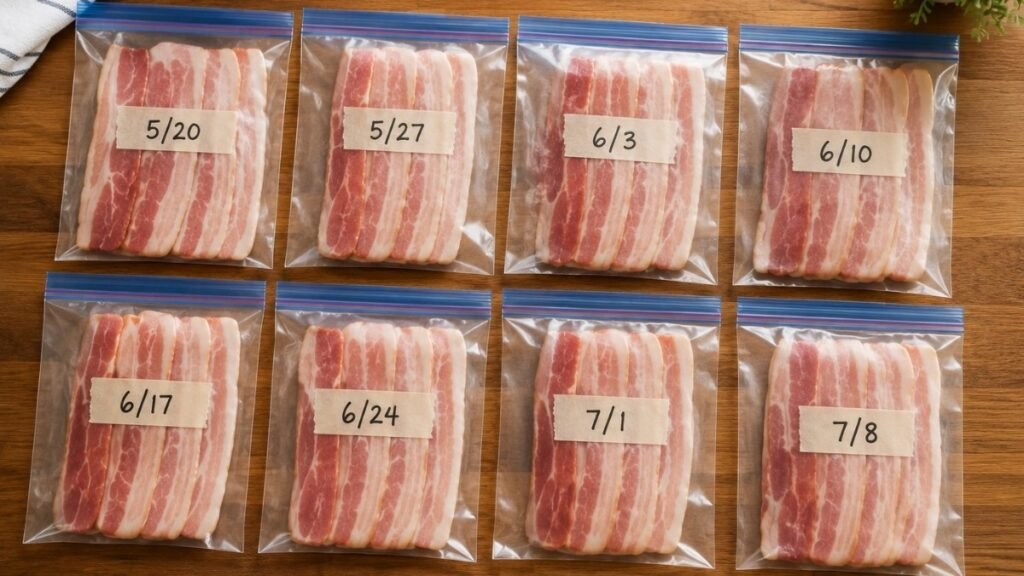
Freezing bacon in individual, meal-sized portions right after purchase is the single best way to avoid waste — it keeps the bacon at peak quality and lets you thaw only what you need, rather than an entire pack at once.
This is especially useful if you’re the kind of shopper who takes advantage of bulk discounts on meat, which is one of the smartest ways to save money on groceries over time — as long as you actually use what you buy before it spoils.
Portion Before Freezing
Rather than freezing the whole package as one block, divide it into portions you’d realistically cook in a single meal — say, 4 to 6 slices per portion for a family, or 2 to 3 for a single person.
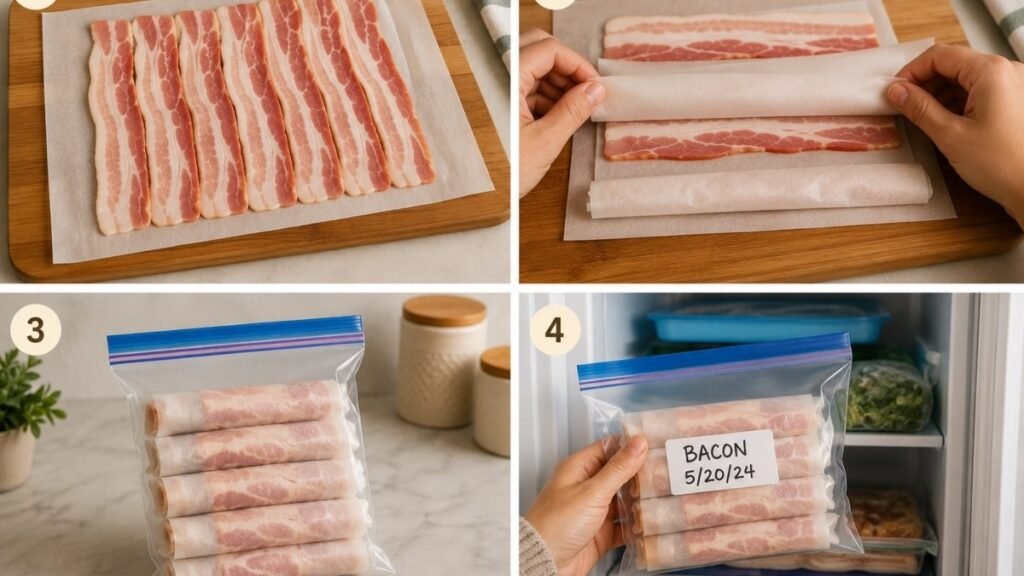
How to Freeze Individual Slices
- Lay bacon slices flat on a sheet of parchment paper.
- Roll or fold the paper between layers of slices so they don’t stick together.
- Place the rolled or layered bacon into a freezer-safe bag, pressing out as much air as possible.
- Label the bag with the freezing date.
- Freeze flat for easier storage and faster thawing later.
This method means you can pull out exactly two or three slices for a quick breakfast without thawing the entire package — a small step that makes a noticeable difference over time.
How Long Frozen Bacon Lasts
Raw bacon stays safe indefinitely in the freezer from a food-safety standpoint, but for best texture and flavor, aim to use it within 1 to 2 months, or up to 6 months if well-sealed. Cooked bacon holds its quality for about 1 month in the freezer.
How to Thaw Safely
Thaw bacon in the refrigerator overnight rather than on the counter. Counter-thawing lets the outer layers sit in the “danger zone” temperature range (40–140°F) for too long, even if the inside is still frozen. If you’re in a hurry, cooking bacon directly from frozen (separating slices with a butter knife as they warm) also works well for pan-frying.
Bulk Buying & Freezing Checklist
- [ ] Portion bacon into meal-sized amounts before freezing
- [ ] Separate slices with parchment paper
- [ ] Remove as much air as possible from the freezer bag
- [ ] Label with the date frozen
- [ ] Thaw in the fridge, not on the counter
- [ ] Use frozen raw bacon within 1–2 months for best quality
Family-sized or warehouse-club bacon packs are genuinely a good deal per pound, but they’re often sized for households larger than the one buying them. Splitting a large pack into smaller frozen portions the same day you buy it is what actually makes that bulk discount worth it — otherwise, a good portion of it tends to go unused.
Key takeaway: Freeze bacon in meal-sized portions immediately after purchase instead of waiting until it’s nearly spoiled.
Common Bacon Storage Mistakes That Cost Families Money
Most bacon waste isn’t caused by bacon spoiling unusually fast — it’s caused by a handful of avoidable storage habits.
Mistake #1: Waiting Too Long Before Freezing
By the time bacon looks like it’s “about to go bad,” it’s often too late to freeze it with good results. Freeze it while it’s still fresh, not as a last resort.
Mistake #2: Storing Bacon in the Refrigerator Door
The door is the warmest, most temperature-inconsistent part of the fridge. It might be convenient, but it shortens shelf life more than most people realize.
Mistake #3: Assuming Freezing Kills Bacteria
Freezing pauses bacterial growth — it doesn’t kill bacteria or reset the shelf-life clock. Bacon that was close to spoiling before freezing will still be close to spoiling once thawed.
Mistake #4: Buying a Package Too Large for Your Household
It’s tempting to grab the biggest discounted pack, but if two people are working through a 3-pound family pack, a lot of it will likely need freezing anyway. Buying a size closer to what you’ll actually use fresh — and freezing the rest immediately — avoids the problem altogether.
Money-Saving Storage Habits
- [ ] Buy bulk bacon only if you’ll freeze the extra right away
- [ ] Keep the fridge thermometer honest — check it occasionally
- [ ] Reseal opened bacon properly every single time
- [ ] Don’t refreeze raw bacon once it’s been thawed
- [ ] Use cooked bacon within 4–5 days or freeze it
It’s a common scenario in busy households: bacon gets pushed to the back of the fridge behind other groceries and simply forgotten for a week or two. It’s not a lack of care — it’s just how kitchens work when everyone’s juggling a lot. A simple fix is keeping opened bacon toward the front of a shelf, at eye level, so it’s part of what you see (and use) first.
Key takeaway: Most bacon waste happens because of storage habits — not because bacon spoils unusually fast.
What About Bacon Grease?
Bacon grease can be safely stored and reused, which is a great way to reduce cooking oil costs — but it needs proper filtering and storage to stay good.

Refrigerator Storage
Strain the grease through a fine mesh strainer or cheesecloth to remove leftover bits of bacon, then store it in an airtight container in the fridge. It typically stays good for up to 3 months refrigerated.
Freezer Storage
For longer storage, bacon grease freezes well for up to 6 months. Freezing it in smaller portions (an ice cube tray works well) makes it easy to use just a spoonful at a time for cooking.
Signs Bacon Grease Has Gone Bad
- A sour, rancid smell (different from bacon’s usual smoky scent)
- Visible mold
- An “off” color change or unusual texture
Saving bacon grease for cooking eggs, vegetables, or roasted potatoes is a small habit that adds up — it’s essentially free flavor you’d otherwise pour down the drain, and it can meaningfully cut down on how much cooking oil you buy over a month.
Key takeaway: Properly stored bacon grease can be safely reused and reduce cooking costs.
Frequently Asked Questions
How long does unopened bacon stay good in the fridge past the expiration date? Unopened bacon is often still fine for several days to about a week past the printed date, as long as it’s been refrigerated consistently at or below 40°F. Always check color, smell, and texture before cooking, rather than relying on the date alone.
How long can opened uncooked bacon last in the refrigerator? Opened raw bacon should generally be used within 5 to 7 days. If you won’t use it within that window, freezing it is a better option than letting it sit until it’s questionable.
How long does thawed bacon last in the fridge before cooking? Bacon thawed in the refrigerator is safe to cook within 3 to 5 days. Avoid thawing it on the counter, and don’t refreeze it raw once it’s thawed.
How can you tell if bacon has gone bad in the fridge? Look for gray or greenish discoloration, a sour or ammonia-like smell, and a slimy (not just naturally oily) texture. If more than one of these signs is present, it’s best to discard it.
What is the best way to store bacon to make it last longer if you live alone? Freeze it in small, single-serving portions right after buying it, separated by parchment paper. This way you’re only thawing what you’ll actually use, rather than working through an opened package before it spoils.
Does freezing bacon kill bacteria or just stop it from growing? Freezing only pauses bacterial growth — it doesn’t kill bacteria or reverse spoilage that’s already started. Bacon should be reasonably fresh when you freeze it, not used as a last-minute rescue for bacon that’s already questionable.
Is uncured bacon more likely to spoil faster in the fridge than cured bacon? Yes, generally. Uncured bacon lacks some of the preservative effects of traditional curing agents, so it typically has a slightly shorter shelf life — closer to 3–5 days once opened, compared to 5–7 days for regular cured bacon.
Can you batch cook bacon and freeze it for quick meals later? Yes, cooked bacon freezes well for about a month and reheats easily in a skillet or microwave. It’s a convenient way to add protein to quick breakfasts or lunches without cooking bacon from scratch every time — and pairs well with other make-ahead ideas if you’re building out a weekly meal prep lunch ideas guide.
Final Thoughts
Bacon is one of those groceries that’s easy to buy in bulk for the savings but just as easy to lose track of once it’s in the fridge. Knowing the real storage windows — not just the printed date — means you can confidently decide whether that half-used pack is still worth cooking, without second-guessing yourself or tossing something that was perfectly fine.
The habits that matter most are simple: reseal it properly, keep it cold, freeze what you won’t use within the week, and trust your senses over the calendar. Get those right, and bacon becomes one of the easier proteins to manage in a busy kitchen — good news, since it’s also one of the more affordable ones per serving when you buy smart.
🏠 Behind This Guide
Bacon is one of those foods that’s easy to forget until you spot it in the back of the fridge and wonder, “Is it still safe to eat?” That’s exactly why we created this guide—to make that decision simpler and help you avoid wasting perfectly good food.
This guide is built around three practical goals:
- 🥓 Storage Times — How long unopened, opened, cooked, and frozen bacon actually lasts.
- 🧊 Food Safety — Simple signs that tell you when bacon is still safe—or when it’s time to throw it away.
- 💰 Smarter Grocery Habits — Easy storage tips that help reduce food waste and get more value from every pack.
Because good food storage isn’t about memorizing dates.
It’s about wasting less, saving more, and feeling confident every time you open your fridge.
📚 Related Reading
- How Long Does Ground Beef Last in the Fridge?
- How Long Does Ham Last in the Fridge?
- How to Tell If Chicken Is Bad
❤️ A Final Note
Making the most of your groceries isn’t about being perfect—it’s about making small, informed choices every day.
At Pantryva, we create practical food storage, grocery, and kitchen guides that help everyday households waste less, spend smarter, and feel more confident about the food they bring home. Every article is built around clear, reliable advice you can trust in real life.
Our goal is simple: helping you make smarter food decisions, save more on every grocery trip, and get the most from every item in your pantry.