
Key Takeaways
- The single most expensive grocery habit most families don’t notice: buying fresh vegetables and throwing away 30–40% of them before they get eaten. The USDA estimates the average American household wastes approximately $1,500 worth of food per year — and produce accounts for a disproportionate share of that loss.
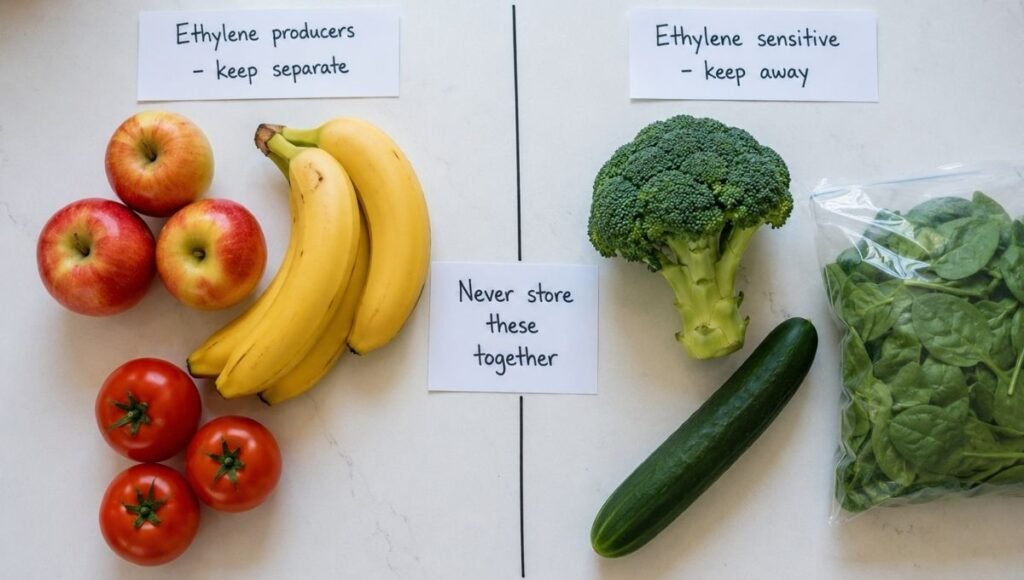
- Ethylene gas is the hidden enemy of your vegetable drawer. Certain produce (apples, bananas, tomatoes, peppers) releases ethylene that accelerates the ripening and deterioration of ethylene-sensitive vegetables (cucumbers, carrots, broccoli, mushrooms) stored nearby. Keeping them separated is one of the most impactful storage changes most people can make.
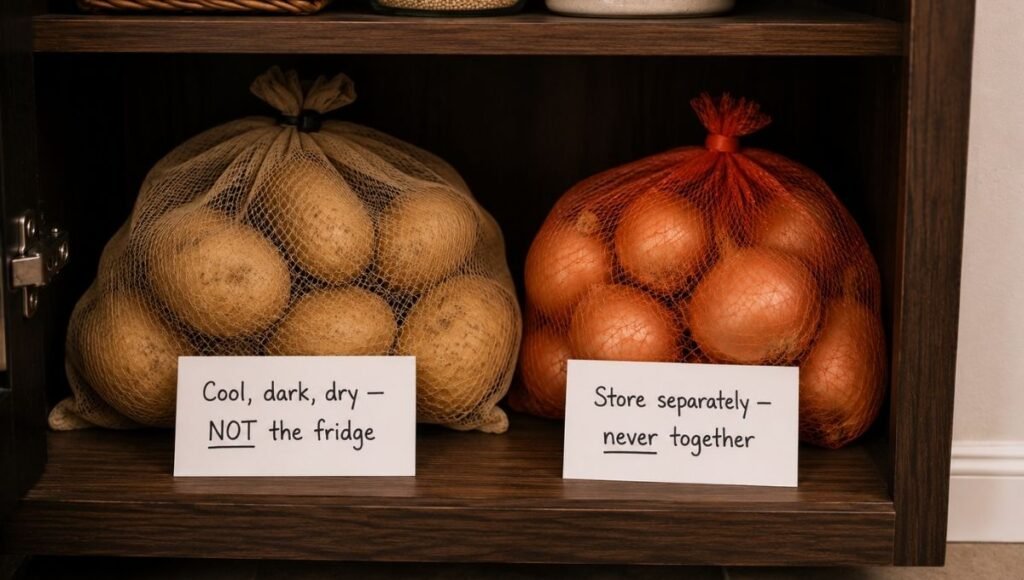
- Potatoes and onions should never be stored together — the gases they release accelerate spoilage in each other. Store potatoes in a cool, dark, dry place away from onions.
- Most vegetables last significantly longer with one simple treatment: a paper towel. Placed in the bag or container with the vegetable, it absorbs excess moisture — which is the primary cause of sliminess, rot, and early spoilage in refrigerated produce.
- At Aldi and Walmart, a week’s worth of vegetables for a family of four costs $15–$25. Getting those vegetables to last the full week instead of throwing out 40% of them by Thursday is worth $6–$10 in recovered value — every single week.
You do the shopping on Sunday. You buy a solid haul — broccoli, carrots, bell peppers, mushrooms, spinach, a bunch of green onions. You feel good about it. Wednesday evening you open the crisper drawer and the spinach has gone slimy, the mushrooms are weirdly soft, and the broccoli is starting to yellow. The bell peppers look fine. The carrots look okay but they’ve gone slightly limp.
You use what you can and throw away the rest. And somewhere in the back of your mind, you note that this happens pretty much every week.
The produce loss problem is one of the most consistent and fixable grocery budget leaks in most households — and it’s almost never about buying too much. It’s almost always about storage. A few vegetables need completely different conditions than most people give them. A few tricks — none of them complicated — can double or triple how long your produce stays at its best.
This guide covers every major vegetable you’re likely to bring home from Aldi, Walmart, or Costco, with specific storage instructions for each one, how long each lasts, and the signs that tell you it’s time to use something up before it crosses the line.
The Two Things That Ruin Vegetables Faster Than Anything Else
Before the vegetable-by-vegetable guide, two principles that apply to almost everything.
1. Moisture in the Wrong Place
Vegetables need some moisture to stay crisp and fresh — but moisture in direct contact with the vegetable’s surface creates the conditions for bacterial growth, sliminess, and rot. This is why produce that looks perfect when you put it in the fridge turns slimy within a day or two of refrigeration.
The paper towel fix: Place one or two sheets of paper towel in any bag or container holding vegetables. The paper towel absorbs excess moisture from both the vegetable surface and the air inside the container, keeping the environment humid (good) without wet (bad). This single habit extends the life of leafy greens, mushrooms, herbs, and cut vegetables by 2–5 days in most cases. Replace the paper towel if it becomes saturated.
2. Ethylene Gas Exposure
Ethylene is a natural plant hormone that ripens and ages produce. Some items produce a lot of it — apples, bananas, tomatoes, avocados, peaches. Others are highly sensitive to it — cucumbers, broccoli, carrots, leafy greens, mushrooms. When you store ethylene producers next to ethylene-sensitive vegetables, the sensitive vegetables deteriorate faster than they would on their own.
The practical rule: Keep your fruit bowl separate from your vegetable drawer. Don’t store apples, bananas, or tomatoes in the same crisper drawer as broccoli, cucumbers, or carrots. This is especially important in the crisper, where the enclosed space concentrates the ethylene gas.
How to Use Your Crisper Drawer Correctly
Most refrigerators have two crisper drawers — a high-humidity drawer and a low-humidity drawer. Many people either don’t know this or don’t use them intentionally.
High humidity drawer (keep the vent closed): Best for vegetables that wilt — leafy greens, broccoli, cauliflower, carrots, celery, herbs, green onions, asparagus. The higher humidity prevents moisture loss and wilting.
Low humidity drawer (keep the vent open): Best for fruits and vegetables that need more airflow — apples, grapes, peppers, mushrooms. The lower humidity slows mold and rot for items that would get slimy in high humidity.
If your fridge doesn’t have labeled humidity drawers: keep leafy greens and vegetables that wilt in the back (colder, more consistent temperature) and harder produce toward the front.
How to Store Every Vegetable: The Complete Breakdown
Potatoes
Where: Room temperature — NOT the refrigerator How long: 3–5 weeks in optimal conditions; 1–2 weeks in typical kitchen conditions How: In a cool (50–65°F), dark, dry, well-ventilated place. A paper bag, cardboard box, or mesh bag works better than a sealed plastic bag, which traps moisture. A pantry, lower cabinet, or basement is ideal. Keep away from heat sources (oven, sunny counters).
The refrigerator mistake: Storing potatoes in the fridge converts their starches to sugars (a process called cold-induced sweetening), which changes the texture and flavor — and when cooked, the sugars caramelize into dark, slightly bitter compounds. Never refrigerate potatoes you plan to cook normally.
The onion mistake: Storing potatoes and onions together accelerates spoilage in both. The gases they emit react badly. Keep them in separate locations.
How long do potatoes last? At room temperature in proper conditions: 3–5 weeks. Cooked potatoes in the fridge: 3–4 days. Frozen (blanched first): up to 12 months.
Signs they’ve gone too far: Soft spots, strong smell, green patches (indicating solanine — cut away generously and avoid the green parts), or excessive sprouting. Small sprouts are fine to cut off; a potato that’s mostly sprout and hollow is done.
Carrots
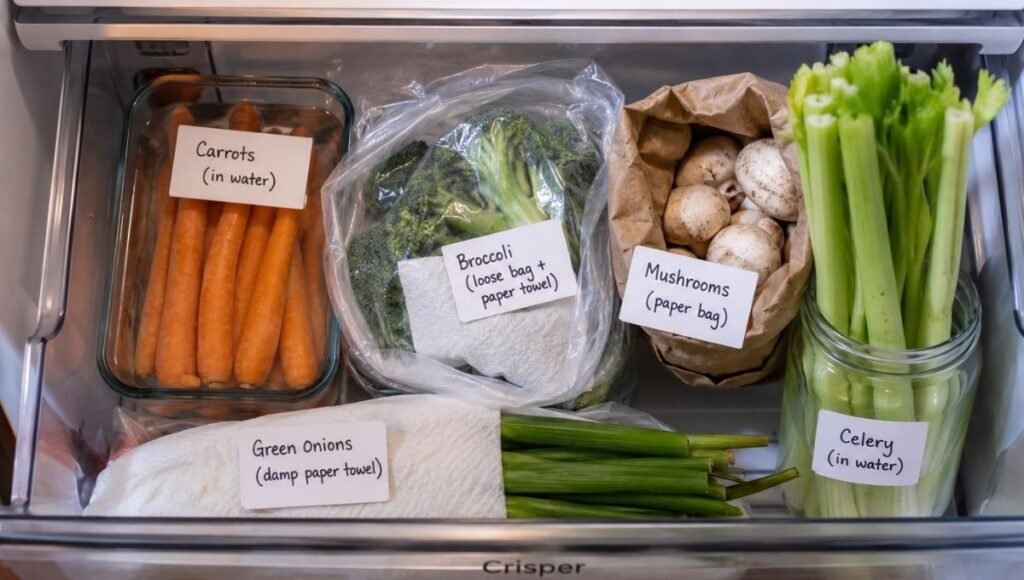
Where: Refrigerator, high humidity drawer How long: 3–4 weeks whole; 2–3 weeks cut How: Remove any leafy tops (they draw moisture from the carrot, causing faster wilting). Store whole, unpeeled carrots in a sealed bag or container with a paper towel to absorb excess moisture. For cut or peeled carrots: submerge in water in a sealed container and refrigerate — this is the crunch-preservation trick. Change the water every few days.
How long do carrots last in the fridge? Whole, unpeeled: 3–4 weeks. Peeled or cut: 2–3 weeks submerged in water (significantly longer than dry storage). Baby carrots in original bag: 3–4 weeks; once opened, transfer to a water-submerged container.
Revival trick: Limp carrots that have lost their crunch can often be revived by submerging in ice water for 30–60 minutes. The carrot cells reabsorb water and regain much of their original texture. Works well for snacking; less critical for cooking.
Broccoli
Where: Refrigerator, high humidity drawer How long: 3–7 days (one of the shorter-lived vegetables — use it early in the week) How: Store unwashed in a loose plastic bag or open produce bag in the high humidity crisper. Don’t seal it tightly — broccoli needs some air circulation. A slightly damp paper towel wrapped around the cut end helps prevent drying.
The ethylene warning: Broccoli is highly sensitive to ethylene gas. Keep it away from apples, tomatoes, and other ethylene-producing fruits.
How long does broccoli last in the fridge? Whole head: 5–7 days. Cut florets: 3–5 days in an airtight container with a paper towel.
Signs it’s going: Yellowing florets (still edible, just older), slimy stem (discard), strong sulfurous smell (discard). Slightly yellowed broccoli is fine for cooked applications — soups, stir-fries, roasting.
Freezing broccoli: Blanch florets in boiling water for 3 minutes, then transfer immediately to ice water. Dry thoroughly. Freeze in a single layer on a sheet pan, then transfer to a freezer bag. Lasts 10–12 months frozen with minimal quality loss.
Cucumbers
Where: Room temperature OR refrigerator — with specific conditions How long: 1 week at room temperature; up to 2 weeks refrigerated How: Cucumbers are unusual — they’re actually cold-sensitive and can suffer chilling injury (pitting, water-soaked spots, accelerated decay) when stored below 50°F for extended periods. For cucumbers you’ll use within 5–7 days: room temperature away from ethylene-producing fruits is fine. For longer storage: wrap individual cucumbers in paper towels, place in an airtight container, and keep in the warmest section of your fridge (front, upper shelf).
The plastic-wrap trick: Wrapping cucumbers tightly in plastic wrap or paper towels significantly extends their life by slowing moisture loss through the skin. Unwrapped cucumbers in the fridge lose moisture and become soft much faster.
Don’t wash until you’re ready to eat them. Washing introduces moisture that accelerates surface deterioration.
Fresh Ginger
Where: Refrigerator or freezer How long: 3–4 weeks in the fridge; 6 months in the freezer How: For refrigerator storage: keep unpeeled in a zip-top bag with as much air removed as possible, or in a small airtight container. The skin protects the ginger from drying out. For freezer storage: freeze the whole knob unpeeled — this is actually the preferred method for many cooks. Frozen ginger grates even more easily than fresh (the cell structure breaks down, releasing more flavor), and you can grate directly from frozen without thawing.
The best method most people don’t know: Store ginger submerged in vodka or sherry in a small jar in the refrigerator. The alcohol preserves it for months. The ginger-infused spirit can also be used in cooking.
Signs it’s gone: Mold growth, very dry and shriveled texture, strong unpleasant fermented smell (distinct from ginger’s normal pungent aroma).
Mushrooms
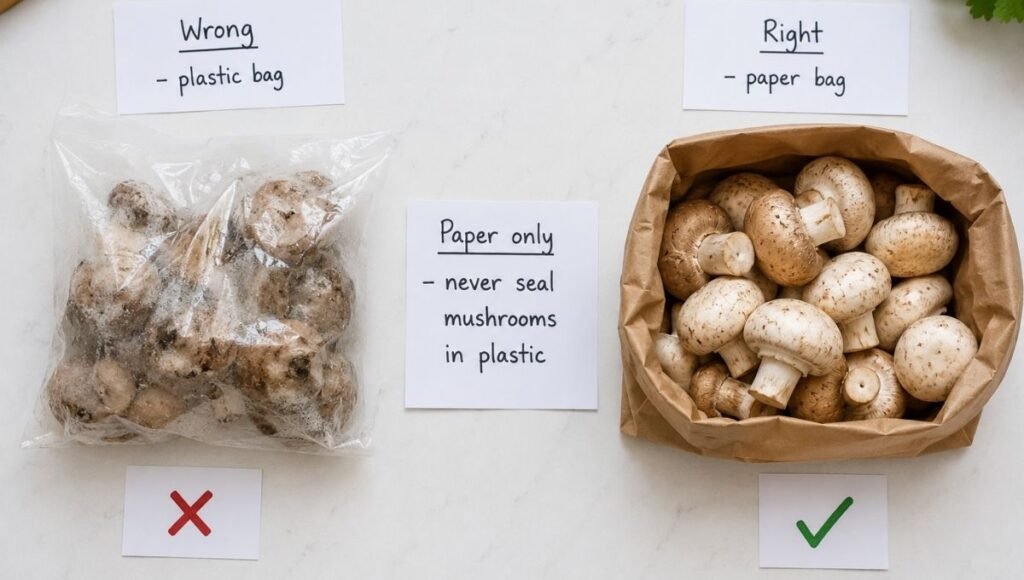
Where: Refrigerator — never sealed airtight How long: 5–7 days How: This is the most counter-intuitive vegetable storage on the list: mushrooms need to breathe. Store them in a paper bag (not plastic) in the refrigerator. If they came in a plastic tray covered with plastic film, remove the film and replace with a paper towel, or transfer to a paper bag. The paper absorbs excess moisture while allowing air exchange. Plastic bags trap moisture and cause mushrooms to become slimy within 1–2 days.
Never wash mushrooms until you’re about to cook them. Mushrooms absorb water like sponges; washing before storage is one of the fastest ways to ruin them. If they seem dirty, brush off any debris with a dry cloth or soft brush.
Brown paper bag rule: If you’re going to buy only one reusable grocery bag, buy the kind with paper bags — mushrooms from the farmers market in a paper bag, stored directly in the fridge, last noticeably longer than supermarket mushrooms in sealed plastic.
Celery
Where: Refrigerator How long: 2–4 weeks (one of the longer-lasting vegetables when stored correctly) How: The two methods that work:
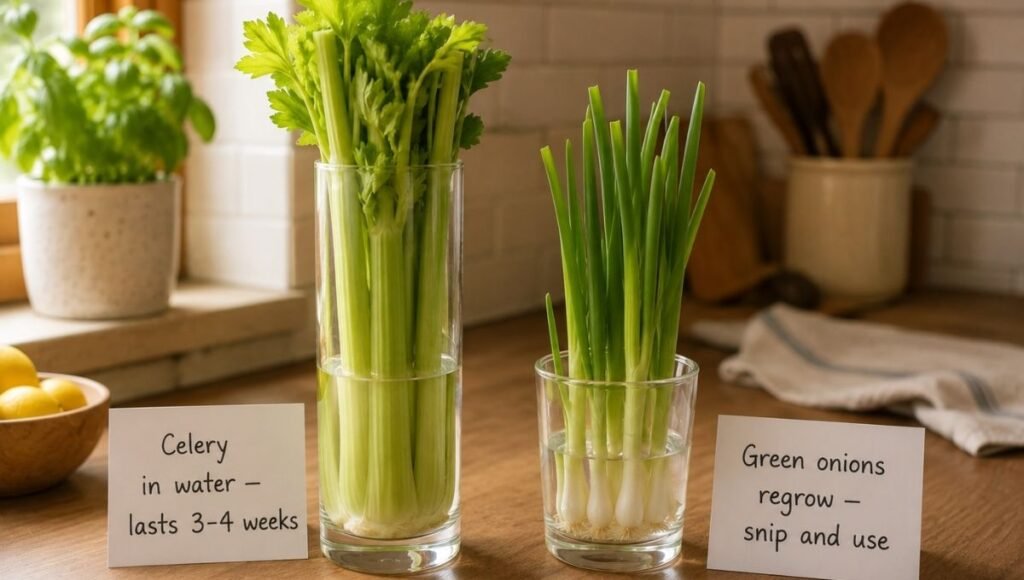
Method 1 (best for long-term): Stand celery upright with the base in 1–2 inches of water in a tall glass or jar. Cover the top loosely with a bag and store in the fridge. Celery stored this way regularly lasts 3–4 weeks while staying crisp.
Method 2 (best for space-saving): Wrap tightly in aluminum foil — not plastic. Foil allows ethylene to escape while retaining moisture. Celery wrapped in foil in the crisper consistently lasts 2–3 weeks.
Limp celery revival: Soak limp celery stalks in ice water for 30–60 minutes. The cells reabsorb water and the celery regains significant crunch. Works remarkably well — often bringing celery that seems done back to fully usable condition.
Green Onions (Scallions)
Where: Refrigerator (or a glass of water on the counter) How long: 1–2 weeks in the fridge; 2–3 weeks in water How: The counter method many people don’t know about: place green onions with the white root ends in a glass with 1–2 inches of water, loosely cover the green tops with a bag, and leave on the counter. They’ll not only stay fresh — they’ll continue to grow. You can snip the green tops as needed and the plant keeps regenerating.
For refrigerator storage: wrap in a slightly damp paper towel, then place in a zip-top bag. Store vertically if possible in the door pocket.
The regrowth trick: If green onions have already gone slightly limp, put them root-end in water. Within 24 hours they’ll perk back up, and within a week the green tops will have grown several additional inches of fresh onion.
Bell Peppers
Where: Refrigerator, low humidity drawer How long: Whole: 1–2 weeks. Cut: 3–4 days in an airtight container How: Store whole, unwashed bell peppers in the low humidity crisper drawer or in a loose bag. They last significantly longer whole than cut — cut peppers should go in an airtight container with a paper towel and be used within 3–4 days.
Bell peppers are ethylene producers, which means they’ll accelerate the ripening of ethylene-sensitive vegetables if stored together. Keep them separated from broccoli, cucumbers, and leafy greens.
The budget note: Bell peppers are one of the highest price-per-unit vegetables at most grocery stores ($1–$2 each at regular grocery stores, $0.79–$0.99 each at Aldi). Properly stored, they last 1–2 weeks — making bulk buying when on sale a genuinely worthwhile strategy if you use them regularly.
Zucchini
Where: Refrigerator How long: 1–2 weeks How: Store unwashed in the crisper drawer in a loose plastic bag or in the original store bag with some air holes. Zucchini is sensitive to both excess moisture (causes soft spots and decay) and dehydration (causes shriveling). The crisper’s humidity environment is ideal.
Don’t store zucchini in a sealed airtight container — it needs some air circulation. A perforated bag or loosely closed bag is better than a sealed one.
Signs it’s going: Soft spots that don’t recover, excessive mushiness at the stem end, visible mold. A slightly wrinkled exterior is cosmetic — the interior is usually still fine for cooking.
Fresh Herbs
Where: Depends on the herb type How long: 1–3 weeks depending on variety
Fresh herbs divide into two categories with different storage needs:
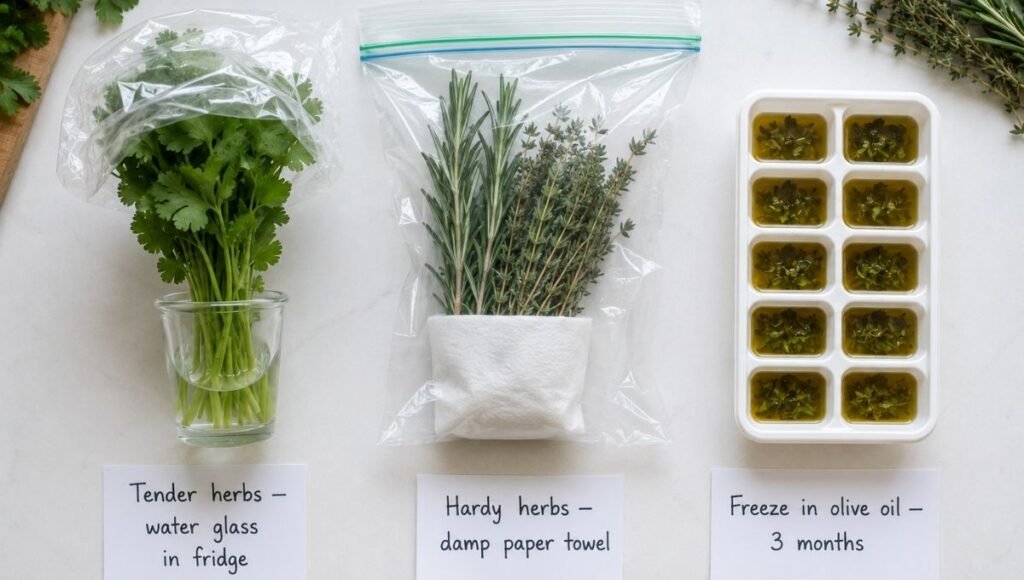
Tender herbs (basil, cilantro, parsley, mint, dill): Treat like fresh flowers. Trim the stems, place in a glass with 1–2 inches of water, and store on the counter (for basil, which goes black in the fridge) or loosely covered in the refrigerator (for cilantro, parsley, mint). Change the water every 2–3 days. This method keeps tender herbs fresh for 1–3 weeks.
Basil only: Never refrigerate fresh basil — cold temperatures cause the leaves to blacken rapidly. Counter in water, away from direct sunlight.
Hardy herbs (rosemary, thyme, sage, oregano, chives): Wrap loosely in a slightly damp paper towel, place in a zip-top bag, and store in the refrigerator. These last 2–3 weeks with this method.
The freezing option: Blend soft herbs with olive oil and freeze in ice cube trays. Once solid, transfer to a freezer bag. Keeps for 3–6 months and goes directly from freezer into soups, sauces, and sautés. This is the best approach for large bunches that you can’t use before they’d otherwise go bad.
Spinach and Leafy Greens
Where: Refrigerator, high humidity drawer How long: 5–10 days (pre-washed bags: follow package date; loose spinach: 7–10 days) How: The paper towel method is the most important intervention for leafy greens. Place paper towels in the bag or container with spinach and other greens — replace when saturated. Don’t wash until you’re ready to use. Keep in the high humidity crisper away from ethylene producers.
For pre-washed salad bags: leave in original packaging and add a paper towel. Once opened, transfer to an airtight container with a dry paper towel inside.
Signs it’s going: Slimy leaves (discard), yellowing (discard for salad, consider cooking wilted but non-slimy leaves into soups), strong unpleasant smell.
How long does spinach last in the fridge? Loose fresh spinach: 7–10 days with proper storage. Pre-washed bagged spinach: 5–7 days after opening.
The Vegetable Crisper Drawer: A Weekly System
Here’s a practical weekly approach that prevents the “Wednesday crisper disaster” most families experience:
When you unpack groceries:
- Remove all produce from plastic store bags
- Add a paper towel to any bag going back into the fridge
- Separate ethylene producers (peppers, tomatoes, apples) from sensitive vegetables (broccoli, cucumbers, leafy greens)
- Place mushrooms in a paper bag — never sealed plastic
- Stand green onions and celery in water
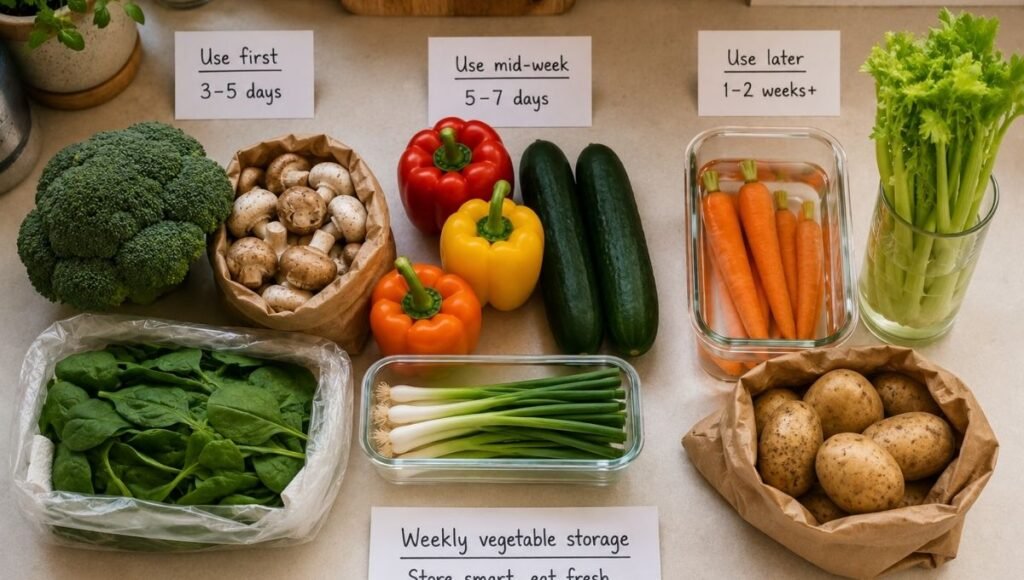
Organize by how soon you need to use it:
- Use first (3–5 days): broccoli, mushrooms, fresh herbs, spinach, zucchini
- Use mid-week (5–7 days): bell peppers, cucumbers, green onions, carrots
- Use later (1–2 weeks+): celery, whole potatoes (counter), ginger
The “use it up” dinner: One meal per week built around whatever is approaching its limit. A stir-fry, soup, or sheet pan dinner can use up 4–6 different vegetables simultaneously. This single habit, practiced consistently, eliminates most produce waste.
Vegetable Storage Quick Reference
| Vegetable | Where | How Long | Key Tip |
|---|---|---|---|
| Potatoes | Cool dark pantry | 3–5 weeks | Never fridge; away from onions |
| Carrots | Fridge, high humidity | 3–4 weeks | Submerge cut carrots in water |
| Broccoli | Fridge, high humidity | 5–7 days | Loose bag; away from ethylene |
| Cucumbers | Room temp or wrapped in fridge | 5–14 days | Wrap in paper towel; no tight seal |
| Ginger | Fridge or freezer | 3–4 weeks / 6 months | Freeze whole for easiest grating |
| Mushrooms | Fridge in paper bag | 5–7 days | Never plastic; never wash early |
| Celery | Fridge upright in water | 3–4 weeks | Aluminum foil works too |
| Green onions | Water glass on counter | 2–3 weeks | They’ll keep growing |
| Bell peppers | Fridge, low humidity | 1–2 weeks | Store whole; separate from broccoli |
| Zucchini | Fridge, crisper | 1–2 weeks | Loose bag only |
| Fresh herbs | Counter in water / fridge | 1–3 weeks | Basil never fridge |
| Spinach | Fridge, high humidity | 7–10 days | Paper towel in the bag |
FAQ
Q: Why do my vegetables go bad so fast even in the fridge?
The most common causes are: excess moisture in direct contact with the vegetable (fix: paper towel in every bag), ethylene exposure from nearby fruit (fix: separate crisper drawers), and storing ethylene-sensitive vegetables next to ethylene-producing ones. The crisper drawer humidity setting also matters — leafy greens need high humidity, mushrooms and peppers need low humidity.
Q: Should potatoes be stored in the fridge?
No. Refrigerator temperatures convert potato starches to sugars, which changes the texture and flavor (and when cooked, causes darker coloring and a slightly sweet, unpleasant taste). Store potatoes in a cool, dark, dry, ventilated space at room temperature — a pantry shelf, lower cabinet, or paper bag in a cool corner works well.
Q: How do you keep vegetables fresh longer in the fridge?
Three most impactful habits: (1) paper towel in every bag or container to absorb excess moisture, (2) keep ethylene producers (apples, tomatoes) separated from ethylene-sensitive vegetables (broccoli, cucumbers, leafy greens), (3) don’t wash until you’re ready to use — moisture on the surface of vegetables accelerates deterioration. These three changes alone can extend most produce by 3–5 days.
Q: How long do carrots last in the fridge?
Whole, unpeeled carrots: 3–4 weeks in the high humidity crisper. Cut or peeled carrots submerged in water in a sealed container: 2–3 weeks. Baby carrots in original packaging: 3–4 weeks; once opened, transfer to water-submerged storage for best results.
Q: Can you freeze fresh vegetables without blanching?
Some vegetables freeze acceptably without blanching (corn, peas, green beans, zucchini for cooked applications). Most vegetables, however, benefit from blanching before freezing — briefly boiling, then immediately cooling in ice water. Blanching deactivates the enzymes that cause continued deterioration even at freezer temperatures. Without blanching, most vegetables develop off-flavors and mushy texture within 1–2 months. Blanched vegetables maintain quality for 10–12 months.
Q: How do you tell if a vegetable has gone bad?
General rule: if it smells wrong, feels slimy, or has visible mold, discard it. Wilting and slight discoloration don’t automatically mean a vegetable is bad — limp carrots and celery can often be revived in ice water, and yellowed broccoli or slightly wrinkled zucchini are still fine for cooked applications. The slime test and smell test are the most reliable indicators: slimy texture that doesn’t go away after rinsing, or an off/sour smell, means it’s time to discard.
The Honest Bottom Line
Getting vegetables to actually last until you use them isn’t about shopping less or buying smaller quantities. It’s about two or three targeted habits: the paper towel in the bag, separating ethylene producers from sensitive vegetables, and knowing which few vegetables need counter storage rather than the fridge.
The financial math is straightforward. If a family of four spends $20 on vegetables per week and currently loses 30% of them to spoilage before use — that’s $6 per week, $312 per year, thrown away. The habits in this guide recover most of that. Not by being more disciplined about eating vegetables, but by storing them in a way that gives them the environment they actually need to last.
For the bigger grocery savings system that connects produce management to meal planning, shopping smarter, and cutting overall food waste, our how to save money on groceries guide covers the complete picture. And for the pantry staples that work alongside fresh produce to round out a week of real meals, our pantry staples guide is the natural companion.
References
- USDA Economic Research Service. The Estimated Amount, Value, and Calories of Postharvest Food Losses at the Retail and Consumer Levels in the United States. ers.usda.gov
- American Heart Association. Keep Fruits and Vegetables Fresher Longer — Storage Guidelines. heart.org
- Purdue University Cooperative Extension. Storing Fresh Fruits and Vegetables for Best Flavor. extension.purdue.edu
- USDA Food Safety and Inspection Service. Refrigerator and Freezer Storage Chart. fsis.usda.gov
- UC Davis Postharvest Technology Center. Ethylene in Postharvest Technology — Produce Compatibility and Storage. postharvest.ucdavis.edu