
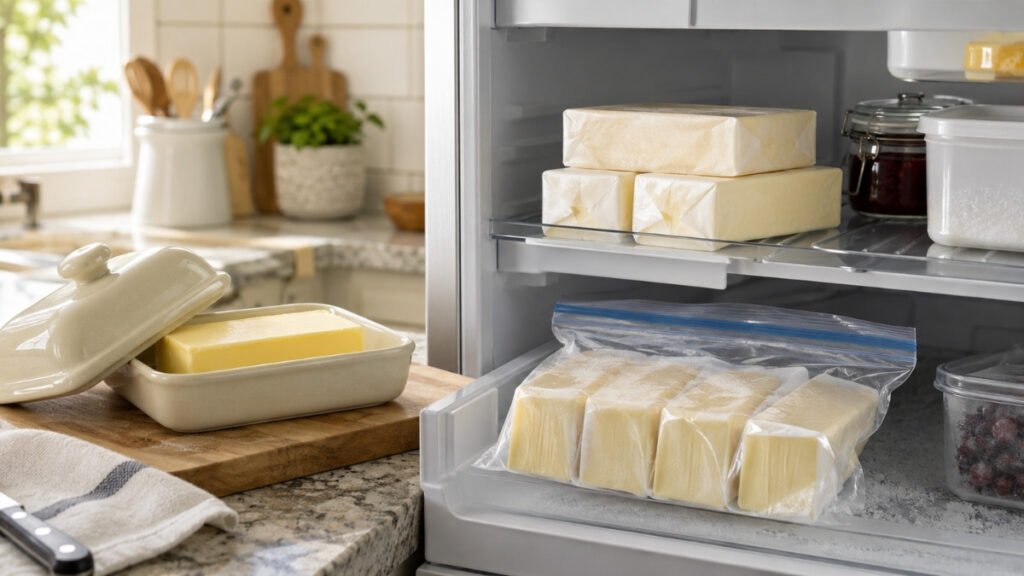
There’s a good chance you’ve got a stick of butter sitting out on the counter right now, and somewhere in the back of your mind is a small nagging question: is that actually still okay? Butter is one of those staples every household goes through constantly, yet most of us are never quite sure how long it’s really supposed to last outside the fridge — or whether that half-used block in the back of the refrigerator is still fine to bake with.
The good news is that butter is far more forgiving than most dairy products. Unlike milk, it doesn’t spoil quickly, and a little bit of know-how goes a long way toward keeping it fresh, spreadable, and safe without wasting a single stick.
This guide breaks down exactly how long butter lasts on the counter, in the fridge, and in the freezer — for both salted and unsalted varieties — along with how to spot butter that’s actually gone bad versus butter that just needs a quick trim. We’ll also cover practical storage habits that make buying butter in bulk a genuinely smart way to save money instead of a gamble.
Overview: The Quick Answer
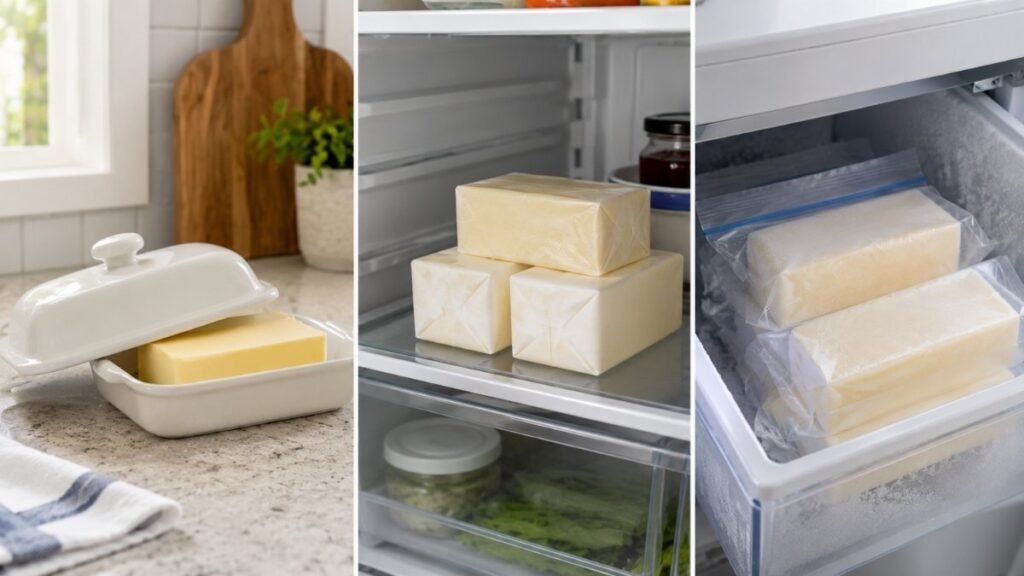
Salted butter can sit at cool room temperature, covered, for about 1 to 2 weeks, lasts roughly 6 to 9 months in the refrigerator, and up to 12 months in the freezer for best quality. Unsalted butter is more delicate — it’s best kept on the counter for no more than 1 to 2 days, lasts about 1 to 3 months refrigerated, and around 5 to 6 months in the freezer.
The key habit worth adopting either way: keep only a small amount of butter out for daily use, and store the rest in the fridge or freezer. This gives you the convenience of soft, spreadable butter without shortening the life of your whole supply.
Butter Shelf Life Quick Guide
| Butter Type | Counter | Refrigerator | Freezer | Best Practice |
|---|---|---|---|---|
| Salted butter | 1–2 weeks (covered, cool room) | 6–9 months | Up to 12 months | Keep a small portion out, refrigerate the rest |
| Unsalted butter | 1–2 days max | 1–3 months | 5–6 months | Refrigerate promptly; avoid extended counter time |
What Affects Butter Shelf Life?
Butter’s shelf life depends less on the calendar and more on how it’s handled — factors like air exposure, packaging, temperature consistency, and nearby food odors all play a bigger role than most people realize.
Why Packaging Matters
Butter that stays wrapped tightly in its original packaging, or is transferred to an airtight container, holds up noticeably better than butter left loosely covered or exposed to air. Air exposure is one of the main drivers of oxidation, which is the most common reason butter starts to taste “off” well before it’s technically spoiled.
Why Temperature Consistency Matters
Butter that experiences repeated temperature swings — moved in and out of the fridge, left near a warm stove, or stored somewhere that fluctuates — breaks down faster than butter kept at a stable temperature, whether that’s a consistently cool room or a steady refrigerator shelf.
Best-By Date Doesn’t Always Mean Bad Butter
The date printed on butter packaging is a quality estimate, not a safety deadline. Properly stored, sealed butter is often still perfectly good for weeks past that date — it’s really about flavor and texture staying at their peak, not a strict cutoff for safety.
I’ve found that butter forgotten at the back of the refrigerator often stays in better shape than the stick sitting in the door that’s used every day. The reason is simple: the refrigerator door gets warmer every time it’s opens, while the back stays much more consistently cold.
Salted vs. Unsalted Butter: Which Lasts Longer?
Salted butter generally lasts longer than unsalted butter in every storage location, because salt acts as a natural preservative that slows bacterial growth and oxidation.
Unsalted butter, without that added protection, is more sensitive to temperature and air exposure — which is exactly why it benefits from colder, more consistent storage and shorter counter time.
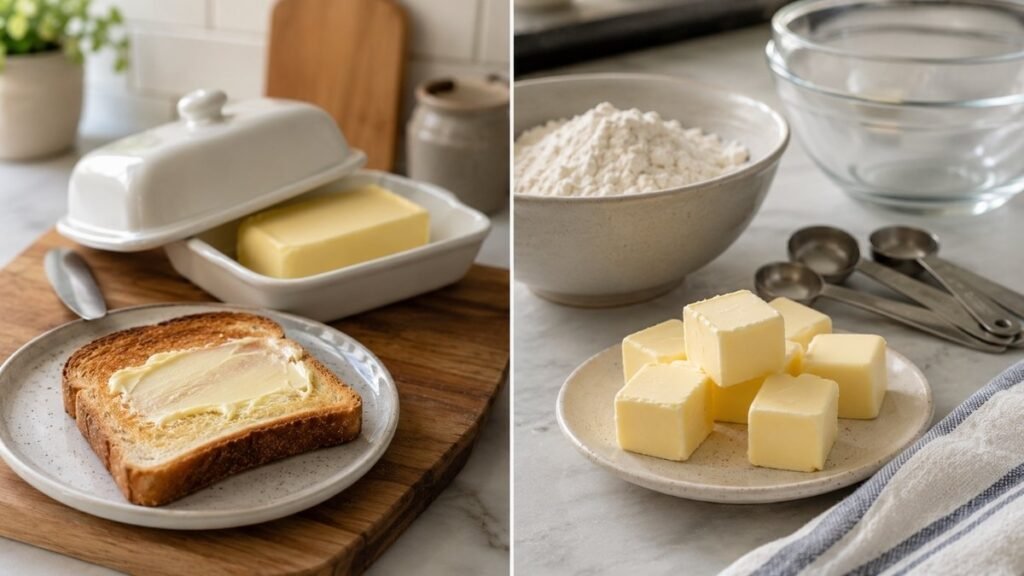
Beyond shelf life, the two also serve different purposes in the kitchen. Salted butter is a popular everyday choice for toast, cooking, and general use, largely because its flavor and longer shelf life make it convenient. Unsalted butter is often preferred for baking, where precise control over salt content matters for the recipe’s outcome.
Salted vs. Unsalted Butter Comparison
| Factor | Salted Butter | Unsalted Butter |
|---|---|---|
| Flavor | Slightly salty, more robust | Clean, neutral, “sweet” cream flavor |
| Best for | Everyday cooking, spreading | Baking, recipes needing salt control |
| Baking | Usable, but adjust added salt | Preferred for precise recipes |
| Everyday cooking | Very versatile | Works well, but less common choice |
| Storage tolerance | Higher — longer counter and fridge life | Lower — needs colder, shorter storage |
Many households naturally settle into keeping salted butter out for toast and everyday cooking, while reserving a stick of unsalted butter in the fridge specifically for baking days. It’s a small system, but it plays to the strengths of each type.
How to Tell When Butter Has Gone Bad
Before using an older stick, take a quick look at the color, give it a sniff, and, if everything seems normal, taste a tiny bit. Those simple checks are usually enough to tell whether it’s still good to use or better off in the trash.
Surface Oxidation
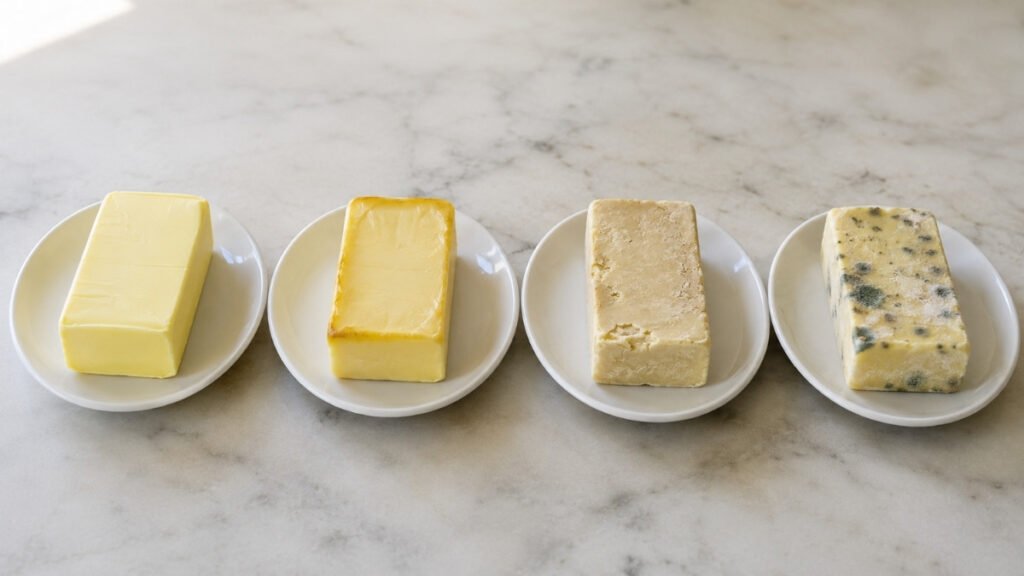
A thin, deeper-yellow layer forming on the surface or edges of butter is oxidation — a normal, gradual reaction to air exposure. This affects flavor slightly but isn’t dangerous, and in most cases it can simply be trimmed away, with the rest of the butter still perfectly usable.
Rancid Butter
Rancid butter has a noticeably sour, stale, or “off” smell that runs throughout the butter, not just on the surface. It may also taste bitter or sharp. Unlike simple oxidation, rancidity affects the whole stick and isn’t something you can trim around.
Mold and Contamination
Any visible mold — fuzzy spots, unusual colored patches — means the butter should be discarded immediately, along with any butter that’s had contact with dirty utensils or crumbs from other foods over time.
Oxidized vs. Rancid vs. Moldy Butter
| Condition | Appearance | Smell | Cause | Safe to Use? | Recommended Action |
|---|---|---|---|---|---|
| Oxidation | Thin yellow/darker edge | Mild or unchanged | Air exposure | Yes, mostly | Trim the affected edge, use the rest |
| Rancidity | Uniform color, may look normal | Sour, stale, sharp | Fat breakdown from air, light, heat | No | Discard entirely |
| Mold | Fuzzy spots, discolored patches | Musty or off | Contamination, moisture | No | Discard entirely |
Three-Step Butter Check
- Look — Check for mold or an oxidized (darker yellow) edge.
- Smell — Sour or stale odors throughout mean rancidity.
- Taste — Only if there’s no visible mold or contamination; a bitter or sharp taste confirms it should be discarded.
A thin, oxidized yellow edge is genuinely different from butter that smells stale all the way through — the first is a cosmetic issue you can trim around, while the second means the fat itself has broken down and cooking won’t reverse that. Since rancid butter can’t be fixed by cooking any more than truly spoiled food can, it’s not worth trying to bake around it once you’ve confirmed that sour, off smell.
How to Keep Butter Soft and Safe on the Counter
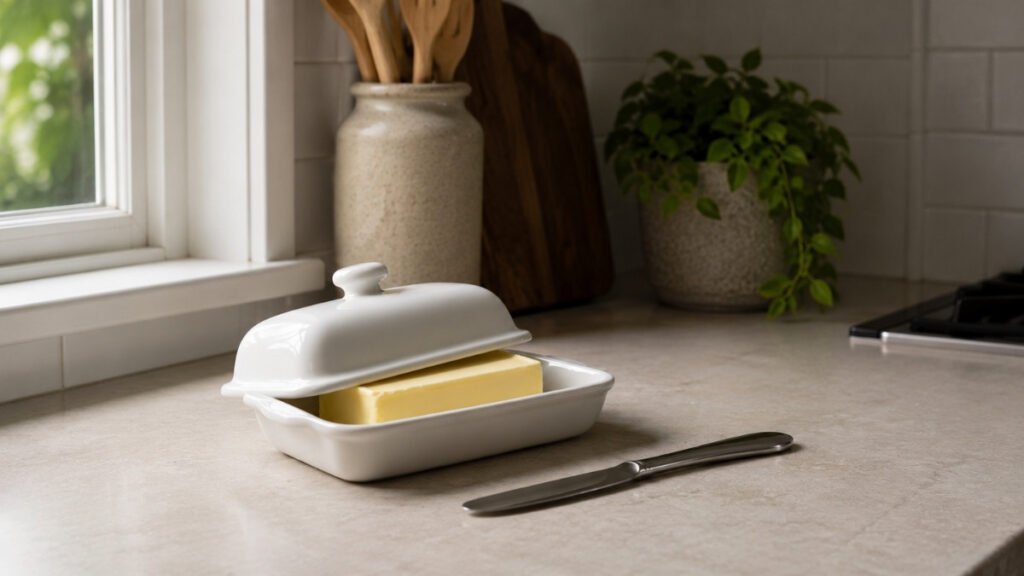
Many people keep a stick of butter on the counter so it’s always soft enough to spread on toast or fresh bread. That’s perfectly fine—as long as it’s stored the right way and your kitchen doesn’t get too warm.
How Much Butter Should Stay on the Counter?
Keep out only what you’ll use within a few days — typically a single stick or a small dish’s worth. There’s no real benefit to leaving a full multipack of butter sitting on the counter; it just increases exposure time for butter you don’t need immediately.
Butter Dish vs. Butter Bell
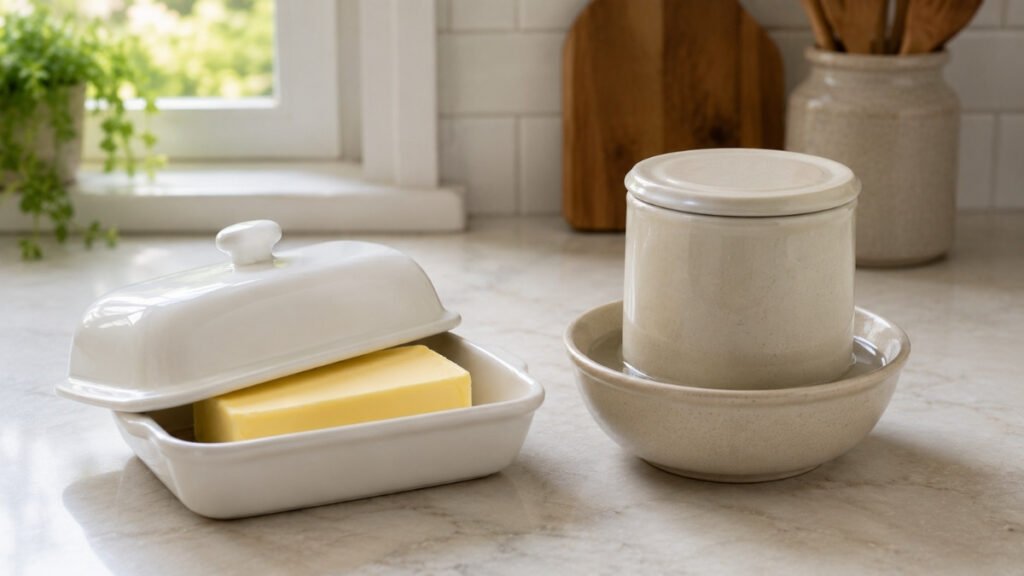
A covered butter dish simply shields butter from air and light, which is enough for most households. A Butter Bell (a French-style crock that seals butter under a small amount of water) adds an extra layer of protection and can keep butter fresher for slightly longer at room temperature, though it does require regular water changes to work properly and avoid its own hygiene issues.
Butter Dish vs. Butter Bell
| Storage Method | Ease of Use | Maintenance | Best Climate | Main Drawback | Best For |
|---|---|---|---|---|---|
| Covered butter dish | Very easy | Minimal | Any, cooler rooms preferred | Less air protection than a Butter Bell | Everyday convenience |
| Butter Bell | Easy, slight learning curve | Requires regular water changes | Cooler climates | Water needs refreshing to stay hygienic | Households wanting longer countertop freshness |
Warm-Weather Storage Tips
During hot summer months, especially in kitchens without air conditioning, it’s often better to skip countertop storage altogether and keep butter refrigerated, softening a small portion just before use instead.
Common Hygiene Mistakes
- Using a knife that’s already touched other foods (like jam or peanut butter) without wiping it first
- Leaving crumbs in the butter dish, which can introduce bacteria and speed up spoilage
- Refilling a butter dish without washing it between sticks
Countertop Butter Safety Checklist
- [ ] Keep only a small, few-days’ portion out at a time
- [ ] Use a covered dish or Butter Bell, not an open plate
- [ ] Store it in a cool spot, away from direct sunlight or the stove
- [ ] Use a clean, dry knife every time
- [ ] Avoid leaving crumbs in the butter dish
- [ ] Wash the container thoroughly before refilling
Countertop butter storage that works perfectly well in a cool winter kitchen often needs to be reconsidered during a hot summer stretch, especially without air conditioning — the same stick that stays fine for a week in January might need to move back to the fridge sooner in July.
How to Store Butter in the Refrigerator
Keeping it tightly wrapped, away from strong-smelling foods, and using older sticks first helps preserve both flavor and freshness.
Here’s what actually makes a difference:
- Keep the original wrapper whenever possible — it’s usually well-suited to protecting butter, or transfer to an airtight container if the packaging is damaged.
- Store away from strong-smelling foods like onions, garlic, or leftovers with pungent aromas, since butter readily absorbs odors from its surroundings.
- Keep it tightly sealed at all times, minimizing air exposure between uses.
- Label opened butter with the date it was opened, especially if you buy in bulk and have multiple sticks in rotation.
- Rotate older butter first so nothing sits forgotten at the back of the fridge indefinitely.
- Store bulk butter in the coldest part of the fridge, and keep your daily-use portion separate from your longer-term supply.
Refrigerator Butter Storage Checklist
- [ ] Keep butter in its original wrapper or an airtight container
- [ ] Store away from onions, garlic, and other strong-smelling foods
- [ ] Label opened butter with the date
- [ ] Use older sticks before newer ones
- [ ] Keep bulk supply separate from your daily-use portion
Butter stored right beside onions or garlic in the fridge often starts tasting faintly “off” long before it’s actually spoiled — it’s simply picked up the surrounding smell. This is a flavor issue rather than a safety one, but it’s an easy problem to avoid just by organizing the fridge with butter in its own space.
How to Freeze Butter for Long-Term Savings
When butter goes on sale, it’s hard to resist buying a few extra packs. Freezing the ones you won’t use right away is an easy way to stretch your grocery budget—as long as they’re wrapped well and frozen before they sit in the fridge for too long.
Packaging Butter for the Freezer
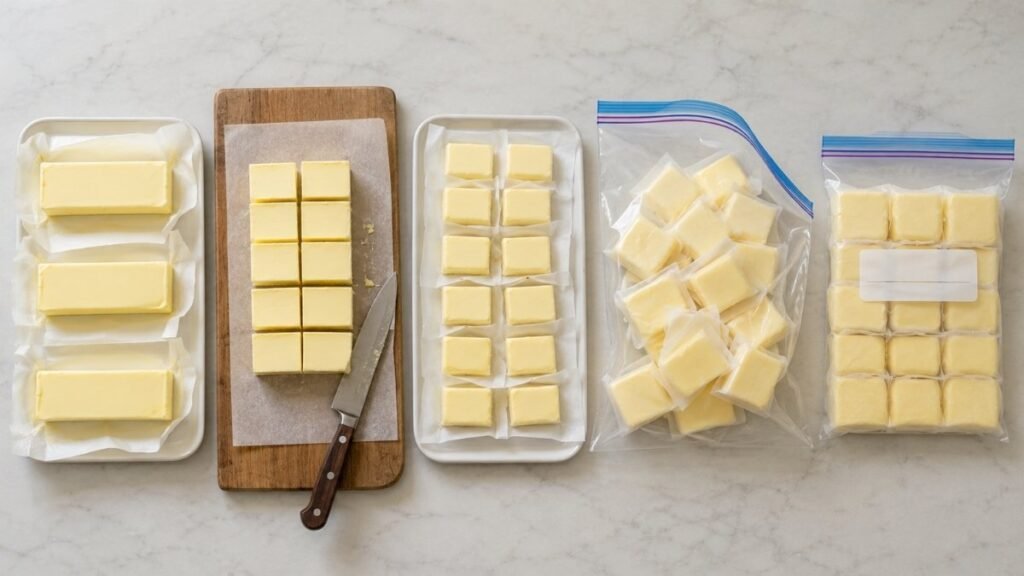
Unopened butter can be frozen directly in its original packaging, but double-wrapping it in foil or a freezer bag adds extra protection against both freezer burn and odor absorption from other foods in the freezer.
Portioning Butter Before Freezing
Rather than freezing an entire multipack as one unit, separate individual sticks or cut portions to match how you’d realistically use them — this way you’re only thawing what you need, not the whole supply at once. Separating pieces with parchment paper prevents them from sticking together in a solid block.
Best Ways to Thaw Frozen Butter
Thaw frozen butter in the refrigerator overnight for the best texture, or at room temperature for a few hours if you need it softened quickly. Avoid microwaving butter to thaw it, since it’s easy to accidentally melt part of it unevenly.
Butter Freezing Methods
| Method | Best For | Packaging | Convenience | Drawback |
|---|---|---|---|---|
| Freeze whole, unopened | Long-term bulk storage | Original wrap + freezer bag | Simple, minimal effort | Must thaw a full stick at once |
| Portion into individual sticks | Households using butter steadily | Double-wrapped, parchment between pieces | Very convenient | Slightly more prep time upfront |
| Pre-cut tablespoon portions | Frequent bakers, small daily use | Parchment-separated, sealed container | Fastest to grab and use | Takes the most time to prepare initially |
Bulk Butter Freezing Checklist
- [ ] Portion butter based on realistic future use
- [ ] Wrap tightly (double-wrap for extra protection)
- [ ] Seal in a freezer-safe bag or container
- [ ] Label with the date frozen
- [ ] Freeze promptly after purchase
- [ ] Thaw only the amount you need at a time
A warehouse-club multipack of butter is a genuinely good deal per stick — but only if it actually gets used before quality declines. Dividing it into recipe-sized or stick-sized portions the same day you bring it home, then freezing what you won’t use in the next few weeks, is what turns that bulk discount into real, usable savings instead of a forgotten block at the back of the freezer.
One more thing worth knowing: repeatedly thawing and refreezing the same portion of butter isn’t a good habit — it affects texture and increases the chance of picking up freezer odors. Thaw only what you plan to use.
Frequently Asked Questions
How long can butter actually sit out on the counter before going bad? Salted butter can typically sit out, covered, for about 1 to 2 weeks in a cool room. Unsalted butter is more sensitive and is best kept out for no more than 1 to 2 days before moving it back to the fridge.
Is salted butter safer to leave at room temperature than unsalted butter? Yes. The salt in salted butter acts as a natural preservative, giving it more tolerance for room-temperature storage. Unsalted butter lacks that protection, so it benefits from colder, more consistent storage.
How long does unopened butter keep in the freezer, and does cold storage affect its quality? Unopened salted butter can last up to about 12 months in the freezer for best quality, while unsalted butter is best used within 5 to 6 months. Freezing preserves safety well beyond those windows, but flavor and texture are at their best within those ranges.
How can you tell if butter has gone bad or turned rancid? Look for a sour or stale smell throughout the butter (not just a slightly darker edge, which is usually just oxidation), any visible mold, or a bitter, off taste. If more than one of these signs is present, discard it.
Should you move countertop butter back into the fridge during warm summer months? Yes, especially in kitchens without air conditioning. Warmer, less stable temperatures shorten how long butter stays fresh at room temperature, so it’s often best to refrigerate it and soften just a small portion before use during hot weather.
Is a butter bell better than a standard covered butter dish for countertop storage? A Butter Bell can extend countertop freshness slightly more than a basic covered dish, since it seals butter under water to limit air exposure. That said, it requires regular water changes to stay hygienic, so a covered dish is a perfectly good, lower-maintenance option for most households.
Can crumbs and dirty knives cause countertop butter to mold faster? Yes. Introducing crumbs or using a knife that’s touched other foods adds contamination that can speed up spoilage, even though butter itself is fairly resistant to bacterial growth. Using a clean, dry knife each time helps butter stay fresher longer.
Is it safe to cook or bake with butter that has slightly turned or oxidized? If it’s simple surface oxidation — a slightly darker yellow edge with no bad smell — trimming that portion away and using the rest is generally fine. If the butter smells sour or stale throughout, it’s rancid, and cooking or baking with it won’t fix that; it should be discarded instead.
Final Thoughts
So, how long does butter last? The answer depends less on the calendar and more on how you store it and how quickly your household uses it. If you finish a stick every week, keeping one on the counter is usually no problem. If you like buying butter on sale, storing most of it in the fridge or freezer is a better way to keep it fresh until you need it.
A few simple habits—keeping butter wrapped, storing it in a cool place, and freezing extra sticks before they’re forgotten—can help you waste less and get more value from every pack you buy. The next time you see butter on sale, you’ll know exactly how to store it with confidence.
🧈 Pantry Notes: The Thinking Behind This Guide
Butter is one of those everyday foods most of us never think twice about—until we’re staring at an old stick in the fridge wondering if it’s still good.
That’s why this guide focuses on the practical questions real households ask, from countertop storage and freezer tips to spotting the signs that butter has actually gone bad.
This guide is built around three simple goals:
- 🧈 Store Butter Safely — Keep butter fresh at room temperature, in the refrigerator, or in the freezer.
- 🥪 Reduce Food Waste — Know when butter is still perfectly usable and when it’s time to throw it away.
- 💰 Save More on Groceries — Buy butter on sale with confidence by storing extra sticks the right way.
Because good food storage isn’t about memorizing expiration dates.
It’s about wasting less, saving more, and making everyday groceries last longer.
🧈 Continue Building Smarter Food Storage Habits
Butter is just one part of keeping your groceries fresh and reducing food waste. These practical guides can help you store everyday foods safely, make smarter shopping decisions, and get more value from every grocery trip.
- How to Save Money on Groceries — Simple shopping strategies that help you cut grocery costs without sacrificing quality or freshness.
- How Long Does Cheese Last in the Fridge? — Learn how long different cheeses stay fresh and the best ways to store them.
- How Long Does Bacon Last in the Fridge? — Find out how long raw, cooked, and opened bacon lasts before it should be used or frozen.
- How Long Do Leftovers Last in the Fridge? — A practical guide to storing leftovers safely and knowing when it’s time to throw them away.
❤️ A Final Note
Making the most of your groceries isn’t about being perfect—it’s about making small, informed choices every day.
At Pantryva, we create practical food storage, grocery, and kitchen guides that help everyday households waste less, spend smarter, and feel more confident about the food they bring home. Every article is built around clear, reliable advice you can trust in real life.
Helping you make smarter food decisions, save more on every grocery trip, and get the most from every item in your pantry.